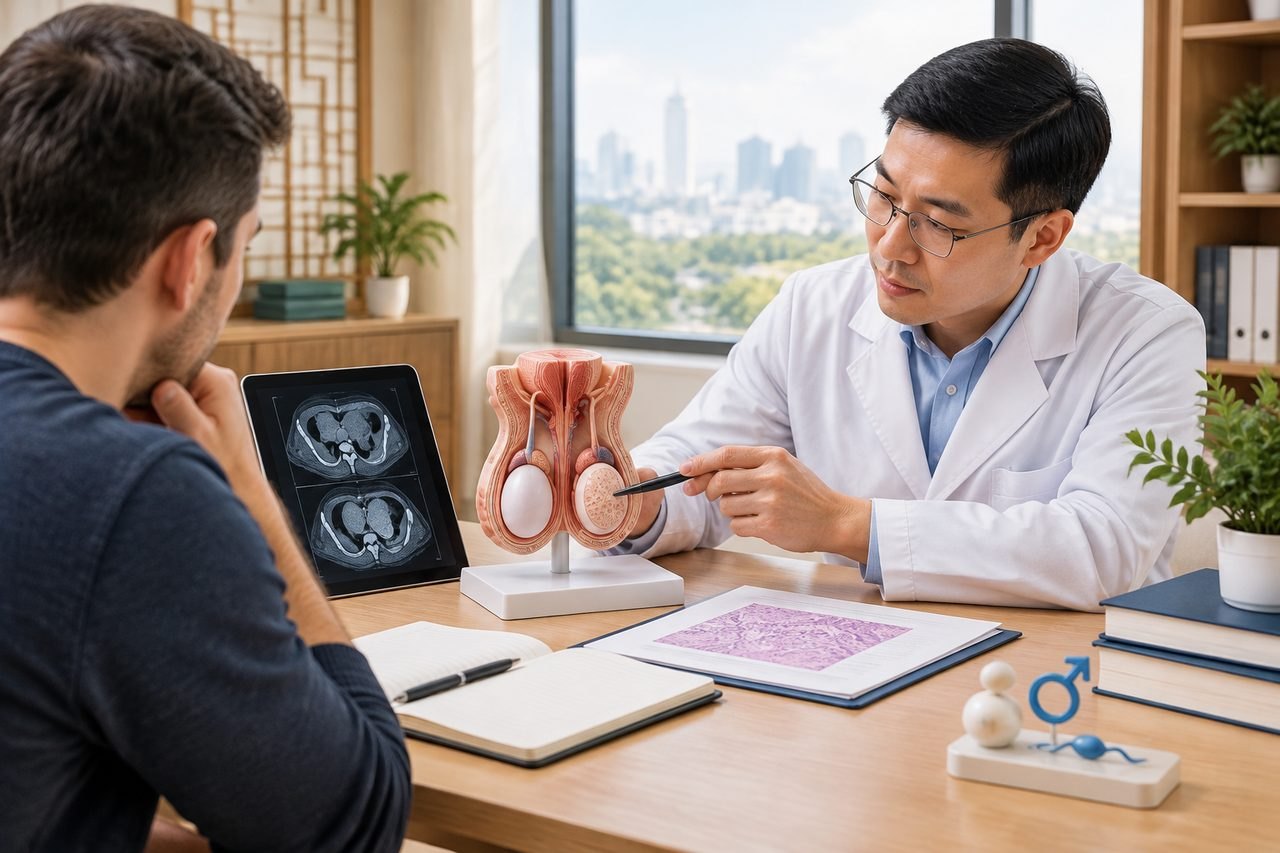
What Disease Extent Means Before Testicular Cancer Surgery
Disease extent is not one number. It is the treating team's working picture of where the cancer is, built from the physical examination, blood tumour markers, imaging of the scrotum, abdomen and chest, and the pathology from the removed testicle. The operation to remove the affected testicle is a main treatment for testicular cancer, but the findings afterwards shape whether further treatment is needed and what kind.
This is why an overseas patient should not treat the operation as a single isolated event. The surgery removes the primary tumour and provides tissue for the pathologist. The pathology report then describes the tumour type and other features that the clinical team uses, together with imaging and marker results, to decide on surveillance or additional treatment. The exact combination is individual.
A useful question before committing to travel is therefore not only 'can you remove the testicle?' but 'what information will you have before surgery, what will you only know after pathology, and how will that change the plan?' Ask the hospital to explain its own sequence in writing, because the order of steps affects how you plan time, escorts and follow-up.
Questions to Ask About Staging and Imaging Before You Travel
Staging describes how far the cancer has spread. For testicular cancer, staging typically draws on imaging of the chest, abdomen and pelvis, and on blood tests for tumour markers. The treating clinician decides which scans are appropriate for you and when they should be done relative to surgery.
Ask the receiving hospital these specific questions: Which imaging do you require before you will accept me for surgery? Do you accept imaging performed in my home country, and if so, what format and what time frame? If repeat imaging is needed in China, how is that arranged and who explains the results? Which tumour markers do you measure, and do you need them before or after the operation?
The reason these questions matter is practical. If the hospital needs its own imaging before it can confirm a surgical plan, your travel dates may depend on scan availability rather than on the operation itself. If it accepts outside imaging, you need to know the technical requirements so that your local radiology department can prepare files correctly. Do not assume either route; ask.
You should also ask who reviews the images and when you would receive an explanation. A written summary of the intended sequence, even a short one, helps you compare what different hospitals tell you and helps your family understand the plan.
Pathology Review and Why the Report Changes the Plan
The pathology report on the removed testicle is central to decisions about further care. It identifies the tumour type and describes features that help the clinical team estimate risk and choose between surveillance and additional treatment. Because further care depends on the individual findings, no one can tell you before surgery exactly what will follow.
If you already have a biopsy or pathology report from your home country, ask whether the hospital in China will review those slides or blocks, and whether it requires its own pathology examination of the surgical specimen. These are different things: a review of existing material informs the plan, while examination of the newly removed testicle produces the definitive report used for decisions after surgery.
Ask how long the pathology result takes at that hospital, who explains it to you, and whether an interpreter is available for that discussion. Ask what happens if the report changes the recommended plan: would further treatment be arranged at the same hospital, and would it require a longer stay? These are scheduling and communication questions, not clinical predictions, and the hospital should answer them for its own service.
One more question is worth writing down: if the pathology suggests that additional treatment is needed, how soon would that treatment start, and what would you need from me to arrange it? The answer belongs to the treating team and depends on your results.
Sequencing Surgery, Pathology and Any Later Treatment
Patients often ask whether everything can be done in one trip. The honest answer is that sequencing depends on your findings and on the hospital's own arrangements. Surgery to remove the testicle is a main treatment, but if further treatment such as chemotherapy or radiotherapy is indicated, it is planned after the pathology and staging information is complete.
Ask the hospital to describe the possible paths in plain terms: surgery followed by surveillance with scheduled reviews; surgery followed by further treatment; or, in some situations, treatment before surgery. Ask which path is being considered for you and what would move you from one path to another. This is not asking the hospital to guarantee an outcome; it is asking how it plans and communicates.
For an overseas patient, the practical follow-up question is where each stage would happen. If surveillance is recommended, can the scheduled reviews be done in your home country with results shared back? If further treatment is recommended, would it be given in China, and what would that mean for your length of stay? Ask the hospital to state its own position rather than relying on general assumptions.
Write down the answers in the order the hospital gives them. A clear sequence helps you decide how much time to plan for and what to arrange at home before you leave.
Fertility and Hormone Questions to Raise With the Treating Team
Removal of a testicle can affect fertility and testosterone production, and the effect depends on your individual situation, the remaining testicle and any additional treatment. This is a clinical discussion that belongs with your treating team, ideally before surgery, so that you can ask about sperm banking and about monitoring after treatment.
Ask directly: Should I consider sperm banking before surgery, and can it be arranged here or at home? How will my hormone levels be monitored afterwards, and who will follow those results? If further treatment is recommended, how might it affect fertility? These questions are appropriate at the first specialist consultation, not only after the operation.
If fertility preservation matters to you, raise it early enough that it can be arranged without delaying necessary treatment. The treating clinician decides what is appropriate and what can be done within the time available. Do not postpone urgent local assessment in order to travel for this discussion.
For patients travelling to China, also ask whether the hospital can provide the relevant referrals and whether an interpreter will be present for sensitive discussions. Understanding the answers in your own language matters for decisions about fertility and hormone follow-up.
Preparing Records and Asking for a Written Plan
A productive enquiry starts with a short summary, not a complete medical archive. Describe when symptoms or a diagnosis appeared, what surgery or tests have been done, what the pathology shows if available, and your main question. The hospital can then tell you what it needs next.
Ask the hospital to confirm in writing: which records and imaging it requires; whether it will review existing pathology; what it can decide from records alone and what requires an in-person assessment; and how the operation, pathology review and any later treatment would be sequenced for you. Also ask how its written estimate is structured, so you understand which parts are confirmed and which remain undecided until your results are known.
If you would like help organising this enquiry, ChinaSpecialistCare can check your available diagnosis and records, identify missing information and suggest the relevant next step. An initial enquiry is free, and a proxy consultation is optional rather than a prerequisite. The hospital decides suitability, and no review establishes that surgery, a particular treatment or travel is appropriate for you.
Do not delay assessment of urgent or worsening symptoms for an overseas enquiry. Local care comes first. When you are ready, send a brief summary and ask the specific questions above; the answers will tell you whether and how to proceed.
Sources & scope of this guide
References and official service information relevant to this guide.
This is general planning information and has not been individually reviewed by a doctor. Medical decisions and personal treatment advice come from your treating clinicians.