Why activity goals belong in the surgical conversation
A total knee replacement is not a single outcome. It is a procedure that resurfaces damaged joint surfaces with artificial components, and the result is shaped by the condition of your knee, the surrounding muscles and ligaments, your general health, and how you use the joint afterwards. The surgical team assesses symptoms and function, but function means different things to different people. Walking to the bathroom, returning to a physically demanding job, hiking on uneven ground and playing recreational sport are not the same request.
Agreeing goals before surgery does two practical things. First, it helps the surgeon explain what the operation can reasonably change and what it cannot. Second, it gives you a clear way to judge whether the plan you are being offered matches the life you want to return to. If your main goal is pain relief for daily walking, the discussion may be simpler than if your goal is to resume high-impact sport. Neither goal is wrong, but the surgical team needs to know which one matters to you.
This is also where you should raise any activity you are not willing to give up. Some patients assume that a knee replacement automatically restores everything they did before. Others assume they must become inactive. Both assumptions can lead to disappointment. The useful position is to ask what the team expects for someone with your specific knee, health profile and rehabilitation plan, and to accept that the answer may include limits.
Separating pain relief, mobility and sport
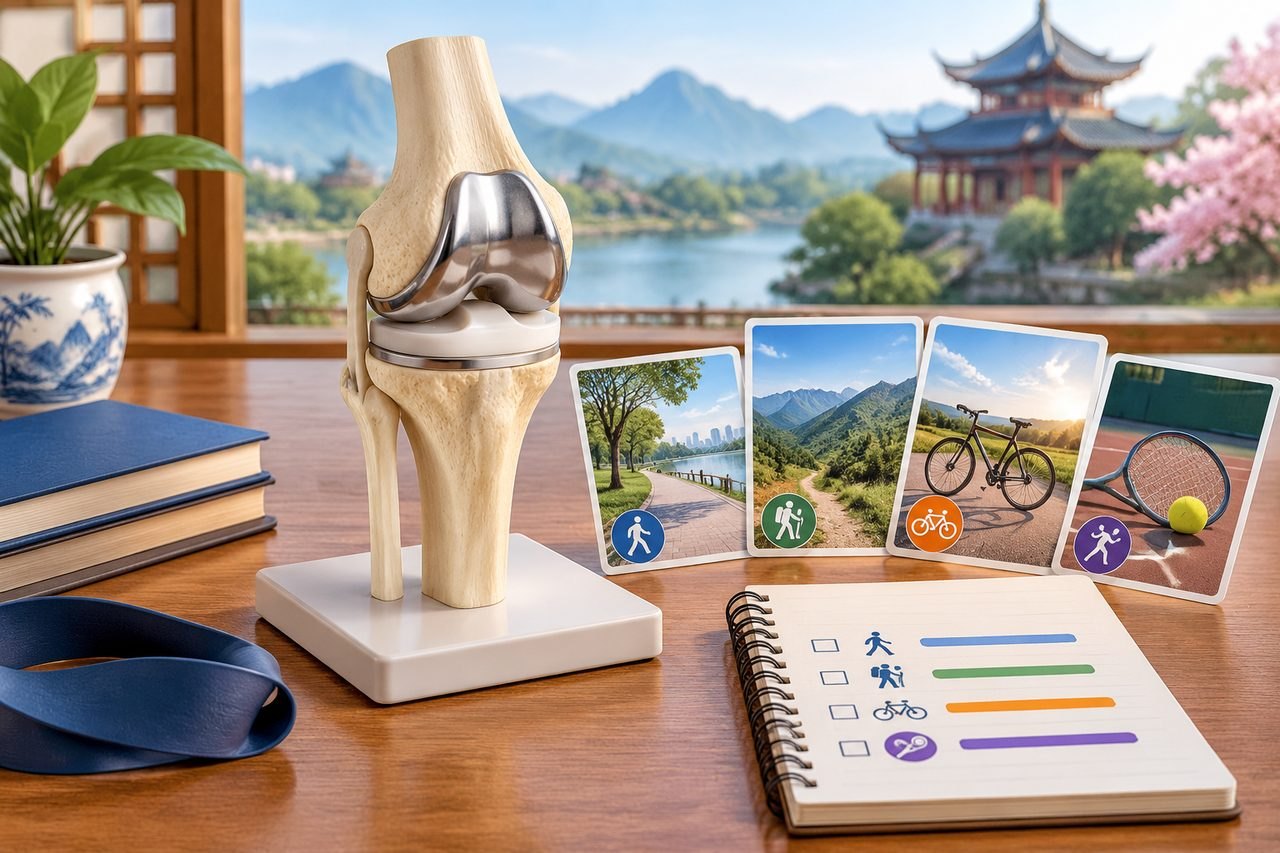
It helps to split your goals into three categories. Pain relief is often the main reason people consider surgery, and it is a different target from mobility. Mobility covers walking distance, stairs, getting out of a chair and moving around your home or workplace. Sport and high-demand activity cover running, jumping, pivoting, kneeling, heavy lifting or prolonged standing. A knee replacement may improve pain and mobility while still leaving some high-demand activities restricted. The treating surgeon should explain which category your goals fall into and why.
Ask directly: which of my goals are realistic, which are uncertain, and which are unlikely? A useful answer will not be a single number or a promise. It will connect your goals to your examination findings, imaging and general health. If you have had previous knee surgery, infection, stiffness or significant deformity, that history may change what the team expects. If you have other joint problems, back pain or circulation issues, those can also affect how much activity you regain.
You should also ask what the alternatives are. Partial knee replacement, osteotomy, non-surgical management or delaying surgery may be options for some patients, depending on the pattern of arthritis and symptoms. The surgeon is the person who can explain whether an alternative is suitable for your knee. Your job is to make sure the team knows what you want to return to, so the recommendation is made with that information in view.
- Which daily activities do you most want to improve?
- Which activities are you willing to modify or give up?
- What does the surgeon expect to be realistic, uncertain or unlikely for your knee?
- What alternatives have been considered, and why is surgery being discussed now?
What the treating team needs from you
The quality of the goal-setting conversation depends on the information you provide. The surgical team will want to understand your symptoms, how far you can walk, whether you use a stick or frame, how your knee affects sleep and daily tasks, and what you have already tried. They will also need your relevant medical history, current medicines, allergies and previous operations. If you have imaging or operation notes from your home country, ask whether the hospital wants them translated or reviewed before your appointment.
Do not assume that a particular scan or test is mandatory before you travel. The receiving clinician decides what is needed for an assessment. A useful question is: what records would help you assess my knee, and what can be reviewed remotely before I travel? You can then share a brief summary first and send fuller records only when the hospital or coordination team asks for them. This keeps the initial enquiry simple and avoids sending a complete medical archive before anyone has reviewed it.
Language matters here. If you are discussing activity goals, you need to be sure that your words are understood accurately. Ask whether an interpreter will be available for the consultation and whether the surgical team can provide written information in English. If you use a companion or interpretation service, that person should interpret your goals and questions, not summarise them into a shorter version. The surgeon's advice is only useful if it responds to what you actually said.
A planning example: two patients, two different goal conversations
Consider two people with knee arthritis who are both considering total knee replacement in China. The first is a 68-year-old retired teacher whose main goal is to walk around her neighbourhood, use stairs at home and travel without constant pain. The second is a 54-year-old warehouse supervisor whose main goal is to return to lifting and prolonged standing at work. Both may be suitable for assessment, but the conversations are not the same. The first patient's team may focus on walking tolerance, stair technique and confidence. The second patient's team must also discuss the physical demands of the job, the time away from work, and whether the knee can tolerate those demands after surgery.
This example is not a prediction of anyone's outcome. It shows why the phrase 'realistic activity goals' cannot be answered with one universal list. The surgeon needs to know the specific activities, the frequency, the intensity and how important they are to your income or independence. A goal that is central to your life deserves more discussion than a casual hobby. If you are unsure how to describe your activity level, write down a typical week before the appointment: work, walking, stairs, exercise, household tasks and sleep.
The same principle applies to rehabilitation. The surgical team and physiotherapist will advise on exercises, weight-bearing and precautions. Do not copy another patient's programme or assume that a particular exercise is right for you. Ask what your own plan should include, what warning signs to watch for, and when you should seek review. The receiving physiotherapist may adjust the plan based on your progress and examination.
Questions that change the next step
Some questions are administrative, and some change the clinical plan. Before you commit to travel or surgery, ask the surgical team which category your goals fall into and what would make them reconsider the plan. For example, if your goal is to return to a physically demanding job, the answer may depend on the strength of the surrounding muscles, your general fitness and the type of work. If your goal is to kneel for religious or cultural reasons, ask whether that is likely, uncertain or unlikely with the planned approach. The answer may influence which procedure or rehabilitation plan is discussed.
You should also ask what the hospital's written plan and estimate include. Hospital fees, clinician fees, implants, medicines, rehabilitation and follow-up are separate from any coordination service. Ask for a written breakdown that states what is included, what is excluded and what remains undecided until after assessment. If you are comparing hospitals, compare the scope of the written plan rather than a single headline figure. A lower initial number may not cover the same items.
Finally, ask what happens if your goals and the surgeon's assessment do not match. A good surgical conversation includes the possibility that surgery is not the right next step, or that a different procedure or non-surgical plan should be considered first. You are not obliged to proceed simply because you have travelled. The hospital decides whether to accept you for surgery, and you decide whether the plan is one you can live with.
- Which of my goals are realistic, uncertain or unlikely with this procedure?
- What would make you reconsider the surgical plan?
- What does the written plan and estimate include, exclude or leave undecided?
- What rehabilitation and follow-up will I need, and who will provide it?
- If surgery is not suitable, what alternatives should I discuss?
Preparing records and the next practical step
For an initial enquiry, a short summary is enough: your age, main knee symptoms, how long you have had them, previous knee surgery or injections, relevant medical conditions, current medicines and the activities you want to return to. You do not need to send passport numbers, payment details or a complete medical archive at this stage. If the hospital or coordination team needs more, they will ask for specific records such as imaging reports, operation notes or recent blood tests.
ChinaSpecialistCare can help you understand the process and coordinate an appointment with a suitable hospital or specialist team. The team provides information and non-clinical coordination; diagnosis, suitability, hospital acceptance and treatment decisions belong to the treating hospital and licensed clinicians. An initial case review is free and does not require buying a proxy consultation. You can start with a brief summary through the enquiry form, email or WhatsApp.
The most useful next step is to write down your three most important activity goals and your three most important questions. Then ask the surgical team to confirm what is realistic for your knee and what the written plan includes. That conversation, not a generic timeline, is what should guide your decision about total knee replacement in China.
Sources & scope of this guide
References and official service information relevant to this guide.
This is general planning information and has not been individually reviewed by a doctor. Medical decisions and personal treatment advice come from your treating clinicians.