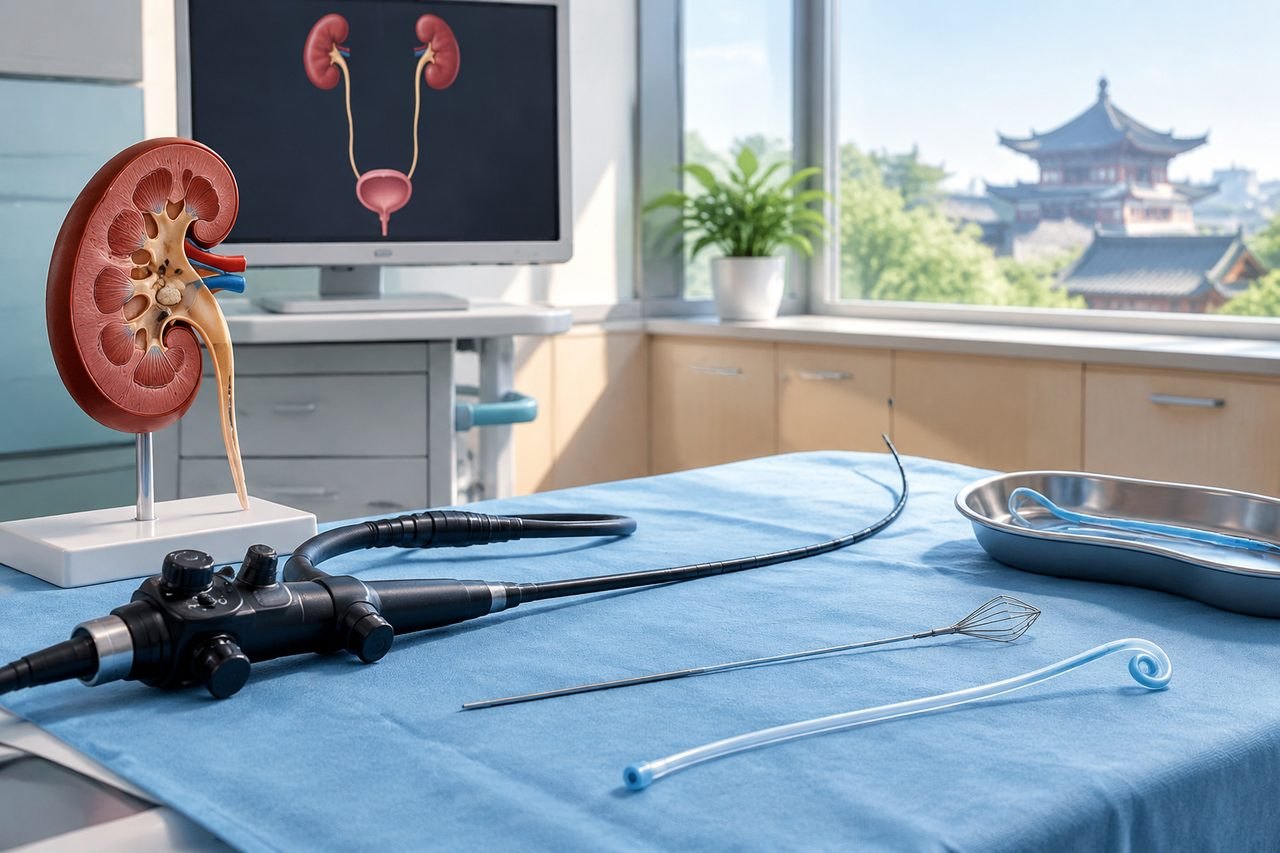
Why Follow-up Is Part of the Ureteroscopy Decision
Ureteroscopy uses a telescope passed through the urinary tract to treat stones. The procedure itself may be completed in one session, but the overall plan can include more than the operating day. The Newcastle Hospitals NHS patient information states that treatment may be staged and that a temporary ureteric stent may require a later removal appointment. That single sentence changes what an overseas patient needs to clarify before booking travel.
A staged plan means the treating team may intentionally divide care across more than one episode. A stent plan means a device may be left in place after the procedure and removed later. Neither point tells you what will happen in your case. It tells you which questions to ask so you are not planning a trip around an incomplete picture.
For an overseas patient, the practical risk is not the procedure name. It is discovering after arrival that a second procedure, a stent removal visit or a follow-up imaging appointment was expected but not scheduled. That is why the follow-up discussion belongs in the enquiry stage, not after the first operation.
Staged Treatment: What It Means for Your Trip
Staged treatment can mean the clinician plans more than one procedure to deal with the stone or stones. The reasons belong to the treating team and depend on your imaging, stone location, stone size and clinical condition. You do not need to self-diagnose the reason. You need to know whether a staged approach is being considered for you.
Ask directly: is this planned as a single procedure or could it be staged? If staged, what would the second stage involve, and is it already planned or only possible? The difference matters for travel. A possible second stage may be decided later; a planned second stage affects how long you may need to remain in China or whether you would need to return.
Also ask who decides that the second stage is needed and when that decision is made. If the answer is that it depends on findings during the first procedure, ask what the typical decision point is and how you would be informed. This is not a request for a guarantee. It is a request for the decision pathway.
If you are travelling from another country, ask whether both stages can be arranged within one stay or whether the hospital would expect a return visit. Do not assume either is possible. The hospital's answer depends on its own scheduling, your clinical suitability and the resources available at that time.
Ureteric Stents: Removal and the Questions That Matter
A ureteric stent is a temporary tube that may be placed to keep the ureter open after ureteroscopy. The Newcastle source notes that a temporary stent may require a later removal appointment. That is the key planning fact: stent removal is a separate event, not something that happens automatically at the end of the first procedure.
Ask whether a stent is planned, and if so, whether removal would be arranged at the same hospital, how it would be performed, and what the expected timing would be. The treating team must confirm the timing and method for your case. Do not rely on a general assumption that removal is quick, painless or can be done anywhere.
Ask what symptoms or problems should prompt you to seek care while the stent is in place. The treating team should give you written or clear verbal instructions about warning signs. If you are leaving China with a stent still in place, ask whether the hospital can communicate with a clinician in your home country and what records you should carry.
Ask what happens if you cannot return to the same hospital for removal. The receiving clinician in your home country makes an independent judgement about whether and how to remove the stent. You should not assume that any clinic can do it or that the original team's plan will be accepted elsewhere without review.
Later Stone Checks: What to Confirm Before You Leave
Follow-up after ureteroscopy may include checks to see whether stones have been cleared or whether further treatment is needed. The exact tests and timing belong to the treating team and depend on your case. The Newcastle source does not specify a schedule, and no general schedule should be applied to you.
Ask what follow-up checks are planned, who orders them, where they would be done and how results would be shared with you. If some checks could be done in your home country, ask what the hospital would need from your local clinician and whether it can review outside imaging or reports.
Ask whether you would need to be in China for those checks or whether they can be done locally with results sent back. Do not assume remote review is available. The hospital decides what it can accept and how it will use outside records.
If you are given a follow-up appointment date before you leave, confirm what it covers. A stent removal visit and a stone check are not the same appointment. Ask whether they are combined or separate, and whether any preparation is needed for each.
What to Send and What to Ask the Hospital
Before the hospital can discuss follow-up meaningfully, it needs enough information to understand your stone situation. Relevant records may include imaging reports, stone location and size, previous stone treatments, current symptoms, medicines and any known kidney or urinary conditions. You do not need to send a complete archive at first contact. A brief summary with the main question is enough to start.
When you contact the hospital or a coordination service, ask specifically about follow-up. A useful message names the procedure and asks: is staged treatment being considered; is a stent planned; how would stent removal be arranged; what later stone checks are expected; and what would be required from me before, during and after the visit.
Ask for the answers in writing where possible. A written reply helps you compare what different providers say and avoids relying on memory after a long journey. If the hospital cannot answer before seeing your records, ask what records it needs and how long the review may take.
Do not treat a preliminary reply as hospital acceptance or as a confirmed treatment plan. The hospital decides suitability after reviewing your case. An initial enquiry does not require buying a proxy consultation, and a proxy consultation is optional rather than a prerequisite for every appointment.
- Is this planned as a single procedure or could it be staged?
- Is a ureteric stent planned, and if so, how and where would it be removed?
- What follow-up stone checks are expected, and can any be done in my home country?
- What warning signs should prompt me to seek care while waiting for follow-up?
- What records does the hospital need to answer these questions for my case?
Planning Around Uncertainty Without Delaying Care
You may not get a complete follow-up plan before you travel. Some decisions depend on findings during the procedure. That uncertainty is normal, but it should be named. Ask the hospital what is known now, what will be decided later and how you would be told.
If you have severe pain, fever, inability to pass urine or worsening symptoms, seek local urgent care rather than waiting for an overseas enquiry to progress. An overseas planning discussion does not replace assessment of current symptoms.
For the China side, a practical next step is to send a brief summary of your stone situation and your specific follow-up questions through the enquiry form, email or WhatsApp. ChinaSpecialistCare's free initial case review checks the available diagnosis, records and your main question, identifies missing information and suggests the relevant next step. It is not a diagnosis or a promise of acceptance. The hospital remains responsible for suitability, staging decisions and the follow-up plan.
Sources & scope of this guide
References and official service information relevant to this guide.
This is general planning information and has not been individually reviewed by a doctor. Medical decisions and personal treatment advice come from your treating clinicians.