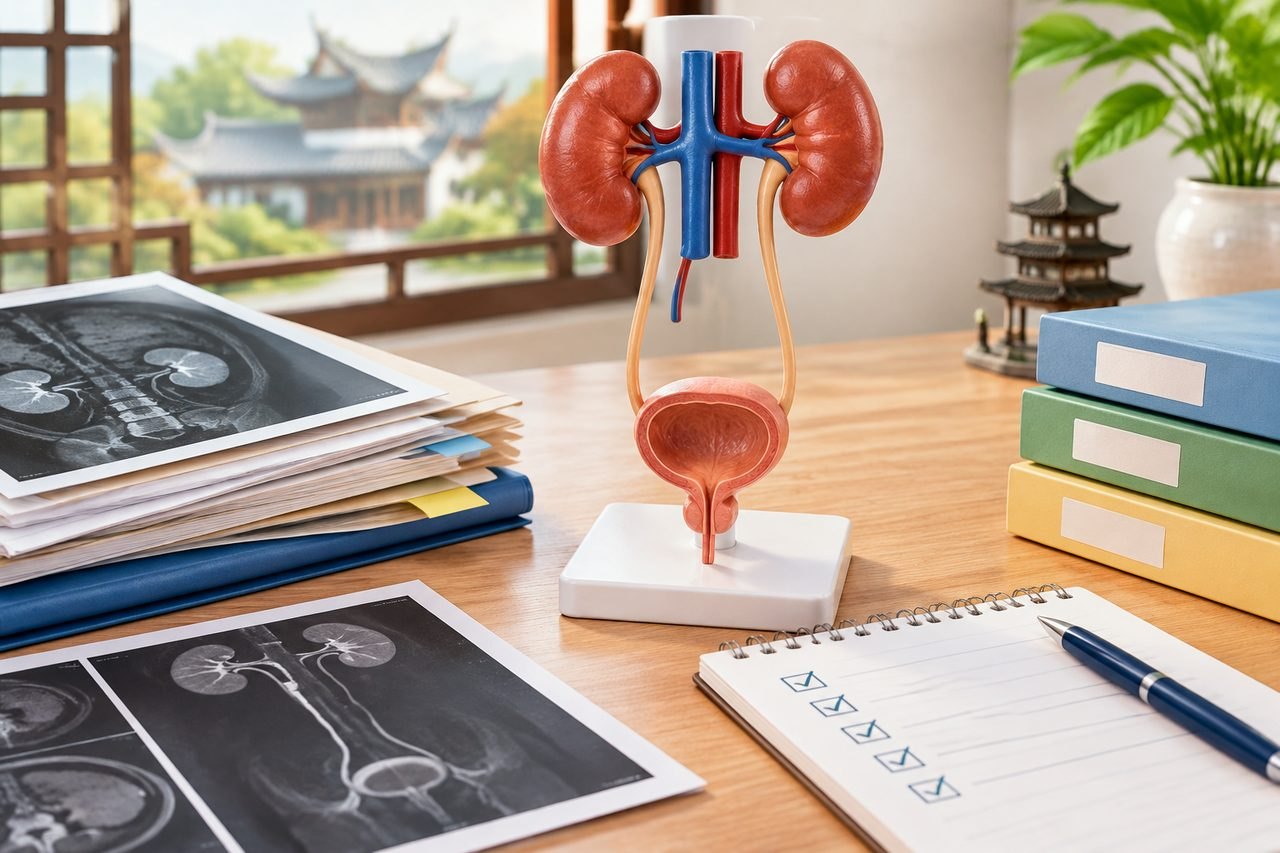
Which Records Matter Most for a Ureteroscopy Plan
A ureteroscopy plan depends on knowing where the stone is, how large it is, whether it is blocking urine flow, and whether infection or kidney function problems are present. The most useful records are usually the ones that answer those questions directly. If you have a CT urogram, non-contrast CT, ultrasound report, or X-ray that shows the stone, that imaging is central. If you do not have the images themselves, the written radiology report is still useful, but it may not let a new urologist measure the stone or assess the ureter independently.
Blood and urine results also matter. A recent kidney function test, a urine culture, and a full blood count help the team understand your current safety profile. If you have had a stent placed, the stent details, placement date, and any removal plan are important. If you have had previous stone treatments, the operation notes and discharge summaries explain what was already done and what might need to be repeated or avoided.
You do not need to send a complete archive before anyone will speak with you. A short summary with the stone location, current symptoms, and the main question is enough to begin. The missing items can be requested in parallel. What matters is that you know which gaps are clinically relevant and which are administrative.
Who to Ask for Each Missing Document
Different records sit with different departments, so one request to the wrong office can waste time. Imaging usually comes from the radiology department or the imaging centre where the scan was performed. Ask for the images on a disc or via a secure link, plus the written report. If you only have a report, ask whether the original images can be released to you or sent directly to the China hospital.
Operative notes, discharge summaries, and clinic letters usually come from the hospital medical records department or the urology clinic that treated you. If a stent was inserted, the stent type, size, and planned removal date may be in the operation note or a follow-up letter. If you are unsure, ask the urology clinic to confirm in writing what was placed and when it should be removed.
Laboratory results come from the laboratory that processed the sample, or from the hospital portal if you still have access. Pathology results, if a stone was analysed, come from the pathology department. In many health systems you have a right to request your own records, but the process and fees vary. Ask each office what they need from you, how long it takes, and whether they can send records directly to an overseas hospital.
How Missing Records Affect the Next Step
A missing record can affect the next step in different ways. If the imaging is missing, the China urologist may not be able to confirm stone size, location, or whether the kidney is obstructed. That can change whether ureteroscopy is even the right procedure, or whether a different approach such as shock wave lithotripsy or percutaneous surgery should be considered. If the urine culture is missing, the team cannot assess whether an active infection needs treatment before any procedure. If the stent details are missing, it may be unclear whether removal is urgent, routine, or already overdue.
A missing record does not always block progress. Sometimes the team can proceed with a provisional plan and request the missing item before a final decision. Sometimes they will ask you to repeat a test in China because the original is too old or not transferable. Sometimes they will ask a specific question that only the original treating team can answer, such as whether a stent was placed and what type it is.
The practical point is to separate what is missing from what is unknown. If you do not have the images, say so clearly. If you do not know whether a stent is still in place, say that too. A clear statement of the gap is more useful than sending an incomplete file without explanation.
Staged Treatment and Stent Removal: Questions to Confirm
Ureteroscopy can be planned as a single procedure or as staged treatment. A temporary ureteric stent may be left in place after surgery, and it may need a later removal appointment. Whether that applies to you depends on the stone, the ureter, the degree of swelling, and the treating surgeon's judgement. You should ask directly whether staged treatment or a stent is proposed, and if so, how removal would be arranged.
Ask who would remove the stent, where, and under what kind of sedation or anaesthesia. Ask whether removal can be done as an outpatient visit or whether it requires another hospital stay. Ask what symptoms would make you seek urgent care before the planned removal. Ask how later stone checks would be arranged, including imaging and clinic follow-up. These are not administrative details; they affect your travel planning and your safety after the procedure.
If you are enquiring from overseas, you may not be able to confirm all of this before you travel. The China hospital will decide suitability after reviewing your records. A remote opinion can explain options, but it does not guarantee that a specific procedure will be performed or that a stent will be removed on a particular date.
What to Send First and What to Ask the China Team
Start with a short summary: your main symptom, when it started, any previous stone treatments, whether you currently have a stent, and your main question. Attach the most recent imaging report, kidney function result, urine culture, and any operation note or discharge summary you already have. If a document is missing, list it as missing rather than leaving it out silently.
Then ask the China team three specific questions. First, which missing records would change your treatment options? Second, can the team request records directly from your original hospital, or do you need to obtain them yourself? Third, if a record cannot be obtained, what alternative information would the team accept, such as a repeat scan in China or a written summary from your treating doctor?
You can also ask whether the team needs the original imaging files or whether a report is enough for an initial review. Ask whether a proxy consultation is needed before an appointment, or whether you can proceed directly to a specialist appointment request. A proxy consultation is optional and is not a prerequisite for every appointment or operation.
Practical Next Step for an Overseas Patient
If you are considering ureteroscopy in China and your records are incomplete, the next step is to send a brief summary and the records you do have. ChinaSpecialistCare can help you identify which documents are missing, request a specialist appointment, and arrange interpretation or hospital navigation if you travel. We do not decide suitability or provide clinical care; the treating hospital and licensed clinicians do.
An initial enquiry is free and does not require buying a proxy consultation. You can ask what the hospital's written estimate includes and what remains undecided. You can ask how stent removal and follow-up checks would be arranged if a stent is placed. You can ask whether a repeat scan in China would be needed before a final plan.
Do not delay urgent local care because you are waiting for records or planning an overseas enquiry. If you have severe pain, fever, vomiting, or difficulty passing urine, seek local medical assessment first. Once you are stable, the records question can be addressed step by step.
Sources & scope of this guide
References and official service information relevant to this guide.
This is general planning information and has not been individually reviewed by a doctor. Medical decisions and personal treatment advice come from your treating clinicians.