What ureteroscopy can actually treat
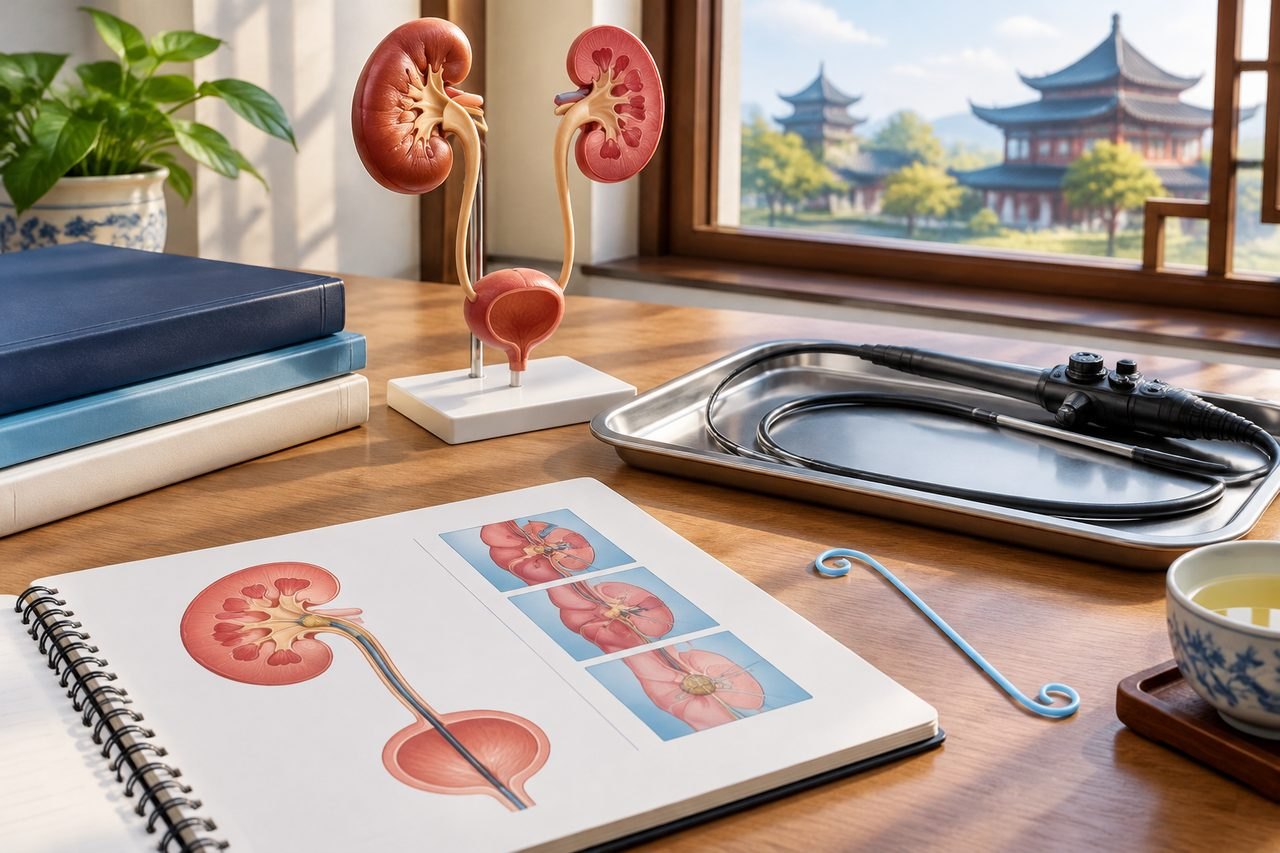
Ureteroscopy is a stone-treatment procedure. A urologist passes a narrow telescope through the bladder and into the ureter, the tube that carries urine from the kidney. Once the stone is visible, it can be broken up with laser energy and the fragments removed or left to pass. A rigid scope reaches the lower ureter well; a flexible scope can be guided higher, including into the kidney, which is why the same procedure is sometimes described as flexible ureteroscopy or retrograde intrarenal surgery.
That scope matters for your decision. If your stone is sitting in the lower ureter, a straightforward ureteroscopy may be enough. If it is in the kidney or in a difficult position, the treating team may need a flexible instrument, a laser, and sometimes a planned second look. The hospital decides which approach fits your imaging and anatomy, not the name of the procedure alone.
Ureteroscopy is not the only stone treatment. Shock wave lithotripsy and percutaneous nephrolithotomy address different stone situations. If you have been told you need ureteroscopy, it is reasonable to ask why this route was chosen over the alternatives for your specific stone.
What ureteroscopy cannot address
Ureteroscopy treats stones. It does not correct the metabolic or anatomical reasons stones keep forming. If your urine chemistry, diet, fluid intake, or a structural abnormality such as a narrowed ureter is driving recurrent stones, removing the current stone does not remove that underlying tendency. You may still need a prevention plan after the procedure.
It also does not treat every stone. Very large kidney stones, stones in certain kidney locations, or stones in a kidney with unusual anatomy may be better handled by percutaneous surgery or another approach. A ureteroscopy may be attempted and then converted or staged if the stone cannot be reached or cleared safely in one session.
Ureteroscopy does not treat infection by itself. If you have an active urinary infection, the treating team will usually want that controlled before instrumenting the urinary tract. It also does not replace assessment of symptoms that are not caused by stones, such as pain from another source or blood in the urine that needs its own evaluation.
Finally, it does not guarantee that you will be stone-free. Residual fragments can remain, and follow-up imaging is often needed to see what is left. The treating clinician should tell you what a realistic result looks like for your stone burden.
Staged treatment and the stent question
Ureteroscopy can be a single procedure, but it can also be staged. Staging means the team plans more than one session, either because the stone burden is large, because access needs to be established first, or because the first attempt could not safely clear everything. If you are travelling to China for care, ask directly whether staged treatment is proposed and what the second stage would involve.
A temporary ureteric stent is common after ureteroscopy. The stent is a thin tube placed inside the ureter to keep urine flowing while swelling settles. It is temporary, but it usually requires a later removal appointment. That appointment is not optional admin; it is part of the treatment plan. Ask how and where the stent would be removed, and whether removal can happen before you return home or would need to be arranged locally.
The stent can cause urinary symptoms, discomfort, or urgency while it is in place. Ask the treating team what symptoms to expect, what would be a reason to seek urgent care, and who to contact. Do not assume you can simply remove it yourself or ignore a planned removal date.
If a stent is placed, your travel plans need to account for the removal. Ask whether the removal is a short clinic visit or a procedure, and what the hospital's written plan says about timing.
Individual differences that change the plan
Two patients with the same stone size can need different plans. Stone location, stone hardness, kidney anatomy, previous surgery, infection status, and other medical conditions all affect whether ureteroscopy is suitable and how many sessions are needed. A stone in a lower ureter is not the same problem as a stone in a lower-pole kidney calyx.
Your records matter here. Imaging that shows the stone's position and size, any previous stone treatments, urine test results, and a list of your current medicines and allergies give the treating team the information they need to judge suitability. If you have had a stent before, say so and explain what happened.
Ask the treating clinician what they need to confirm before recommending ureteroscopy for you. If a record is missing, ask whether it changes the plan or whether the team can proceed with what is available. Do not assume that a remote opinion is the same as a final decision; the hospital decides suitability after reviewing your case.
If you have a bleeding disorder, take blood-thinning medicine, or have a urinary infection, tell the team early. These factors can change whether the procedure can go ahead and what preparation is needed. Do not stop or change any medicine on your own.
Follow-up and later stone checks
After ureteroscopy, follow-up usually includes imaging to check whether stones remain and to look for complications. The timing and type of imaging are clinical decisions. Ask what follow-up is planned, what it is looking for, and whether it can be done after you return home.
If you are an international patient, the practical question is how the treating hospital will hand over your follow-up. Ask for a written summary of what was done, what was found, what was left, and what needs checking. Ask whether the hospital can provide imaging or reports in a format your local clinician can use.
Recurrent stones are a long-term issue. If you form stones repeatedly, ask about a prevention plan: fluid intake, dietary changes, and whether urine or blood tests are needed. These are clinical recommendations, so they should come from your treating team, not from a general article.
Do not delay urgent care. If you develop severe pain, fever, inability to pass urine, or worsening symptoms, seek local medical care rather than waiting for an overseas appointment.
Preparing your enquiry about ureteroscopy in China
If you are considering ureteroscopy in China, start with a short summary rather than a complete medical archive. Describe your main stone problem, when it started, what imaging you have, and what you have already been told. The initial enquiry is free and is used to check whether your question can be routed to a relevant hospital or specialist.
Ask the hospital or coordinator these specific questions: Is ureteroscopy suitable for my stone? Is staged treatment proposed? Is a stent planned, and how would removal be arranged? What records do you need from me? What follow-up is planned, and can it be done locally? What does the written estimate include, and what is paid separately?
The hospital decides suitability, and a remote review does not guarantee acceptance or a particular outcome. A proxy consultation is optional and is not required before every appointment. If you want a records-based opinion before travelling, ask what the review can and cannot establish.
ChinaSpecialistCare can help you prepare records, understand the appointment route, and coordinate practical arrangements. The relevant procedure reference is Ureteroscopy & Laser Stone Treatment. When you are ready, send a brief summary through the enquiry form, email, or WhatsApp and ask what the next step should be.
Sources & scope of this guide
References and official service information relevant to this guide.
This is general planning information and has not been individually reviewed by a doctor. Medical decisions and personal treatment advice come from your treating clinicians.