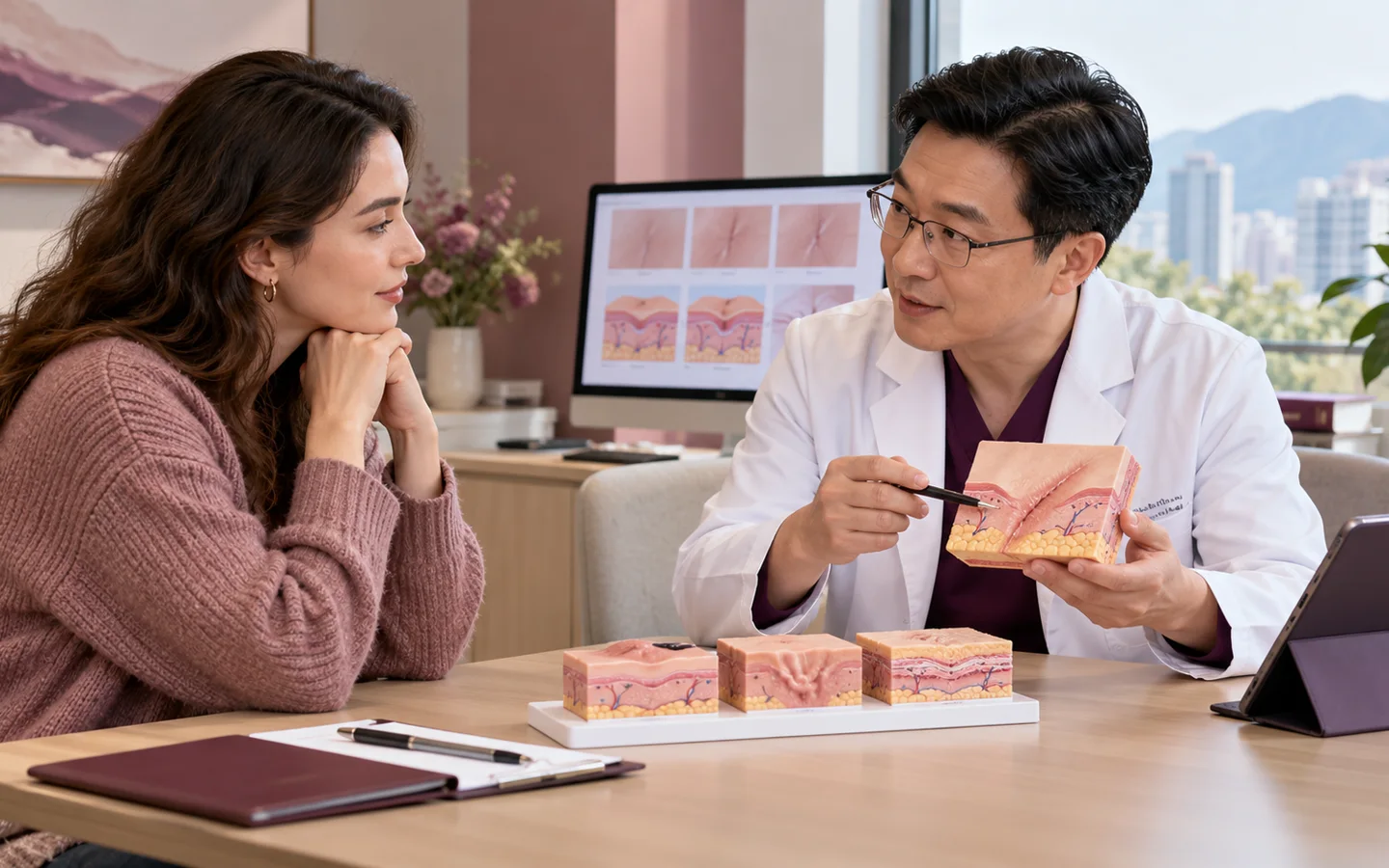
Laser and Skin Reconstruction: diagnosis, function and long-term planning
Laser and Skin Reconstruction is considered when scar, vascular change, pigment, surface damage or skin defect has a diagnosis that can benefit from device treatment or reconstruction.
Laser wavelength, energy and depth must match the target and skin response; deeper tissue loss, unstable wounds or functional distortion may require graft, flap or staged surgery instead of repeated resurfacing.
Who may be considered?
Specialist review may help when a skin or scar problem persists and treatment options need diagnosis-specific comparison.
- Selected hypertrophic or erythematous scars.
- Vascular or pigment problems suitable for a medical laser.
- Texture change or contracture needing combined resurfacing and surgery.
- A stable defect requiring graft or local tissue reconstruction.
What the specialist team must confirm
Review diagnosis, skin type and pigment history, standardized photographs, scar depth and motion, previous laser and isotretinoin or photosensitizing medicines, infection history, sun exposure, wound stability and expectations.
Key points for this treatment

From skin diagnosis to controlled remodeling or reconstruction
A staged plan can combine laser, injection, surgery and rehabilitation without treating every visible difference at once.
Skin response is judged after inflammation settles
Redness, swelling, crusting or dressing care varies by depth, and strict sun protection reduces pigment complications.
Texture, color, scar symptoms, motion and recurrence are compared with baseline, with intervals allowing complete healing before retreatment.

Risks, limits and realistic expectations
Risks include burns, infection, prolonged redness, lighter or darker pigment, acne or herpes flare, worsening scar, incomplete response, contour change and need for repeated treatment.
Increasing pain, blistering beyond expectation, spreading redness, fever, pus, eye symptoms or rapidly darkening skin needs urgent medical review.