
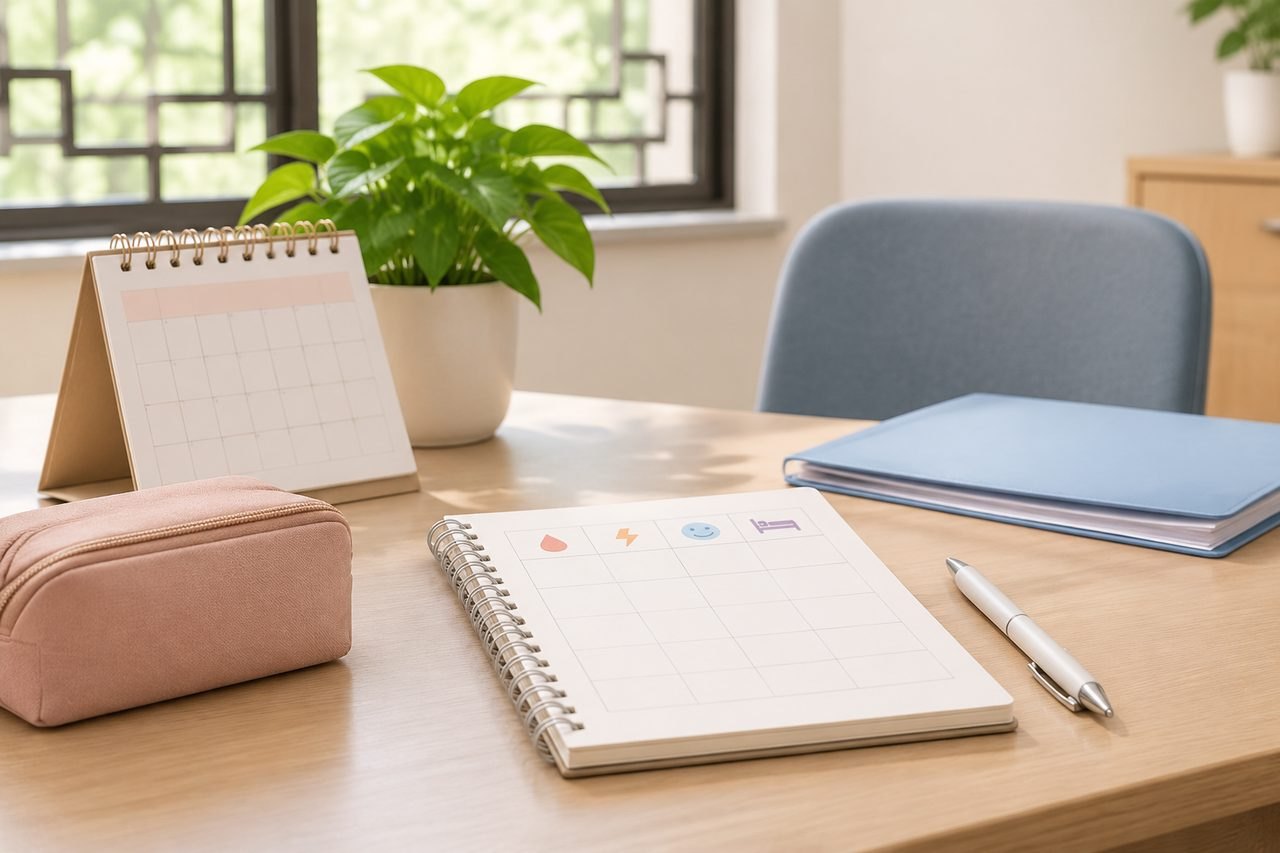
What the diary is for, and what it cannot do
Endometriosis symptoms can resemble other conditions, and the NHS notes that diagnosis may involve several tests, including ultrasound, MRI and laparoscopy. A diary does not shorten that process by itself. Its job is to give the specialist a structured account of your pattern instead of a rushed recollection in a short appointment.
That matters for an overseas consultation, where language and time pressure can make it hard to describe years of symptoms. A clear record lets the clinician see frequency, severity and impact, then ask sharper follow-up questions. It does not establish a diagnosis, and it should not be used to self-treat or to delay assessment of severe or worsening symptoms.
Keep the diary factual. The clinician interprets it.
What to record each day
Aim for a short daily entry rather than a long essay. The most useful diaries capture the same few items consistently, so patterns become visible across cycles. Decide on one format before you start and keep it for the whole recording period; switching between a phone app, a notebook and loose notes halfway through makes the pattern harder to read.
Record the date and the cycle day, counting the first day of bleeding as day one. Mark the days you bled, roughly how heavy the flow was, and whether you passed clots. A simple description works better than a number you cannot reproduce later: light, moderate, heavy, or a note that you changed protection more often than you would on a usual day. If you had spotting or bleeding between periods, note those dates separately so they are not confused with the start of a new cycle.
For pain, write down where it was, how intense it felt on a scale you use the same way every time, and what it stopped you doing. A pain score of 7 means little on its own; a score of 7 that kept you in bed and made you cancel work tells the clinician something. Note whether the pain came in waves or stayed constant, how long an episode lasted, and whether it eased on its own, with heat, with rest or with medicine.
Pay attention to pain tied to specific activities, because the location and timing can help the clinician think about which structures are involved. Note pain during or after sex, pain when passing urine or stool, pain with bowel movements around your period, and pain that worsens with movement or standing. These details are often the ones patients forget in a short appointment and the ones a specialist will ask about directly.
Record other symptoms you notice, even if they seem unrelated: fatigue, bloating, nausea, low mood, headaches, or pain in the lower back, legs or elsewhere. Note the days they appeared so the clinician can see whether they cluster with bleeding or pain. If you track sleep, note the nights when pain or symptoms disrupted it, since that affects how much the pattern interferes with daily life.
List any medicines you took for pain or hormones, with the name, dose and whether they helped. Include over-the-counter painkillers, hormonal treatment and anything prescribed for related symptoms. If you stopped a medicine, note when and why, but do not change or stop prescribed treatment in order to produce a cleaner diary; that decision belongs to the treating clinician.
Keep the daily entry to a couple of minutes. A long, detailed log that you abandon after two weeks is less useful than a short one you can keep for several cycles. If you miss a day, leave it blank rather than reconstructing it from memory, and note anything unusual that happened, such as a heavy bleed, a severe pain episode or a visit to a local doctor.
If writing every day is unrealistic, a weekly summary that still captures bleeding days, pain scores and impact on work or sleep can work, provided you note the dates. Tell the clinician how you recorded the information so they can interpret it correctly. The diary is a tool for the consultation, not a test you can fail.
- Date and cycle day, with the first day of bleeding marked.
- Bleeding: flow description, any clots, and whether you changed protection unusually often.
- Pain: where it was, its intensity on a simple scale you use consistently, and what it stopped you doing.
- Pain tied to specific activities, such as passing urine or stool, sex, or movement.
- Other symptoms you notice, such as fatigue, bloating, low mood or pain in other areas.
- Medicines taken for pain or hormones, with the dose and whether they helped.
- Any bleeding or pain between periods.
Turning daily notes into a summary the specialist can use
A clinician cannot read months of daily entries in a short visit. Add a one-page summary at the front: how many cycles you recorded, the typical pattern of pain and bleeding, the worst episodes, and the symptoms that affect work, sleep or relationships most.
Note what you have already tried and what happened. If you used painkillers or hormonal treatment, record the type, how long you used it and whether symptoms changed. The NHS lists painkillers and hormonal medicines among options, and surgery for some cases, but suitability depends on your situation, including whether you are trying to conceive. Do not change or stop prescribed treatment to fit the diary; ask the treating clinician.
Flag anything that needs urgent local care rather than travel planning, such as severe new pain, heavy bleeding or breathing symptoms. Those should be assessed where you are.
Which records to bring alongside the diary
The diary works best with your existing clinical documents. Gather what you have: previous consultation letters, imaging reports and images if available, operation or laparoscopy notes, pathology results, and a list of current medicines with doses. If records are in another language, ask the receiving hospital what translation or interpretation it can arrange, and confirm this rather than assuming.
The treating team decides whether further tests are needed in China. Do not order scans or tests in advance on the assumption they will be required; ask the hospital what it wants before you travel. A records-based opinion can be arranged while you remain at home, but it is optional and does not guarantee hospital acceptance or a treatment plan.
Questions the diary helps you ask in China
Use the diary to prepare specific questions rather than a general request for help. For example: does my pain pattern suggest endometriosis, adenomyosis or another cause, and which tests would distinguish them? Which treatments fit my symptoms and my plans around fertility? What are the risks and side effects of each option? If surgery is discussed, what would it involve and what follow-up would I need?
Also ask practical questions: what the hospital's written plan and fee quote cover, what language support is available, and what the clinician needs from you before any procedure. These are questions for the named provider, not assumptions you should make from a website.
A practical next step
Start the diary now, keep it simple, and bring the summary plus your existing records to any consultation. If you would like help identifying a suitable gynaecology route in China, you can send a brief summary through the free initial case review; our team checks the available information and suggests a next step. This is not a diagnosis or a promise of acceptance, and the hospital decides suitability. You can also read about planning care in China before deciding whether to travel.
Sources & scope of this guide
References and official service information relevant to this guide.
This is general planning information and has not been individually reviewed by a doctor. Medical decisions and personal treatment advice come from your treating clinicians.