
What a prostate cancer pathology review actually checks
Prostate cancer treatment decisions rest heavily on the pathology report from the diagnostic biopsy. The Gleason score, now usually expressed as Grade Group, describes how the cancer cells look and correlates with how aggressive the cancer is likely to behave. The number of biopsy cores involved, the proportion of each core containing cancer, perineural invasion and other features also inform risk grouping. When those details are unclear, incomplete or inconsistent with the clinical picture, a second pathologist can re-read the same slides and issue an independent interpretation.
This is a records-based exercise. The reviewing pathologist examines material that already exists rather than performing a new biopsy. That distinction matters: a review can refine the description of the cancer, but it does not create new tissue evidence and cannot settle every question. If the original biopsy sampled only part of the prostate, or if the slides are limited, the review is limited too. The treating urologist or oncologist remains responsible for deciding whether further sampling or imaging is needed.
A review is most useful when the original report is ambiguous, when the Grade Group sits at a boundary that changes management, when the biopsy was read at a small laboratory, or when the patient is considering a major step such as surgery or radiotherapy and wants the diagnosis independently checked. It is less useful when the original report is complete, internally consistent and already reviewed by a specialist centre. Ask the receiving clinician whether a review would change anything in your case before arranging one.
The records a reviewing pathologist needs
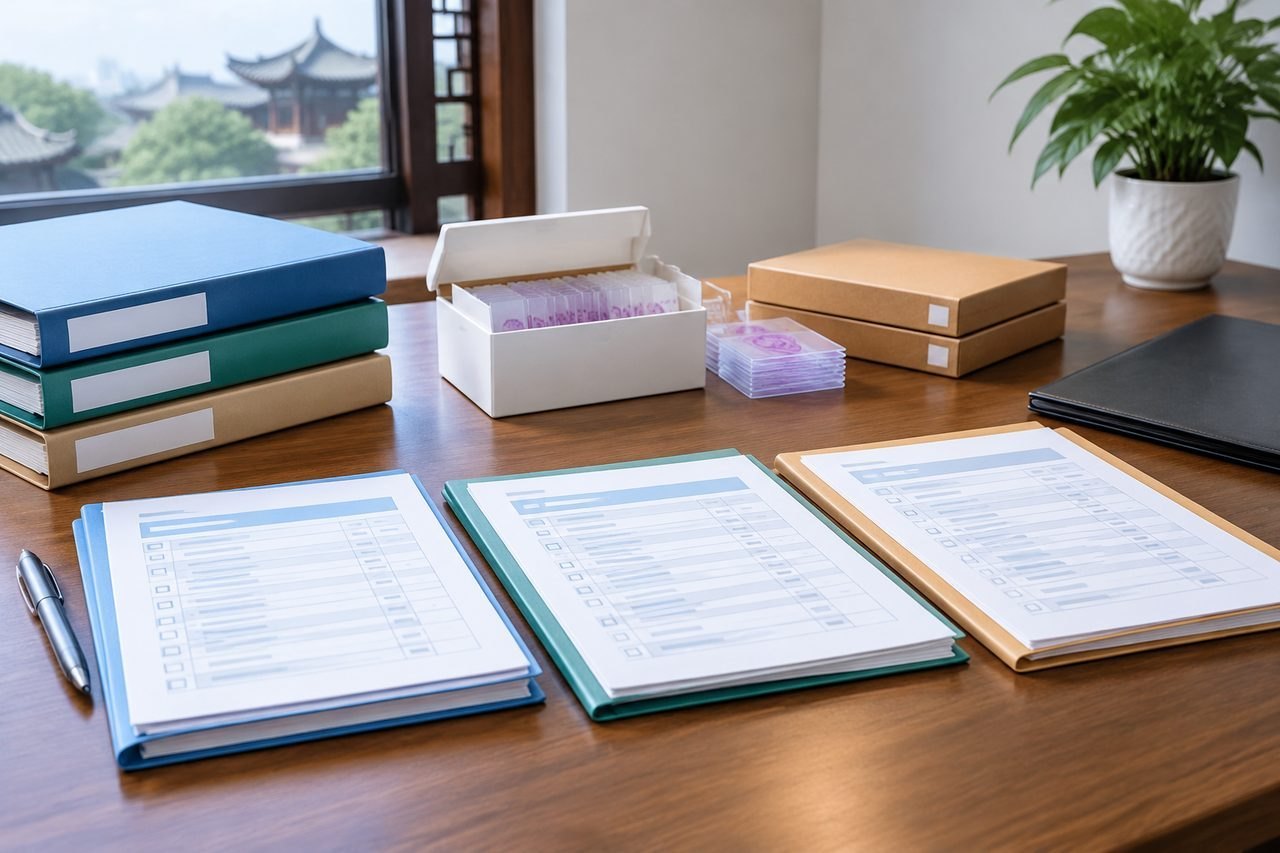
Pathology review depends on physical material, not only paperwork. The reviewing laboratory generally needs the original glass slides, and often the paraffin blocks from which new sections or stains can be cut. A written report alone lets a pathologist comment on the recorded findings but not independently verify them. Ask your diagnosing hospital what it can release and in what form, because slide and block release policies differ between laboratories and countries.
Alongside the slides, send the full original pathology report, including any addendum, immunohistochemistry results and the number of cores sampled. Clinical context helps the reviewer interpret the material: PSA history, digital rectal examination findings, imaging reports such as MRI, age and relevant comorbidity. A short summary of the question you want answered is more useful than a large unsorted file. If some items are unavailable, say so rather than waiting for a complete archive before anyone looks at the case.
Courier and customs arrangements for biological material are a separate practical matter. Glass slides and blocks are not ordinary documents, and transport requirements are set by the carriers and the authorities involved, not by a coordination service. Ask the sending laboratory and the receiving hospital what documentation and packaging they require. Do not assume that material can simply be carried in luggage.
What the review report can and cannot settle
A pathology review report typically restates the diagnosis, the tumour type, the Grade Group and the extent of involvement in the sampled tissue, and notes whether it agrees with the original interpretation. Where there is disagreement, the report should explain the reasoning. That document then feeds into risk stratification and discussion of treatment options such as active surveillance, radical prostatectomy or radiotherapy.
What the report cannot do is decide your treatment. Grade and stage information is interpreted alongside PSA, imaging, life expectancy and your own priorities. A review also cannot establish that a particular hospital will accept you, that a specific operation is available, or that any treatment will succeed. Those are clinical and administrative decisions for the treating team. Treat the review as one input into a conversation, not as a verdict.
Disagreement between pathologists is possible and does not by itself mean one report is wrong. Prostate biopsy interpretation involves judgement, particularly at grade boundaries. Ask the treating clinician how a discrepancy would be handled and whether it would prompt additional staining, a further opinion or repeat sampling. The answer depends on your individual case.
How a review fits into planning care in China
For an international patient considering treatment in China, a pathology review can happen before travel. The slides and reports are sent to a Chinese hospital's pathology department, and a report is issued for the treating clinicians to consider. This allows a more informed first consultation and can reduce the risk of arriving with a diagnosis that the receiving team wants to re-examine first. It does not remove the need for the treating team to assess you in person.
Ask the hospital you are approaching whether its pathology department accepts external slides for review, what material it requires, whether it will return the slides, and what the report will contain. Ask who will discuss the result with you and in what language. These are practical questions with hospital-specific answers; do not assume a standard process applies across institutions.
ChinaSpecialistCare can help identify a suitable hospital and coordinate a pathology review request as part of planning care. The hospital and its pathologists make the clinical judgement. Our team can help with the practical exchange of records and with appointment arrangements, and the relevant reference page explains the review route in more detail.
Questions to put to the treating team
Bring a short written list to the consultation. Ask whether the original pathology has been reviewed, what the Grade Group is and how confident the pathologist is, and whether any feature in the report changes the recommended options. Ask what additional tests, imaging or sampling the team considers necessary and why. Ask how the review result compares with the original and what would happen if they differ.
It also helps to ask about the practical sequence: which records the hospital still needs, whether the slides must be present before a treatment decision, and who will explain the plan to you. If you are comparing hospitals, ask each one the same questions so the answers can be compared on like terms. A written summary of your own history and priorities makes these conversations more efficient.
A realistic next step
Start with a free initial enquiry. Send a brief summary of the diagnosis, the main question you want answered and what records you currently hold. The team can check what is available, point out missing items and suggest whether a pathology review, a specialist appointment or another step fits your situation. An initial enquiry is not a diagnosis and does not commit you to a proxy consultation or any paid service.
If you later decide to proceed, the hospital's own assessment and written confirmation of its plan and fees apply. Keep your local clinicians informed throughout, and seek urgent local care for any new or worsening symptoms rather than delaying for overseas planning.
Sources & scope of this guide
References and official service information relevant to this guide.
- radiotherapy
- Related treatment reference
- EAU Guidelines on Prostate Cancer
- NCI Prostate Cancer Treatment (PDQ)
- NICE guideline NG131: Prostate cancer diagnosis and management
This is general planning information and has not been individually reviewed by a doctor. Medical decisions and personal treatment advice come from your treating clinicians.