
What a pre-ESD second opinion is actually reviewing
ESD is an endoscopic technique for removing selected superficial lesions of the gastrointestinal tract by dissecting beneath the lesion within the wall, rather than cutting through the full thickness as surgery would. Whether it is appropriate depends on what the lesion is, where it sits, how deep it reaches and whether it has spread. Those are the questions a second opinion should address, and they are answered from images and tissue, not from a diagnosis label alone.
A useful second opinion is therefore not a general 'is this a good hospital' conversation. It is a focused review: does the material support the proposed indication, is the lesion described in enough detail to judge resectability endoscopically, has staging been handled, and are the alternatives (surveillance, surgery, another endoscopic technique) genuinely on the table. A reviewer working only from a typed report is limited, because the report may not describe the features that decide the case.
It also helps to be clear about what kind of opinion you are buying. A free initial case review by a coordination team is administrative: it checks whether records are present and what the next step might be. A clinical second opinion is given by a licensed specialist who reviews the file and comments on the clinical question. These are different products with different limits, and neither one is the same as the hospital's own pre-procedure assessment.
The records that make a review worthwhile
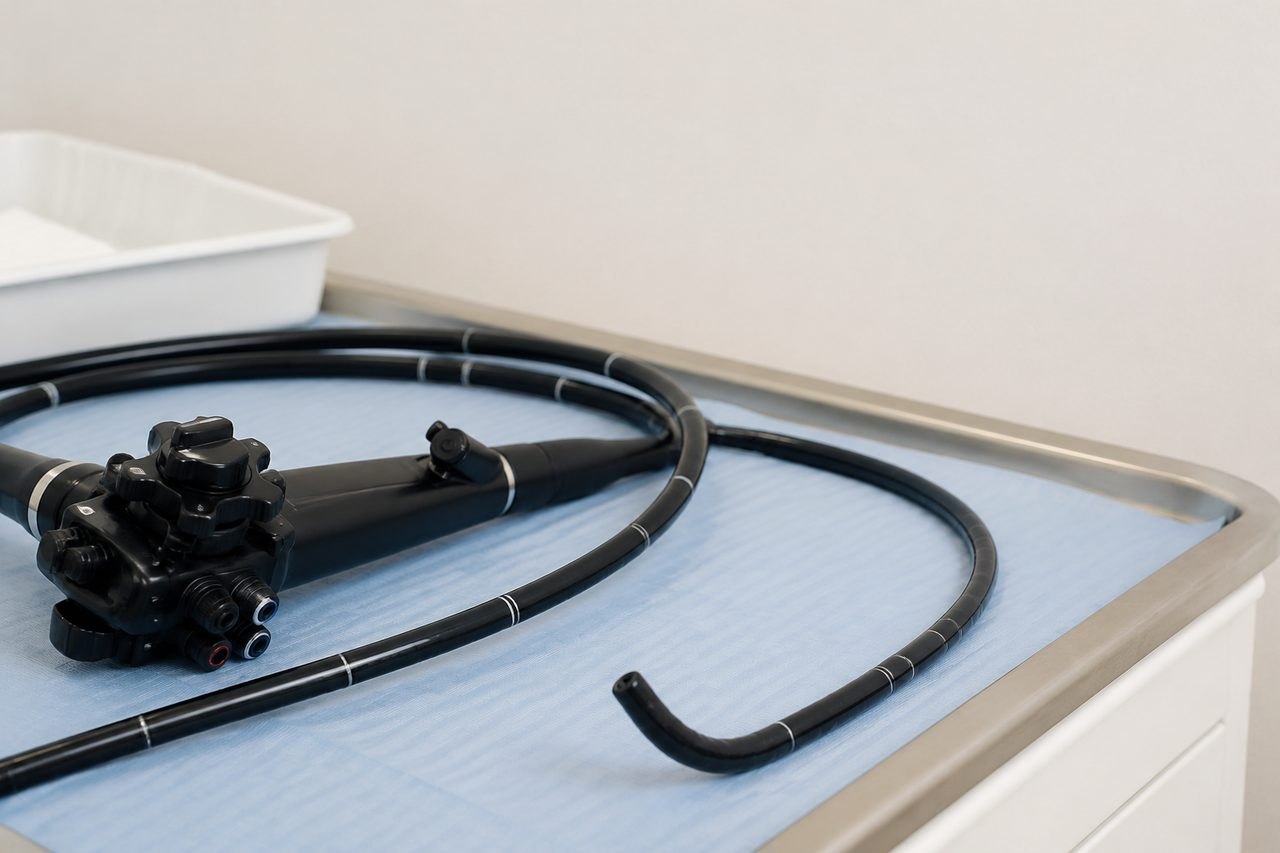
The single most valuable item is usually the original endoscopy images or video, not the written report. Endoscopists judge lesion morphology, surface pattern, size and location from the images; a report that says 'a lesion was seen' gives a reviewer little to work with. Ask the endoscopy unit whether images or a video clip can be exported, and whether the endoscope model and image-enhancement settings are recorded.
Next comes histopathology. The original pathology report, and where possible the slides or a block for re-review, lets a second pathologist confirm the diagnosis and comment on features that influence ESD suitability. If the lesion has not yet been biopsied, that is itself a question for the treating team rather than something to arrange independently.
Staging material matters when malignancy is suspected or confirmed. That may include endoscopic ultrasound, CT or other imaging the team has already requested. Do not commission new tests for a second opinion on your own initiative; ask the reviewing clinician which existing studies are adequate and whether anything further is genuinely needed. A file is rarely 'complete' in an absolute sense, and a reviewer can still comment usefully while flagging gaps.
Practical items are easy to overlook: a list of current medicines, especially anticoagulants or antiplatelet drugs, allergies, previous abdominal surgery and any implanted devices. These affect procedural planning and sedation discussions. A short chronological summary you write yourself, one page, saves the reviewer time and reduces the chance that a key event is buried.
- Original endoscopy images or video, plus the written report
- Original histopathology report and, if possible, slides or block for re-review
- Existing staging imaging the treating team has already arranged
- Current medicines, allergies, surgical history and implanted devices
- A one-page timeline of investigations and decisions so far
Questions to put to the reviewing clinician
A second opinion is more useful when you arrive with specific questions rather than 'what do you think'. The reviewer can then address the decision you actually face. Write the questions down before the consultation and keep them to the few that would change your next step.
Ask what the lesion is and how confident the reviewer is in that diagnosis, and on what evidence. Ask whether the lesion appears confined to the superficial layers on the available material, and what would make the reviewer doubt that. Ask what the alternatives are, including surveillance and surgery, and what the trade-offs are between them in your situation. Ask what the reviewer would want to know before agreeing to ESD, and whether the existing file answers those points.
It is reasonable to ask about the reviewer's own experience with this procedure and this type of lesion, and about how the opinion will be documented. A written summary you can take back to your treating team is more useful than a verbal impression. It is also fair to ask directly what the second opinion cannot tell you, because that sets realistic expectations about what still has to be decided locally.
What a second opinion cannot settle
A records-based opinion does not establish that ESD is technically feasible in your case, that the lesion will be completely removed, or that you will avoid surgery. Those judgements depend on the procedure itself and on findings at the time. A reviewer who has not examined you and is not performing the procedure is offering a view on the evidence, not a guarantee.
It also does not grant hospital acceptance or a place on an operating list. The receiving hospital makes its own assessment, may request further tests, and may reach a different conclusion from the remote reviewer. If you are considering care in China, treat a second opinion as one input into that hospital's decision, not as a substitute for it.
Finally, a second opinion is not a way to avoid the consent conversation. Before any sedation or procedure, you should understand the proposed plan, the alternatives, the risks the treating team considers relevant to you, and what follow-up and surveillance will involve. Those discussions belong with the clinicians who will carry out the procedure, and they should happen while you are alert enough to take them in.
Using a second opinion to plan care in China
If you are weighing ESD at a Chinese hospital, the second opinion can help you decide what to ask that hospital and what to send. ChinaSpecialistCare's confirmed services include specialist matching and appointment coordination, and case-specific hospital and treatment coordination after a hospital has accepted the patient. A proxy consultation, in which our doctor takes your records to a relevant hospital specialist for a records-based opinion while you remain at home, is available as an optional step; it is not a prerequisite for an appointment or a procedure.
An initial enquiry is free and asks for a brief summary, not a complete medical archive. After first contact, the team can explain how to share records securely. The hospital, not the coordination team, decides suitability, what further tests are needed and what the written treatment plan and fee scope will contain. Ask the named hospital what its quote covers rather than assuming inclusions.
For general orientation on the procedure itself, the ESD reference page and the digestive disease specialty page are the relevant starting points. Neither replaces the clinical review of your own file.
A practical next step
Gather the endoscopy images, pathology and existing imaging first, then write your two or three decision questions. Send a short summary through the enquiry form, email or WhatsApp; the team will explain what else is useful and which route fits your question. Keep the second opinion in proportion: it informs your decision, while the treating hospital and its clinicians remain responsible for assessing suitability and for the procedure itself.
Sources & scope of this guide
References and official service information relevant to this guide.
- Related treatment reference
- Endoscopic Submucosal Dissection (ESD) of the upper digestive tract - Leeds Teaching Hospitals NHS Trust
- Endoscopic Submucosal Dissection (ESD) for Colorectal Growths - North Tees and Hartlepool NHS Foundation Trust
This is general planning information and has not been individually reviewed by a doctor. Medical decisions and personal treatment advice come from your treating clinicians.