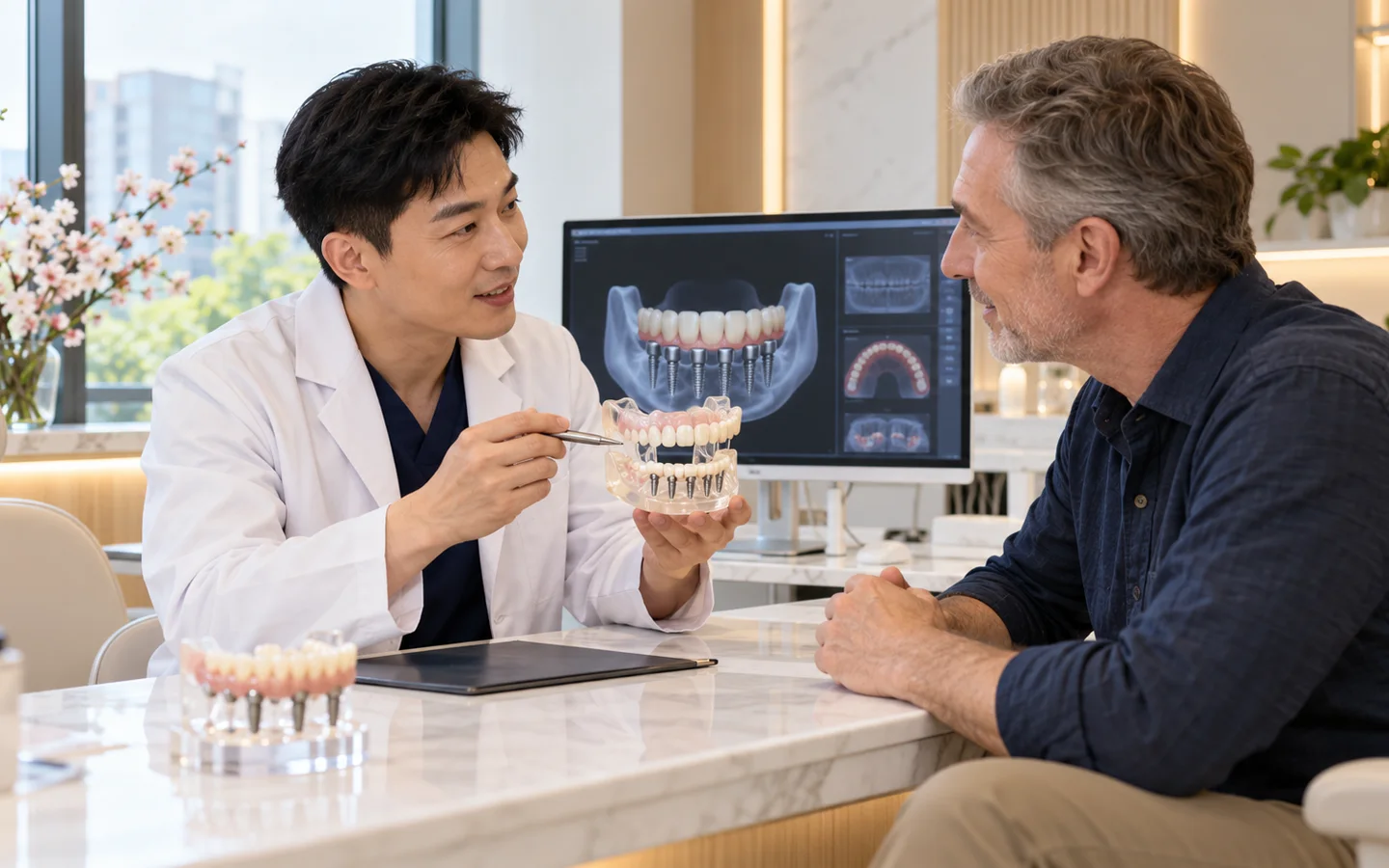
All-on-4 Full-Arch Implants: diagnosis, function and long-term planning
All-on-4 Full-Arch Implants is considered when a failing or edentulous arch may be rehabilitated with a fixed implant-supported prosthesis and the patient understands alternatives.
The number and distribution of implants, bone quality, opposing bite, smile line, speech, hygiene access and backup plan for implant loss matter more than a marketing label.
Who may be considered?
Specialist review may help when many teeth are missing or have poor prognosis and removable versus fixed full-arch options need comparison.
- A fully edentulous arch with suitable anatomy.
- Multiple teeth with documented hopeless prognosis.
- A patient able to maintain a bulky prosthesis and implants.
- A patient who understands provisional and final stages.
What the specialist team must confirm
Review individual tooth prognosis, periodontal status, CBCT, jaw relation, lip support, smile display, phonetics, opening, parafunction, medical risk, expectations and the ability to clean beneath a fixed bridge.
Key points for this treatment

From whole-mouth diagnosis to a maintainable fixed arch
The plan should include temporary teeth, healing, final material, repair access and what happens if an implant does not integrate.
Provisional teeth protect the plan while tissues change
A provisional bridge may be adjusted for swelling, speech, bite and hygiene while implants integrate.
Professional maintenance, component checks and home cleaning under the arch are essential, with night protection when parafunction is present.

Risks, limits and realistic expectations
Risks include implant failure, infection, nerve or sinus injury, bone loss, speech or aesthetic dissatisfaction, food trapping, component fracture, bite overload and loss of additional bone during extractions.
Rapid swelling, fever, uncontrolled bleeding, persistent numbness, severe pain, unstable bridge or difficulty swallowing requires urgent dental assessment.