
Aortic aneurysm planning begins with anatomy and natural history
An aneurysm is an abnormal enlargement of the aorta. Rupture or dissection risk varies with location, diameter, growth, symptoms, body size and genetic or valve-related conditions.
Open surgery replaces the weakened segment with a graft; selected descending or thoracoabdominal disease may be treated endovascularly or with hybrid methods. Surveillance is appropriate when intervention risk exceeds current aneurysm risk.
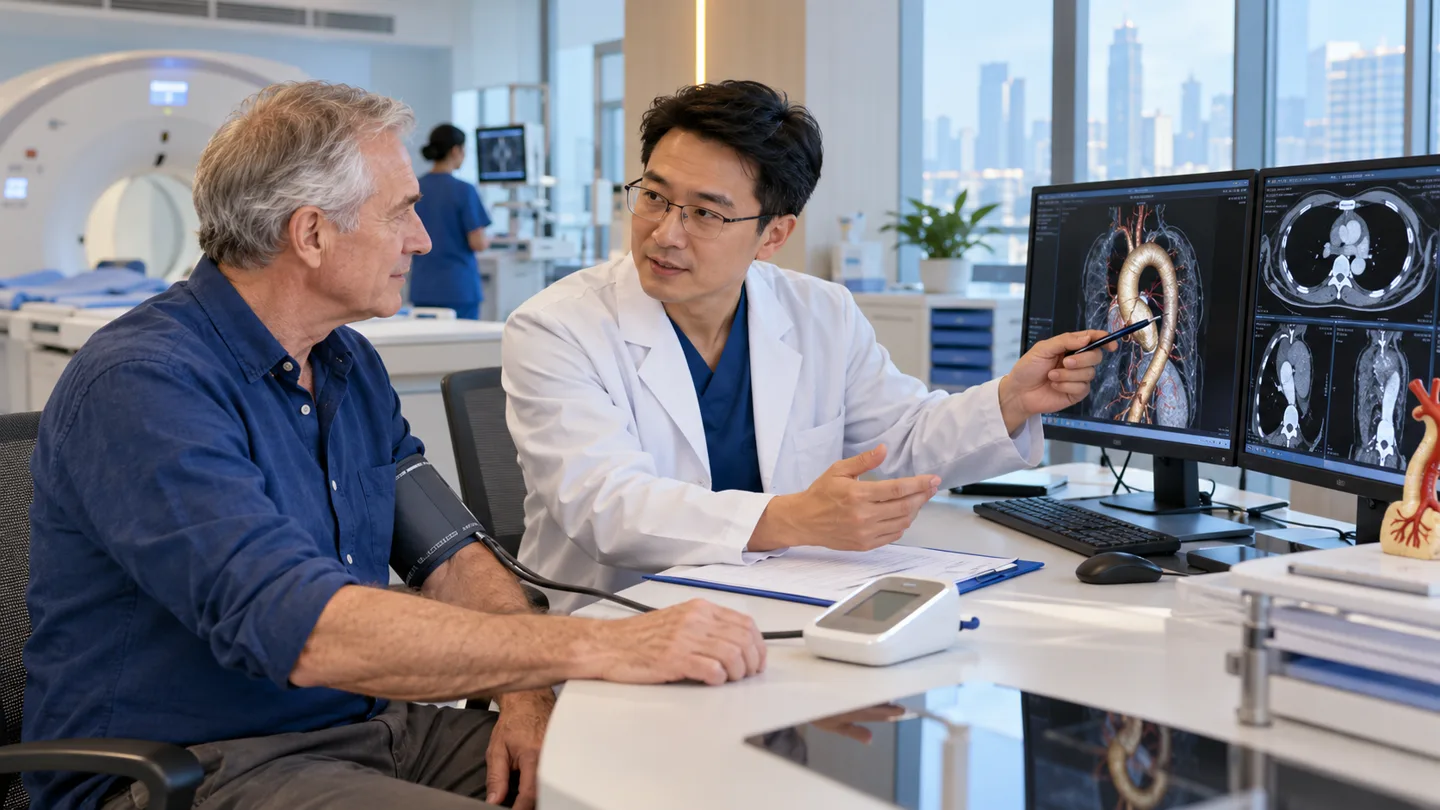
Comparisons should use original CT or MRI images, the same anatomical landmarks and a documented measurement method—not report wording alone.
Who may be considered?
Specialist review may help when the diagnosis, symptoms and previous treatment create a focused question about aortic aneurysm repair.
- An aneurysm reaching an intervention threshold for its location and risk profile.
- Rapid enlargement, pain or features concerning for instability.
- Connective-tissue disease, bicuspid valve or family history that changes timing.
- Complex aortic anatomy requiring open, endovascular or hybrid planning.
What the specialist team must confirm
The aortic team reviews gated CT or MRI, full aortic extent, branch vessels, valve and coronary anatomy, genetic and family history, blood pressure, kidney and lung function, prior aortic operations and emergency symptoms.
Key points for this treatment

From serial imaging to a segment-specific repair plan
The team balances the estimated risk of rupture or dissection against the immediate and long-term risks of intervention.
Repair does not end aortic surveillance
Early care monitors bleeding, kidney and spinal-cord function, circulation, breathing and blood pressure. Recovery differs markedly between open and endovascular treatment.
Later imaging checks grafts, stent seals, branch vessels and untreated aortic segments. Blood-pressure control and family screening may remain important.
Risks, limits and realistic expectations
Repair risks include bleeding, stroke, kidney injury, spinal-cord ischemia, organ or limb ischemia, infection, endoleak, reintervention and death. Endovascular repair reduces some early burdens but requires reliable imaging surveillance.
Sudden severe chest, back or abdominal pain, collapse, weakness or stroke-like symptoms may indicate rupture or dissection and require emergency local care.