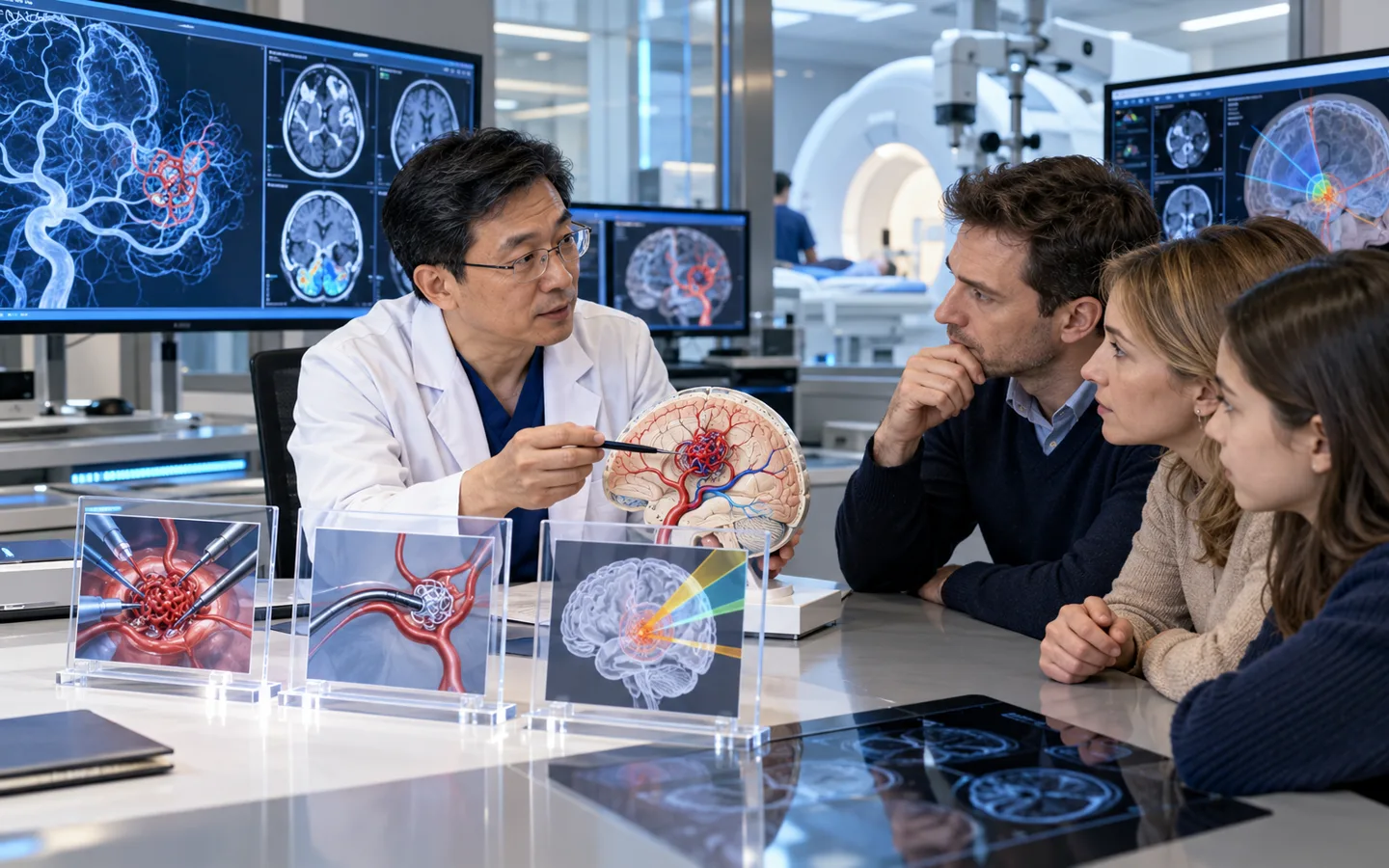
Brain AVM decisions balance treatment risk against future hemorrhage risk
An arteriovenous malformation shunts blood directly from arteries to veins through an abnormal network. It may present with hemorrhage, seizure, headache or an incidental scan.
Microsurgery can eliminate selected accessible AVMs immediately. Embolization may support surgery or treat specific features, while stereotactic radiosurgery works gradually. Some lesions are safer to observe.
Ask whether each embolization session is intended as definitive treatment, preoperative preparation or targeted risk reduction.
Who may be considered?
Specialist review may help when the diagnosis, symptoms and previous treatment create a focused question about brain arteriovenous malformation treatment.
- A ruptured AVM after emergency stabilization.
- An accessible compact AVM with acceptable surgical risk.
- Seizures or neurologic symptoms attributable to the AVM.
- A complex lesion requiring staged multimodal review.
What the specialist team must confirm
The team reviews MRI, CT after hemorrhage, catheter angiography, nidus size and compactness, arterial feeders, deep or superficial drainage, associated aneurysms, eloquent location, prior treatment, seizures and baseline neurologic function.
Key points for this treatment
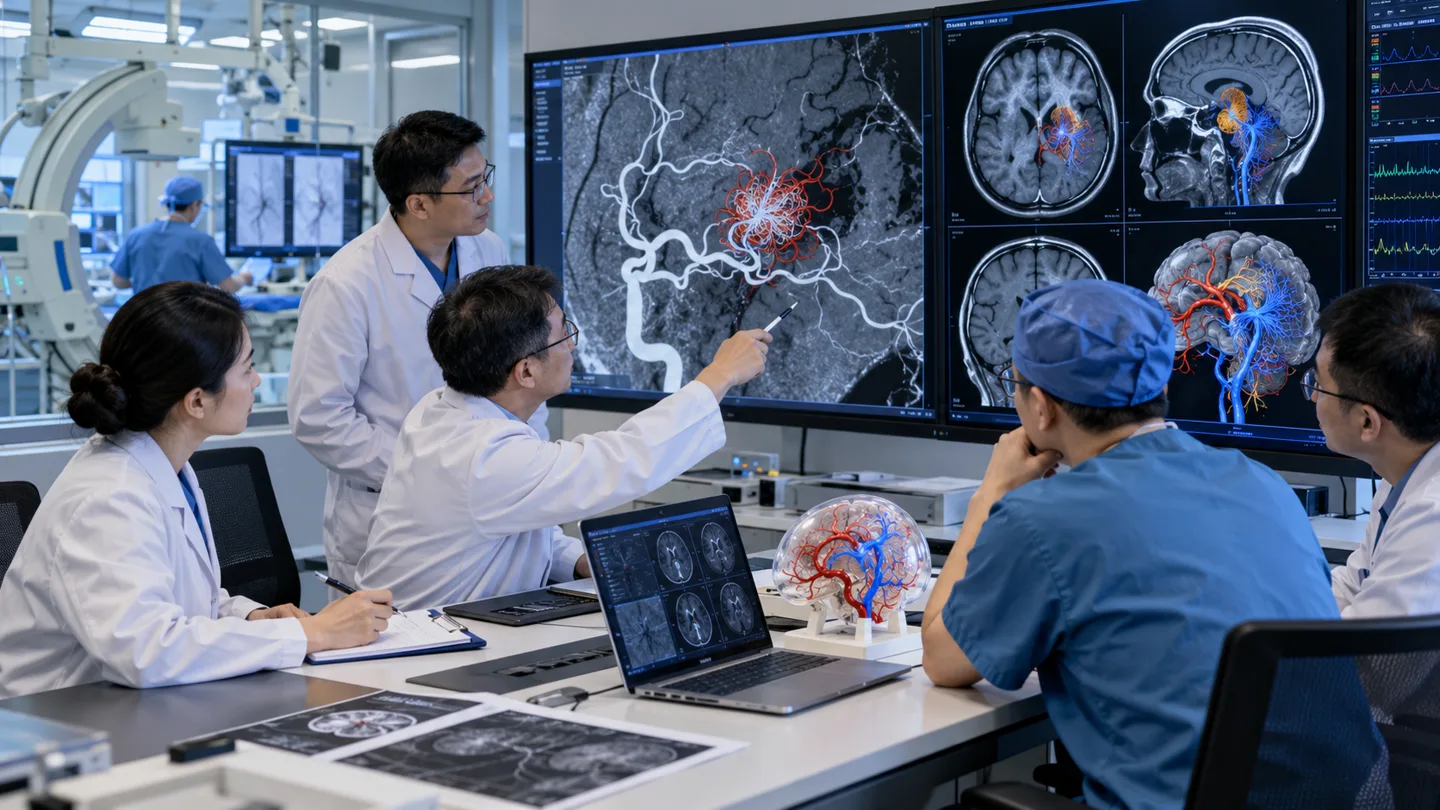
From angiographic map to multimodal sequencing
The safest pathway may use one treatment, several staged treatments or surveillance depending on anatomy and patient risk.
Obliteration must be demonstrated, not assumed
After surgery, neurologic status and hemorrhage complications are monitored. After radiosurgery, bleeding risk can persist during the latency period.
Follow-up vascular imaging confirms whether abnormal shunting has ended. Seizure and rehabilitation care may continue independently.
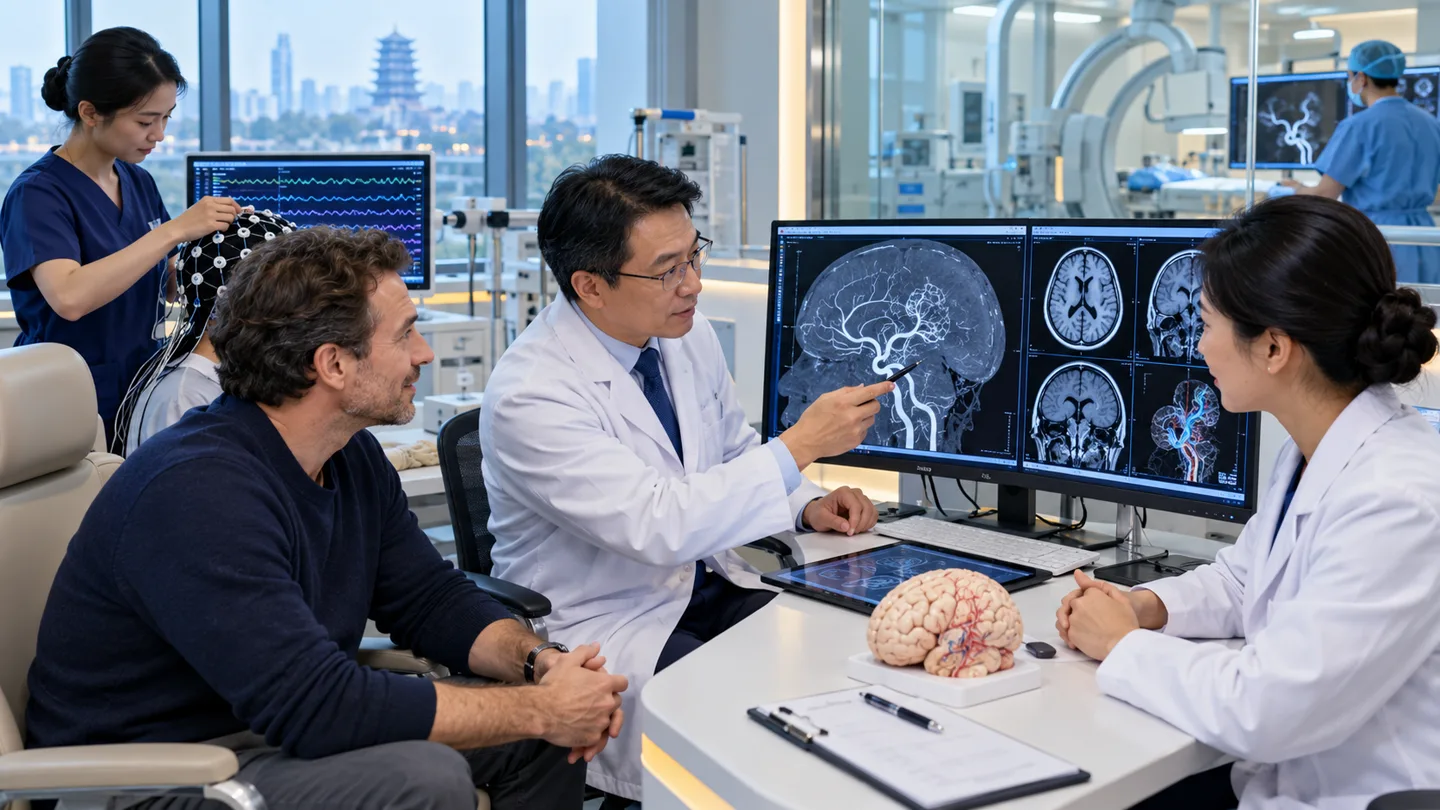
Risks, limits and realistic expectations
Treatment can cause hemorrhage, stroke, seizures, swelling, weakness, speech or visual deficits and death. Complex deep or eloquent AVMs may carry a treatment risk greater than their estimated natural history.
Sudden severe headache, seizure, new weakness, speech difficulty or reduced consciousness requires emergency local care.