
Chronic liver disease care combines cause control with complication prevention
Long-term injury from viral hepatitis, metabolic liver disease, alcohol, autoimmune disease, bile-duct disease or inherited conditions can lead to fibrosis and cirrhosis.
A patient may feel well despite significant scarring. Blood tests, imaging, elastography and clinical signs help determine whether the liver remains compensated or has developed portal hypertension or failure.
Stage and function depend on the whole pattern: platelets, bilirubin, albumin, clotting, imaging, stiffness and complications.
Who may be considered?
Specialist review may help when the diagnosis, symptoms and previous treatment create a focused question about chronic liver disease assessment and care.
- Persistent abnormal liver tests or known chronic hepatitis.
- Fatty or metabolic liver disease with suspected fibrosis.
- Cirrhosis needing complication surveillance.
- Ascites, variceal bleeding, confusion or jaundice requiring specialist management.
What the specialist team must confirm
Review includes cause-specific blood tests, alcohol and medicine history, metabolic risk, ultrasound CT or MRI, elastography, blood count, INR, albumin, bilirubin, kidney function, portal-hypertension signs, previous biopsy and screening history for varices and liver cancer.
Key points for this treatment
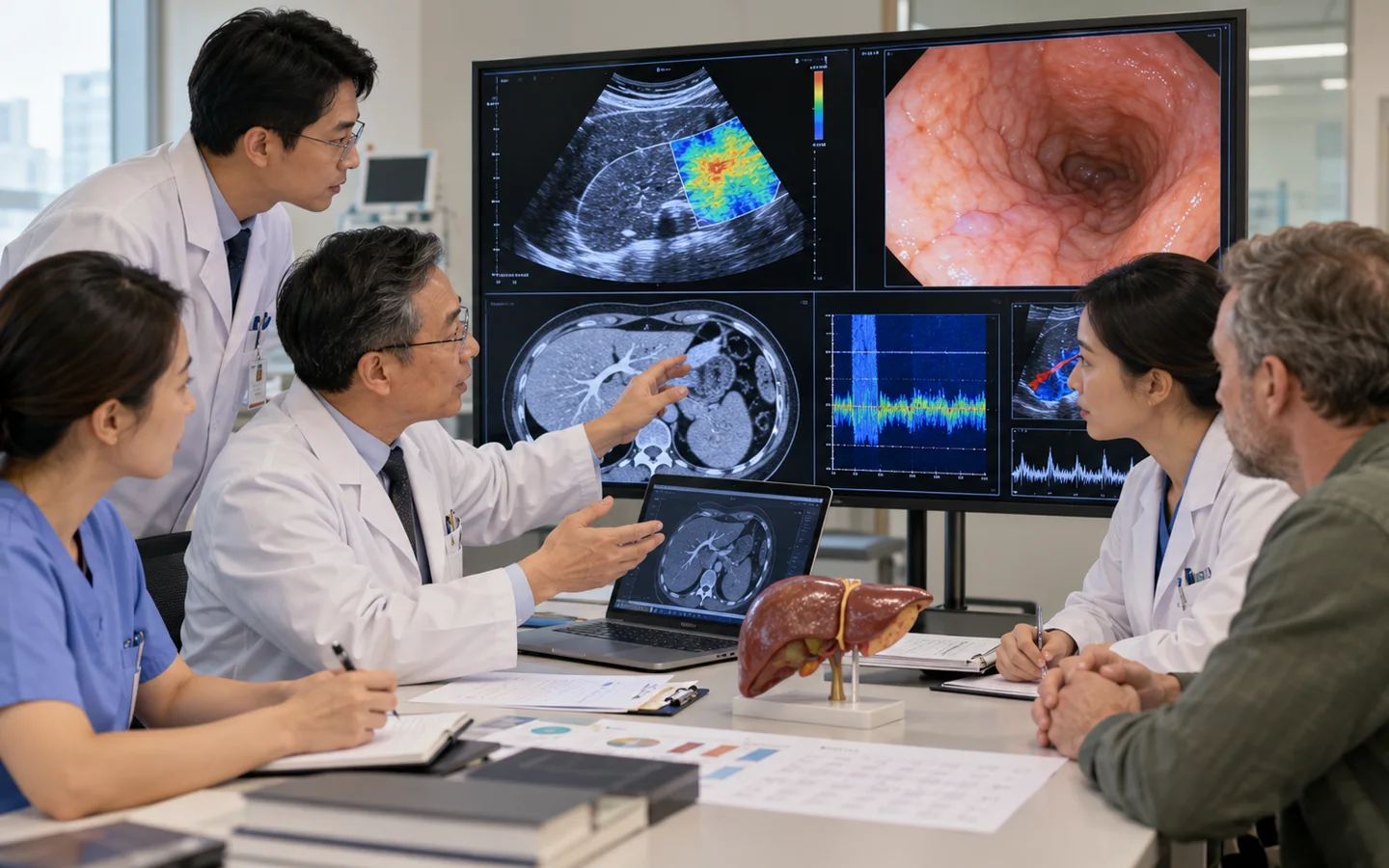
From cause identification to lifelong risk management
The team aims to slow further damage, detect complications early and refer for transplant assessment before irreversible decline becomes an emergency.
Trends matter more than one laboratory result
Weight, symptoms, alcohol exposure, medicines, blood tests and liver stiffness are reviewed over time. Patients with cirrhosis may need regular cancer imaging and variceal assessment.
New fluid retention, confusion, infection, bleeding or kidney decline changes prognosis and may accelerate transplant evaluation.

Risks, limits and realistic expectations
Scarring may not fully reverse. Medicines, procedures and lifestyle changes reduce risk but cannot guarantee prevention of liver failure or cancer. Decompensated disease can deteriorate rapidly.
Vomiting blood, black stool, confusion, fever with abdominal swelling, severe jaundice, fainting or reduced urine output requires emergency local care.