
Fibrosis assessment estimates accumulated scarring and future risk
Chronic liver injury can produce scar tissue long before symptoms appear. Blood-based scores and ultrasound or MR elastography estimate fibrosis without removing tissue.
Stiffness can rise from inflammation, congestion or obstruction as well as fibrosis. Results must be interpreted with cause, laboratory tests, imaging quality and clinical signs.
Cutoffs vary by disease and device. Fasting, active hepatitis, heart failure and measurement quality can change the result.
Who may be considered?
Specialist review may help when the diagnosis, symptoms and previous treatment create a focused question about liver fibrosis assessment.
- Metabolic or fatty liver disease with fibrosis risk.
- Chronic hepatitis B or C.
- Alcohol-associated, autoimmune or cholestatic liver disease.
- Discordant blood, imaging or clinical findings requiring staging.
What the specialist team must confirm
Review includes liver enzymes, platelets, albumin, bilirubin and INR, hepatitis and autoimmune tests, metabolic risk, alcohol and medicine history, ultrasound, validated fibrosis scores, elastography quality metrics and signs of portal hypertension.
Key points for this treatment
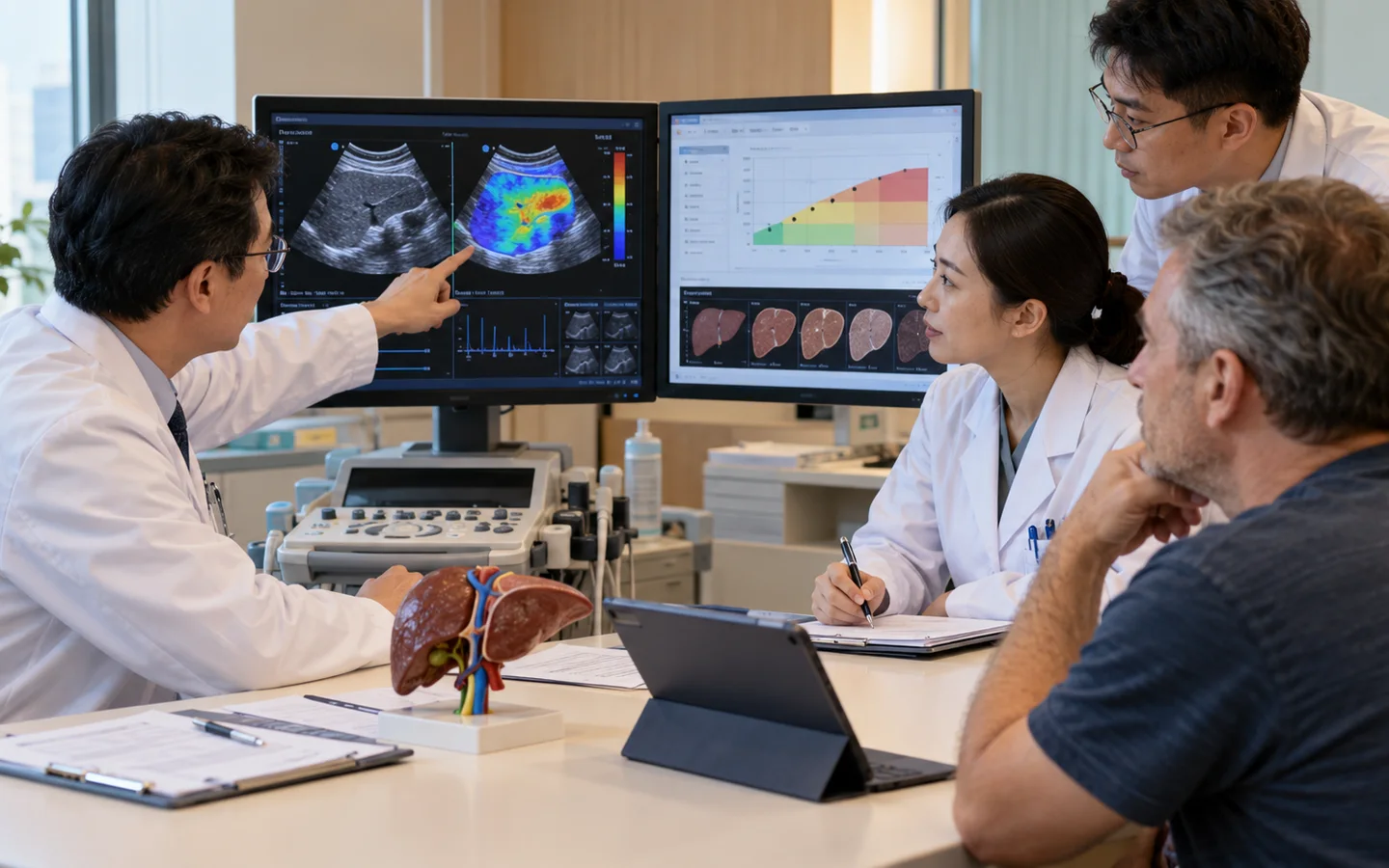
From risk screening to confident fibrosis staging
The aim is to identify advanced disease early enough to change surveillance, treatment intensity and complication prevention.
Fibrosis risk changes with the underlying disease
Cause treatment, weight, alcohol exposure and metabolic control can change inflammation and fibrosis trajectory. Repeat intervals depend on baseline stage and ongoing risk.
Advanced fibrosis or cirrhosis may trigger liver-cancer surveillance, portal-hypertension assessment and closer monitoring even when symptoms are absent.

Risks, limits and realistic expectations
Noninvasive tests can over- or underestimate scarring and do not identify every cause. Biopsy samples a small area and carries bleeding and pain risks; no single test is perfect.
New jaundice, confusion, vomiting blood, black stool, fever with abdominal swelling or fainting requires urgent local care rather than routine fibrosis testing.