Home / Plastic & Reconstructive Surgery / Craniofacial Reconstruction
Plastic and reconstructive patient guide · 颅颌面重建

Craniofacial Reconstruction in China

Considering craniofacial reconstruction in China? Start with facial anatomy, prior operations and reconstruction goals. This guide helps you identify the relevant records, questions for the receiving team and the scope of an individual estimate before a visit is agreed.

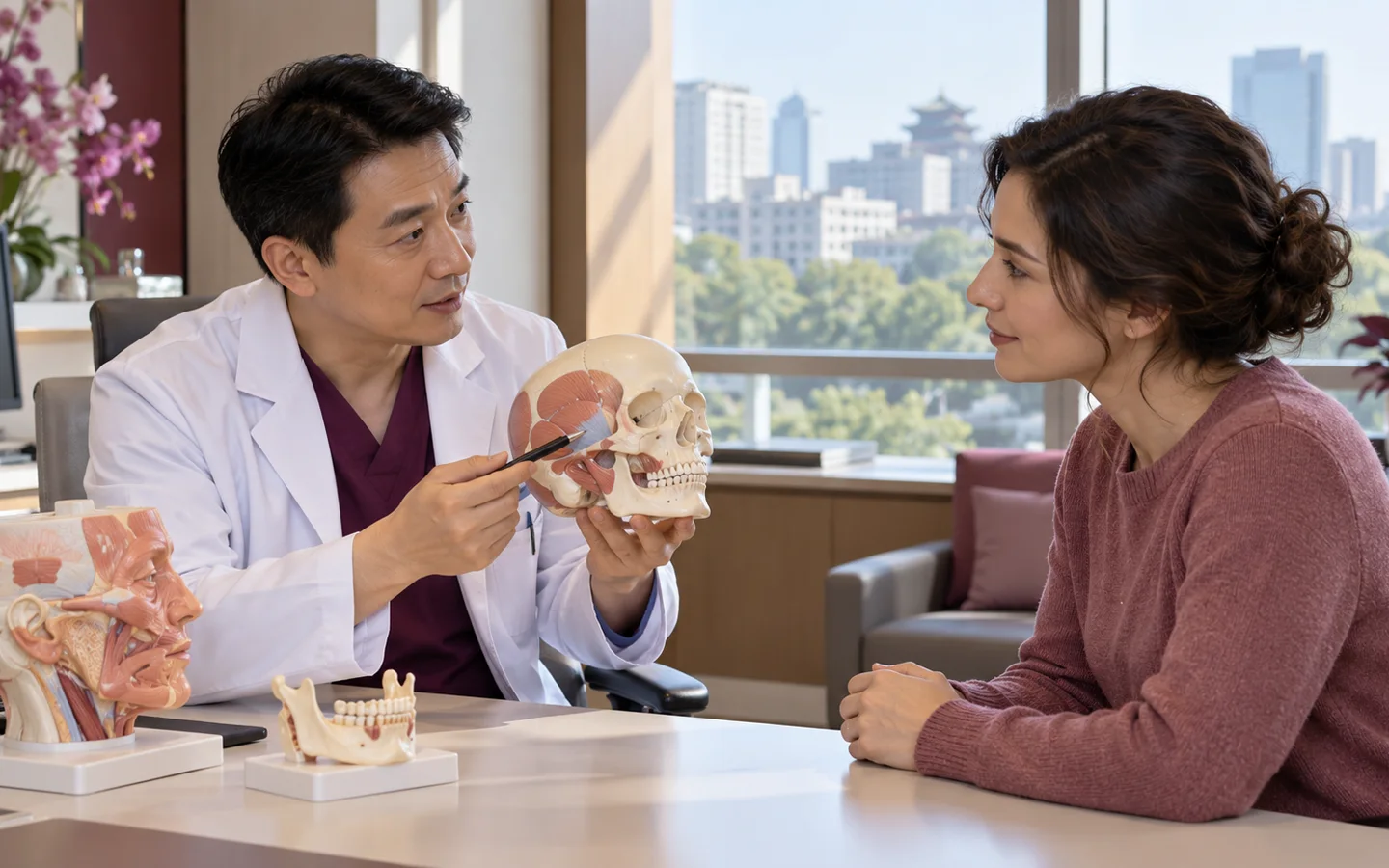
Chinese plastic and reconstructive surgeon explaining craniofacial skeletal and soft-tissue reconstruction using a 3D head model to a fully clothed international patient

Medical records & cost enquiry

Craniofacial Reconstruction: assessment and cost questions

For Craniofacial Reconstruction, the budget depends on the proposed care and the hospital. A useful estimate needs to distinguish:

  • The defect and reconstruction goals
  • Bone, tissue or implant requirements
  • Staged procedures and functional follow-up

Hospital medical fees, travel and our coordination services are separate. Any paid specialist review or coordination service is explained and agreed before you proceed.

Your next step

Start with your question

Tell us your diagnosis and what you need. Our free initial review checks the information and helps identify a suitable next step; it is not a specialist opinion or a hospital quotation.

Request a case-based estimate

Not ready to send records? Ask us first. Where hospital review is appropriate, we can help request an estimate. No travel commitment or mandatory proxy consultation.

Planning craniofacial reconstruction in ChinaHospital review · individual costs · visit and follow-up

Plan the visit around facial anatomy, prior operations and reconstruction goals. Agree the assessment route before travel.

Records for the craniofacial reconstruction review

Tell us what you already have: All craniofacial CT and MRI DICOM; Standardized photographs; Genetic and diagnostic reports. Start with a short summary; after first contact we explain which records the receiving team needs and how to share them.

Confirm the proposed scope and costs

Before asking for a personal estimate, clarify: The defect and reconstruction goals; Bone, tissue or implant requirements; Staged procedures and functional follow-up. The receiving team confirms the proposed scope and hospital charges; coordination is agreed separately.

Visits and care after returning home

Ask which specialists need to review the case together and whether reconstruction would require more than one stage. Tell us if you need interpretation or English-language documents, and confirm the relevant arrangements with the receiving team.

Craniofacial Reconstruction: diagnosis, function and long-term planning

Craniofacial Reconstruction is considered when congenital difference, trauma, tumor or previous treatment affects the craniofacial skeleton and related functions.

Timing and sequence depend on brain and airway safety, growth, vision, hearing, bite, speech and psychosocial priorities; correcting one visible feature without the whole pathway may create later conflict.

Who may be considered?

Specialist review may help when a complex facial or skull difference crosses several anatomic regions or functions.

  • Congenital craniofacial differences requiring staged care.
  • Post-traumatic bone and soft-tissue deformity.
  • Defects after tumor treatment or infection.
  • A patient needing coordinated skeletal and soft-tissue revision.

What the specialist team must confirm

Review diagnosis and genetics when relevant, 3D CT, photographs, dental and bite records, airway, sleep, vision, hearing, speech, neurologic status, growth stage and all previous operations.

Key points for this treatment
Restorescranial and facial form and function
Teammultiple surgical and therapy specialties
Childrenplanning changes with growth
Often stagedbone then soft-tissue refinement
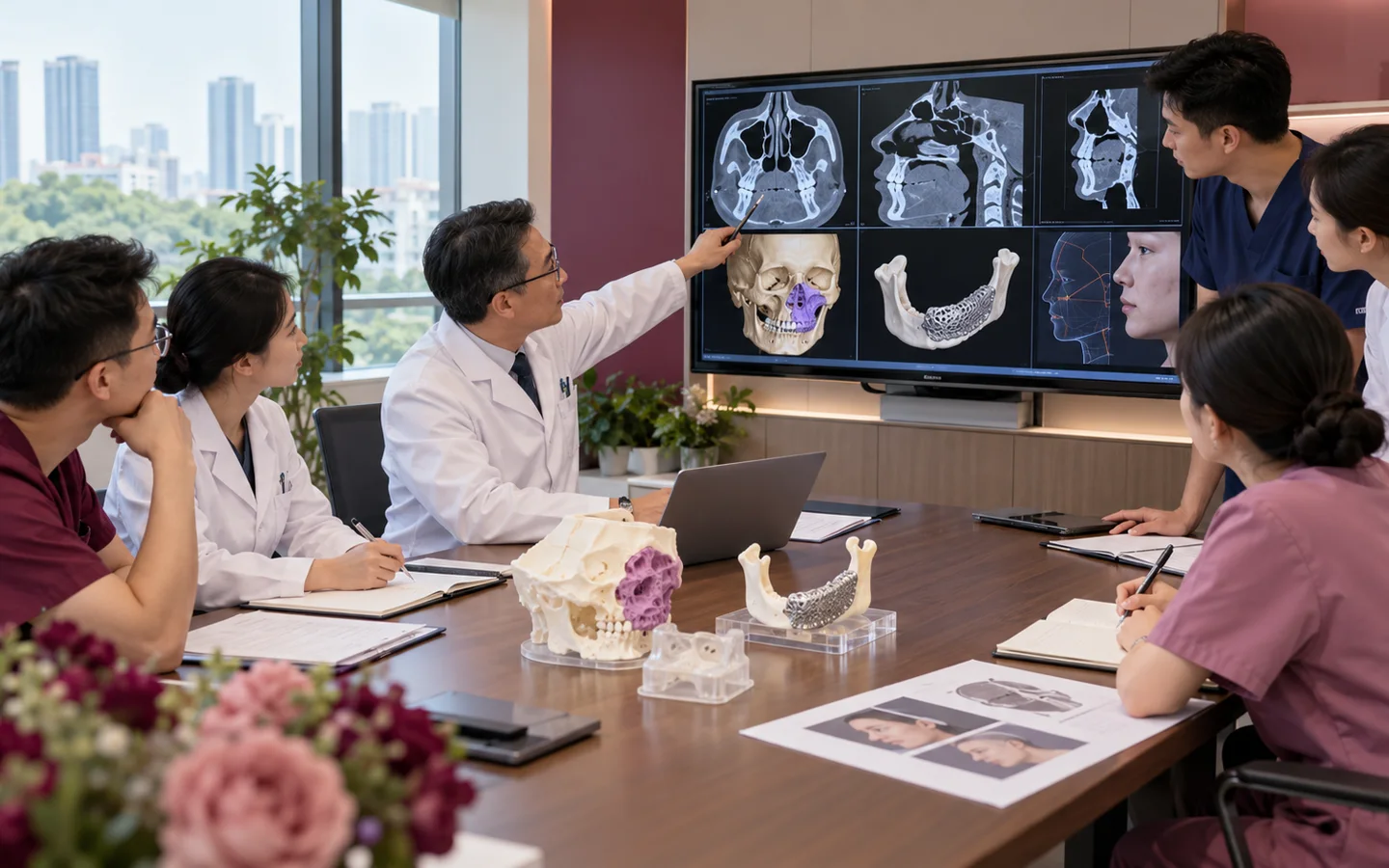
Chinese reconstructive team reviewing 3D CT growth airway vision hearing bite and staged reconstruction timeline
Sequence protects both function and future optionsGrowth, prior scars and planned jaw or dental treatment can determine when a visible correction should occur.

From comprehensive craniofacial assessment to staged lifelong care

A shared timeline should identify which interventions are urgent, growth-dependent or elective refinements.

MapDefine bone soft tissue and function
PrioritizeProtect brain airway vision and feeding
StageCoordinate growth and reconstruction
RefineReassess function symmetry and scar

Growth and function can change the reconstruction over time

Early monitoring depends on the operation and may include airway, vision, neurologic status, nutrition, wound and bone stability.

Facial growth, bite, hearing, vision, speech, scar, hardware and psychosocial impact are reassessed at defined milestones.

Fully clothed international patient completing facial function growth scar bite and sensory rehabilitation follow up with a Chinese rehabilitation clinician
The best plan leaves room for growth and later needsStaging is often a safety and development strategy rather than incomplete treatment.
Function protectedContinue growth surveillance
Asymmetry evolvesReview staged correction timing
Bite changesCoordinate orthodontic and jaw care
Scar or contour concernConsider mature-tissue refinement

Risks, limits and realistic expectations

Risks include bleeding, infection, cerebrospinal-fluid leak, bone-healing problems, nerve injury, airway or vision complications, asymmetry, growth disturbance, hardware issues and repeat surgery.

Do not delay urgent local care

Breathing difficulty, visual change, severe headache, repeated vomiting, rapidly increasing swelling, fever or neurologic change requires emergency assessment.

Before hospital review

Records for craniofacial reconstruction assessment

A safe international review depends on dated source reports, original imaging and a complete treatment timeline—not a diagnosis label alone.

All craniofacial CT and MRI DICOM
Standardized photographs
Genetic and diagnostic reports
Dental and orthodontic records
Airway and sleep assessment
Vision hearing and speech reports
Previous surgery and implant records
Growth and developmental history

Tell us what you need

Ask about your care,
your hospital and your budget.

You can ask about suitability, an expert opinion, an appointment or the likely medical cost. If you are unsure, choose “Not sure — please advise”.

This enquiry is aboutCraniofacial ReconstructionNot sure — please advise

How a personal estimate is prepared

  1. Tell us about your case.Describe your diagnosis, main question and preferred city, if any.
  2. Share the relevant records.We explain what is needed and how to send it by WhatsApp or email.
  3. Request a hospital estimate.Where appropriate, we help request hospital review and a cost estimate. Any paid review is agreed first.

This is an enquiry, not an order or payment. Proxy consultation is not mandatory. Any service scope is agreed separately before you proceed.

Ask about Craniofacial Reconstruction

A first enquiry is free. Email and permission to respond are required; the other details are optional. Any paid clinical review or coordination is discussed separately.

Included automatically so we know which procedure you are asking about.
A preference, not a confirmed appointment.
Please do not send passport numbers, card details or full medical files in this first enquiry. We will explain which records are needed next.

Send a short summary first. This is an enquiry, not an order, payment or confirmed appointment.

No booking or payment is made by sending this enquiry.
Editorial transparency

Medical sources

Patient information is based on established government and professional guidance. Content updated 5 October 2026. This is patient information, not an individual clinical assessment.