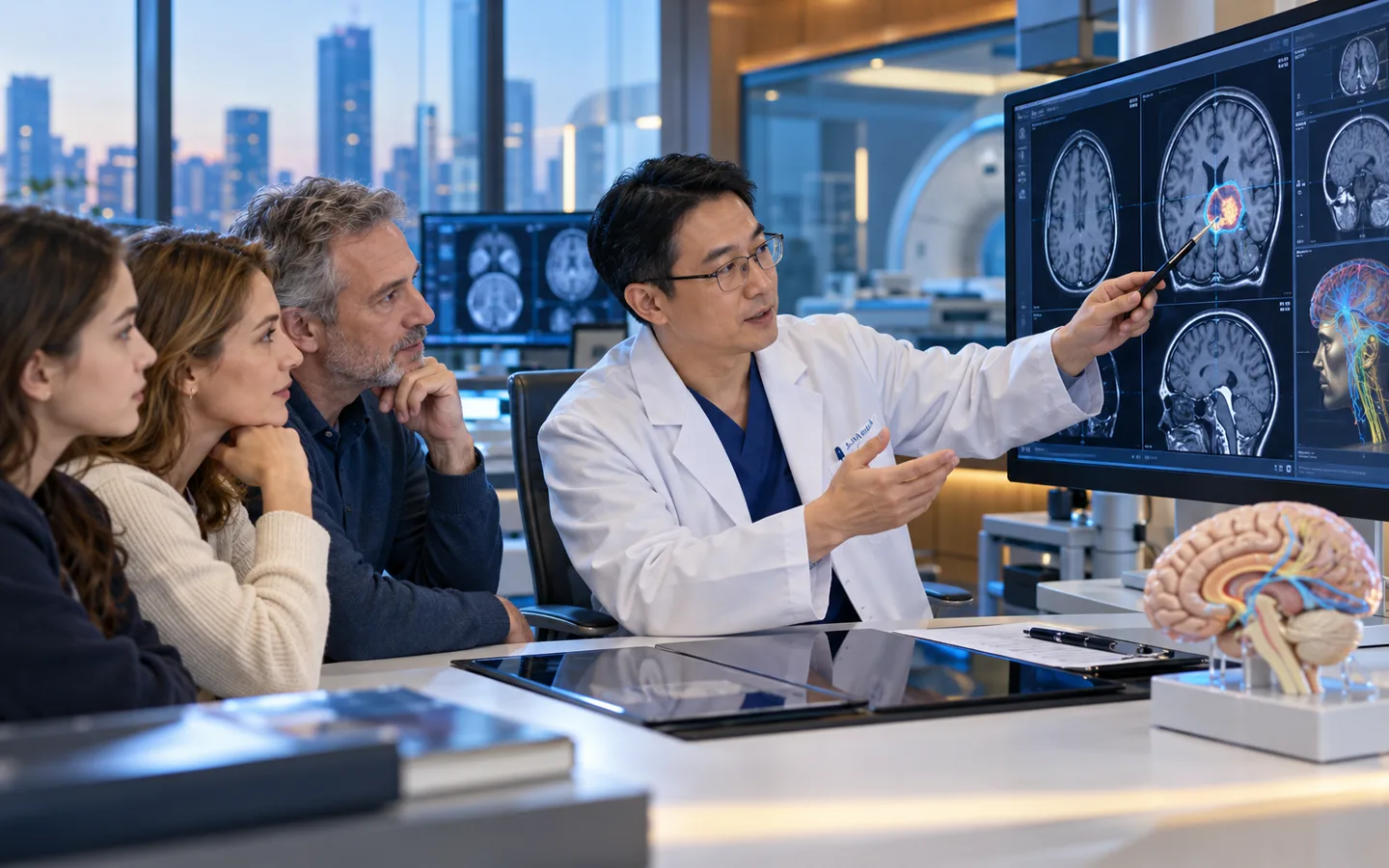
Glioma surgery balances tissue diagnosis, tumor control and function
Gliomas arise from cells of the central nervous system and range from slower-growing tumors to aggressive cancers. MRI suggests but does not fully define type or grade.
Surgery may obtain tissue, reduce tumor burden and relieve pressure. The safe extent depends on infiltration and proximity to networks supporting speech, movement, vision and other critical functions.
Ask how functional mapping, tract imaging, awake testing or intraoperative imaging changes the boundary of surgery.
Who may be considered?
Specialist review may help when the diagnosis, symptoms and previous treatment create a focused question about glioma resection and biopsy.
- A newly identified lesion suspicious for diffuse glioma.
- Tumor growth or new symptoms after surveillance.
- Recurrent disease where new tissue may change molecular or treatment decisions.
- A deep or eloquent-area lesion needing biopsy-versus-resection review.
What the specialist team must confirm
The team reviews contrast MRI and advanced sequences, neurologic and cognitive function, seizure history, steroid use, systemic cancer history, prior surgery or radiation and the expected value of tissue for integrated histologic and molecular diagnosis.
Key points for this treatment
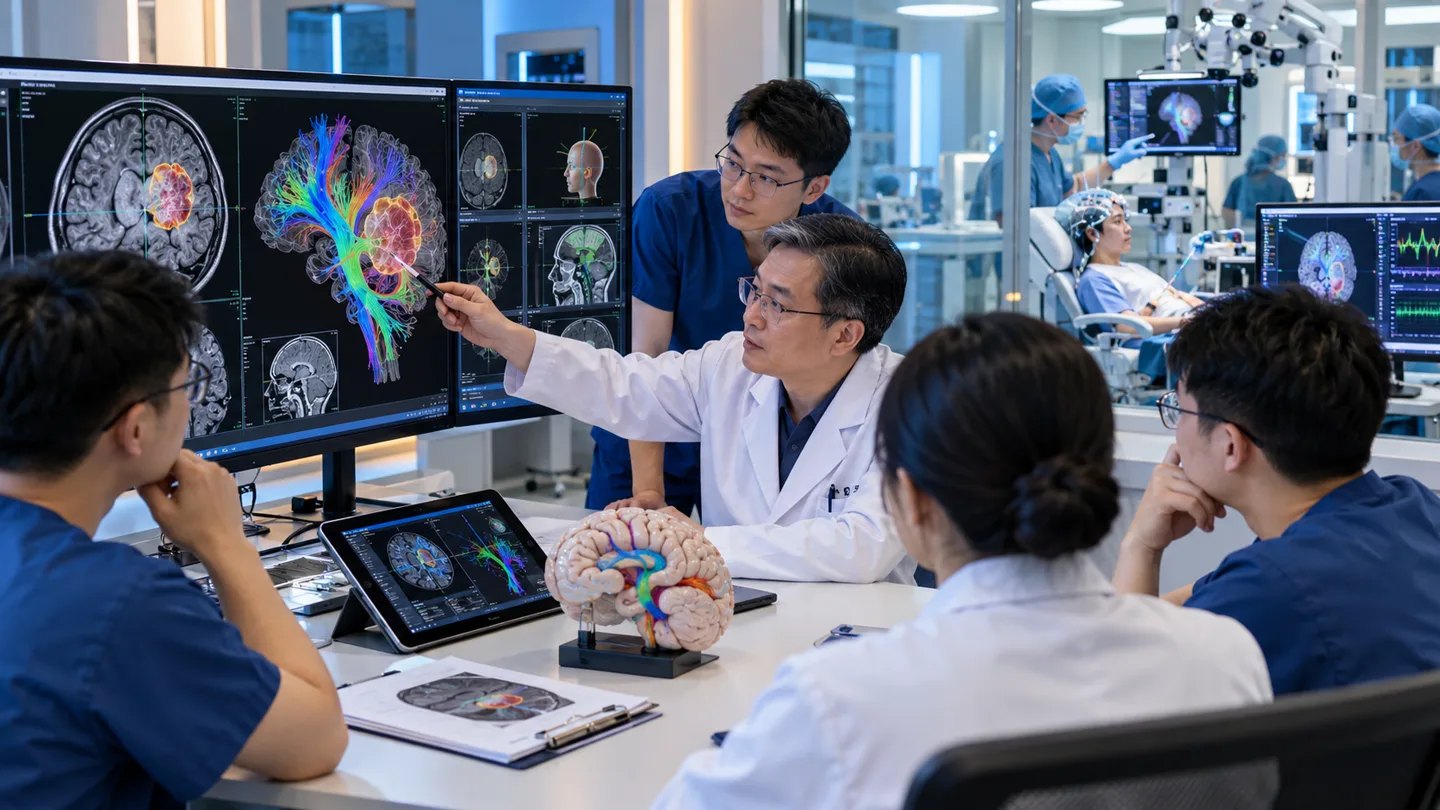
From imaging hypothesis to integrated tumor diagnosis
Surgery is planned as the first step of a coordinated neuro-oncology pathway rather than an isolated event.
Recovery and adjuvant planning proceed together
Early monitoring focuses on swelling, seizures, neurologic change, wound and steroid management. Rehabilitation begins according to deficits and fatigue.
Final integrated pathology and postoperative MRI guide radiation, chemotherapy, clinical-trial and surveillance decisions.
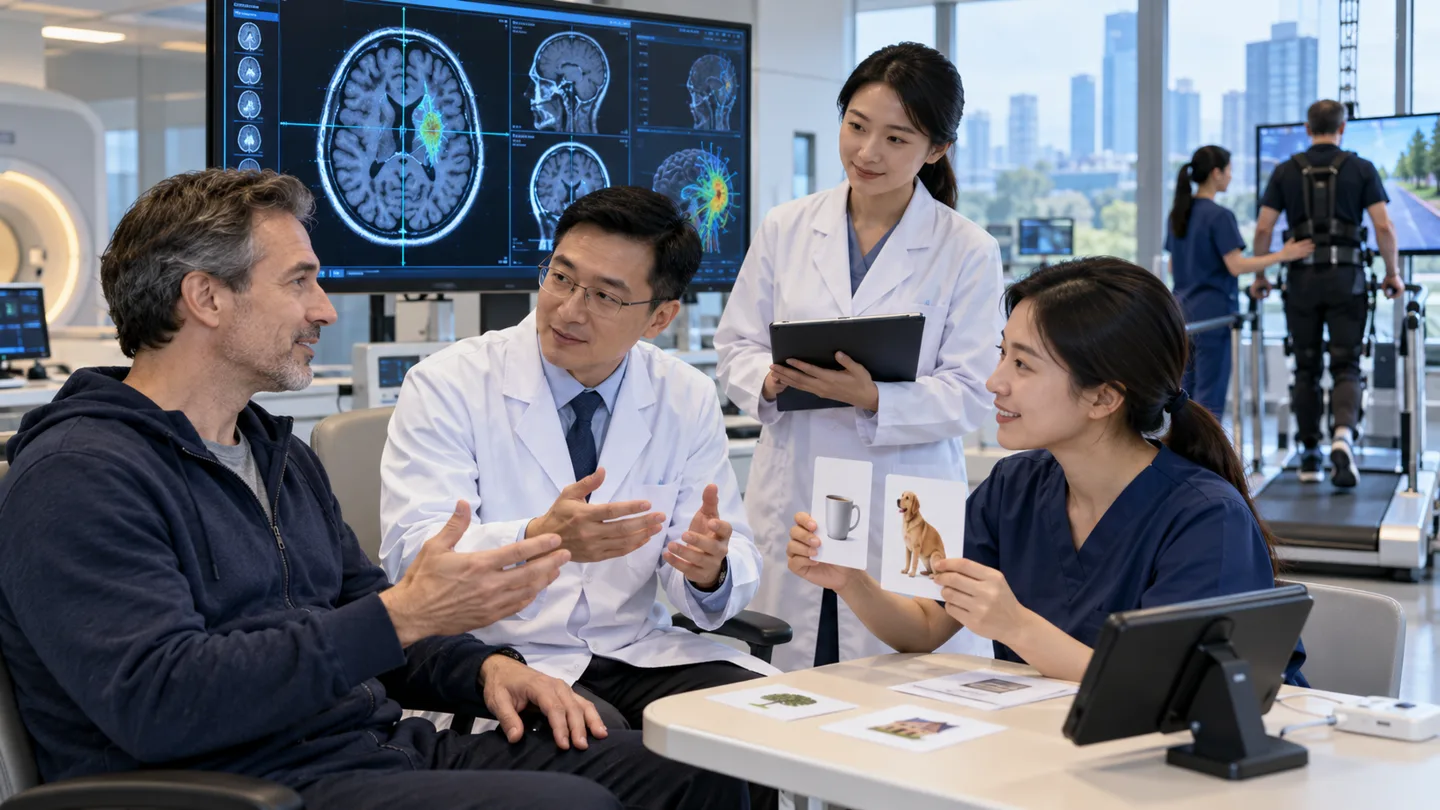
Risks, limits and realistic expectations
Risks include bleeding, infection, seizures, swelling, stroke, weakness, speech or visual impairment, cognitive change, incomplete removal and death. Infiltrating glioma cells commonly extend beyond the visible surgical margin.
New weakness, speech loss, seizure lasting several minutes, severe worsening headache, repeated vomiting or reduced consciousness requires emergency local care.