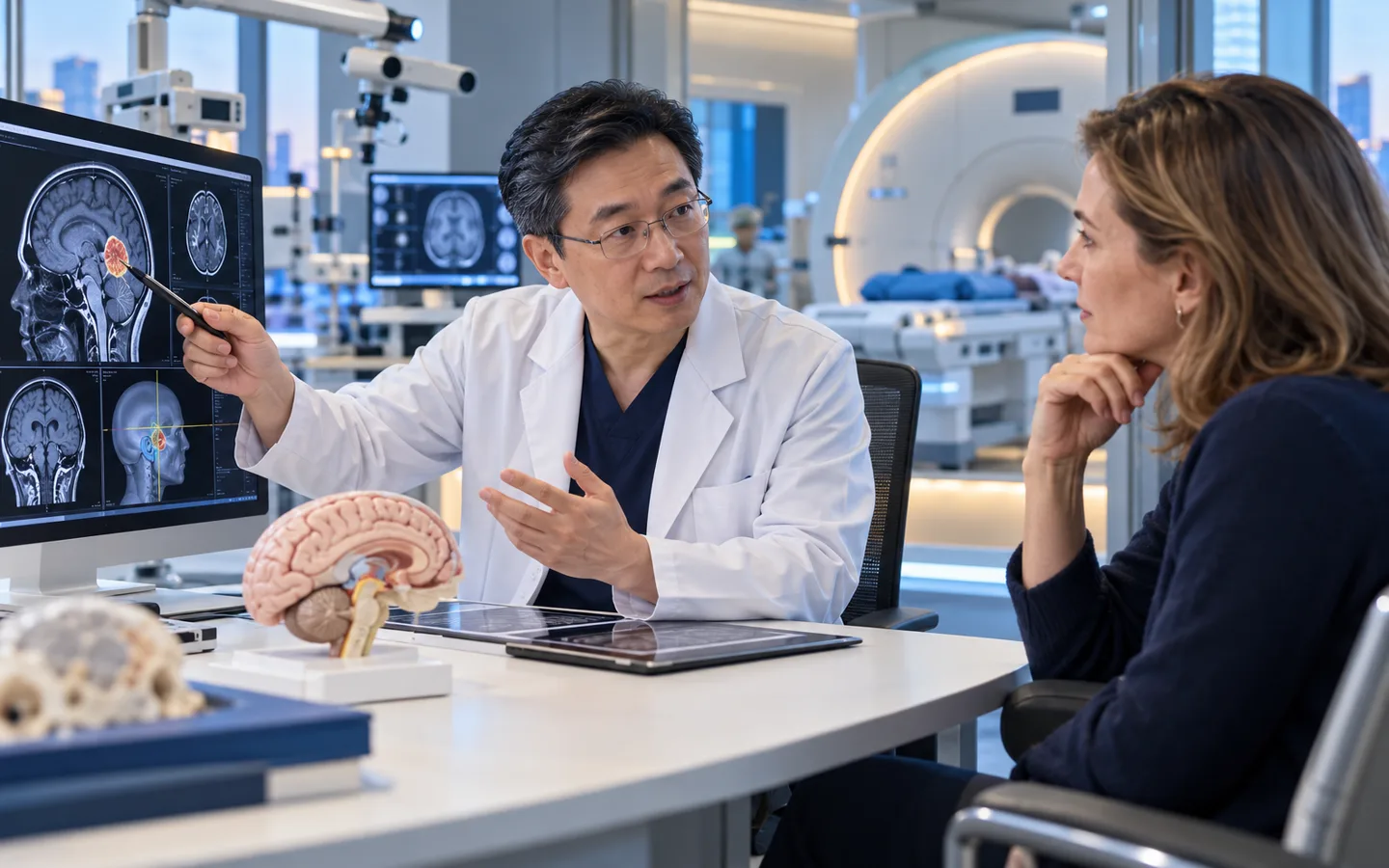
Meningioma treatment depends on behavior and location, not size alone
Many meningiomas grow slowly and can be observed when small and asymptomatic. Others cause seizures, weakness, visual change or pressure because of their location.
Surgery aims to relieve compression and obtain tissue while preserving adjacent brain, cranial nerves and venous drainage. Complete removal may be unsafe when the tumor involves a sinus, skull base or critical artery.
For selected incidental tumors, interval MRI avoids surgical harm while preserving the option to intervene if growth or symptoms develop.
Who may be considered?
Specialist review may help when the diagnosis, symptoms and previous treatment create a focused question about meningioma resection.
- A growing meningioma on serial MRI.
- Symptoms or edema attributable to the tumor.
- Uncertain diagnosis requiring tissue.
- A residual or recurrent tumor needing surgery-versus-radiation review.
What the specialist team must confirm
Review includes serial contrast MRI, growth rate, edema, location, vessel and venous-sinus involvement, cranial-nerve function, seizures, age and health, previous radiation or surgery and whether focused radiation is an alternative.
Key points for this treatment
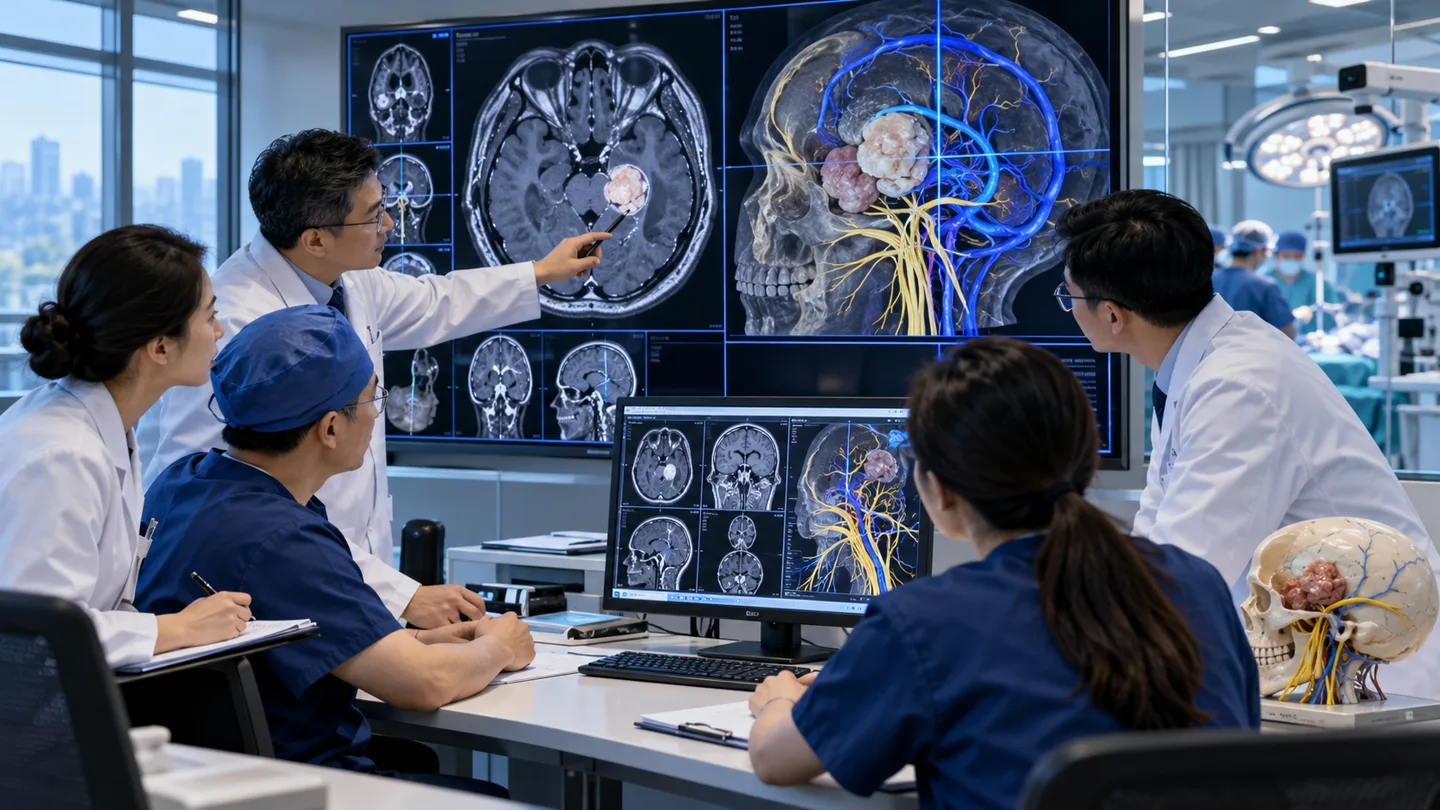
From serial imaging to location-specific treatment
The team weighs natural history against the functional cost of intervention and the option of radiosurgery or radiotherapy.
Pathology and residual tumor determine surveillance
Early care monitors swelling, seizures, wound and location-specific neurologic function such as vision or facial movement.
Follow-up MRI timing depends on grade, extent of removal, residual disease and previous treatment. Recurrence can occur even after apparently complete resection.
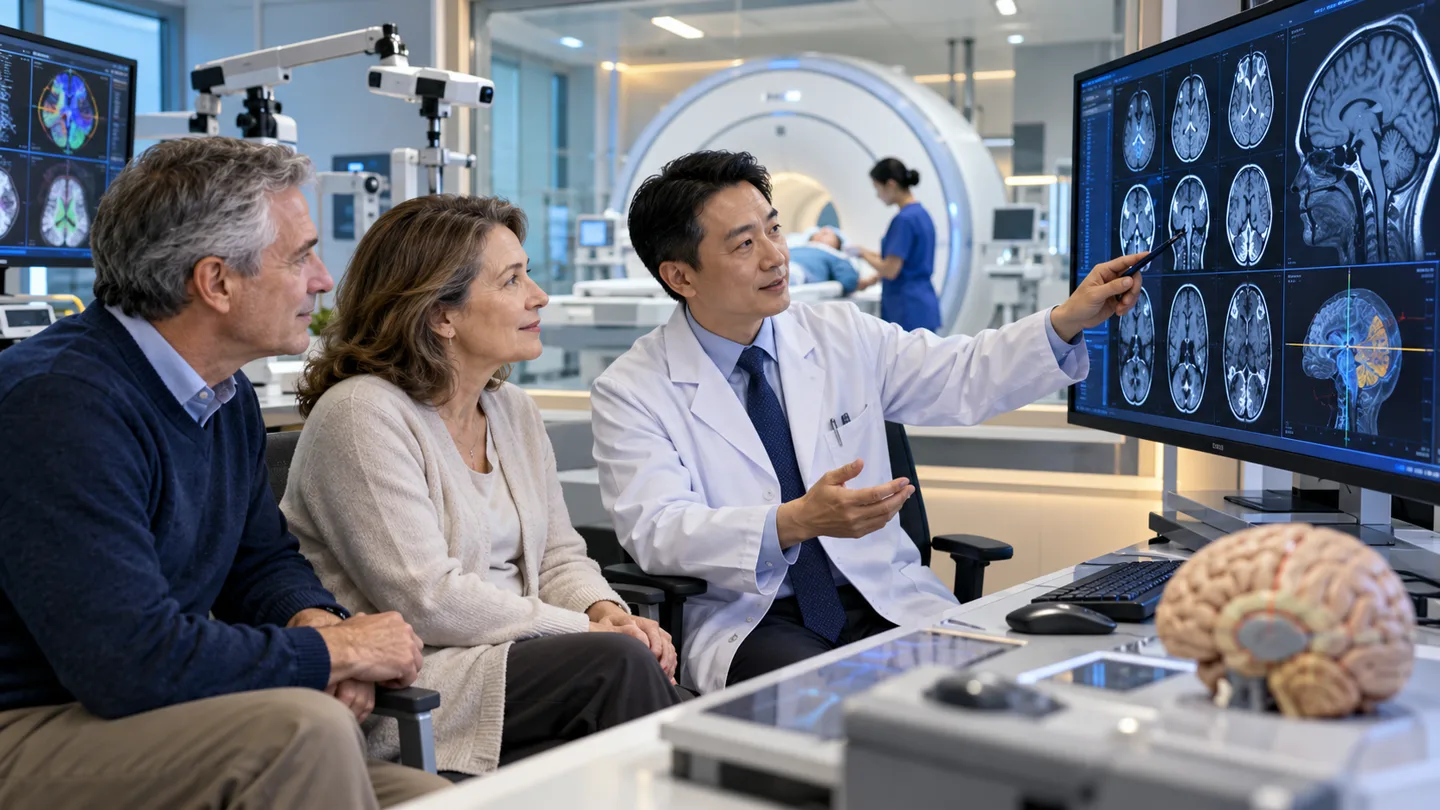
Risks, limits and realistic expectations
Risks include bleeding, infection, seizures, stroke, swelling, weakness, cranial-nerve deficits, venous infarction, cerebrospinal-fluid leak, recurrence and death. Benign pathology does not mean risk-free surgery.
New seizure, weakness, vision loss, severe worsening headache or reduced consciousness needs emergency local care.