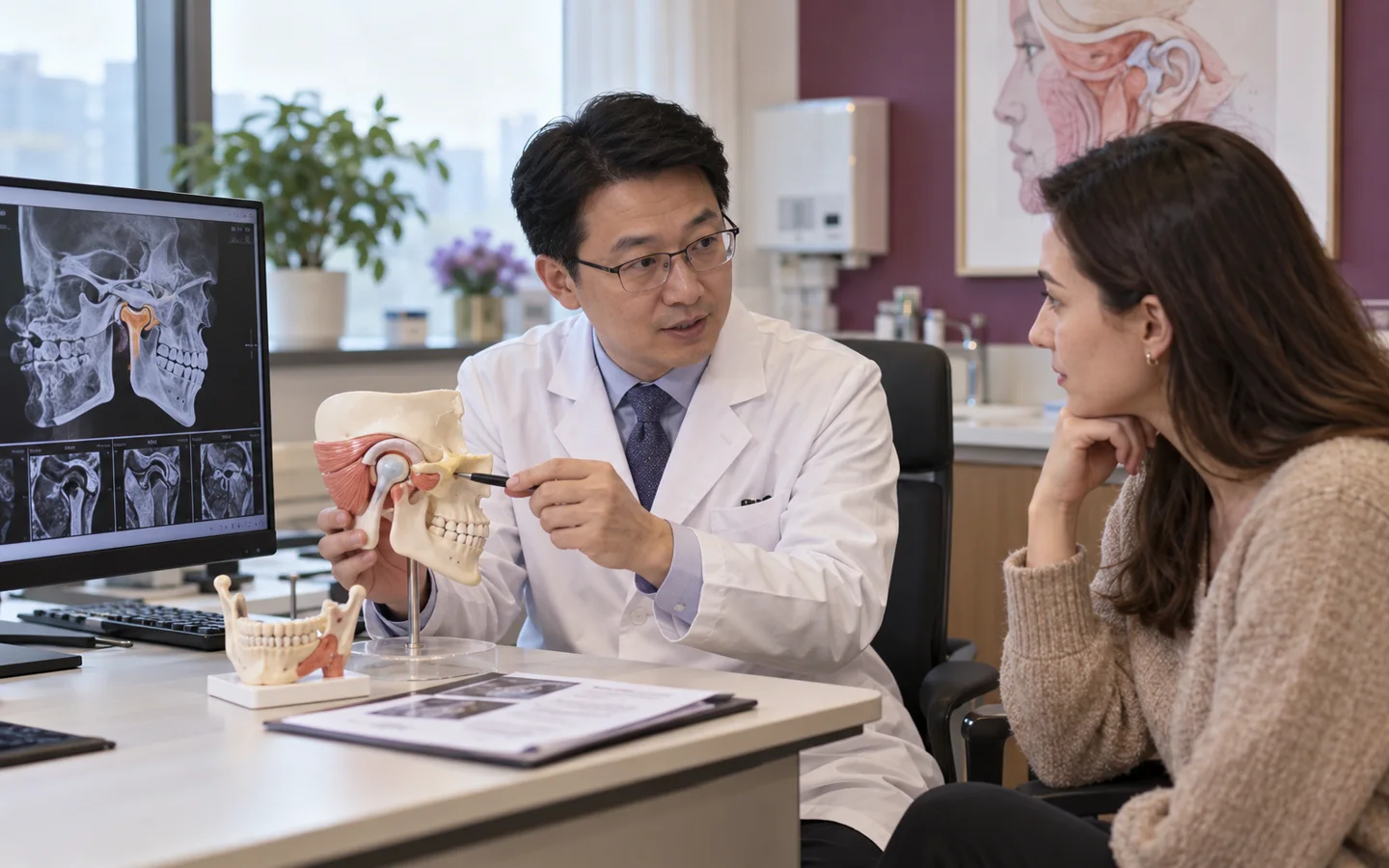
TMJ Surgery: diagnosis, function and long-term planning
TMJ Surgery is considered when severe structural joint destruction, ankylosis, recurrent dislocation or disabling mechanical disease persists despite appropriate simpler treatment.
Clicking alone is not an indication; pain mechanisms, muscle disorders, central sensitization and dental factors must be separated from surgically correctable joint pathology.
Who may be considered?
Specialist review may help when jaw pain or limited opening remains severe and imaging shows a structural problem that matches the symptoms.
- Ankylosis or severe joint destruction.
- Recurrent dislocation not controlled conservatively.
- A specific internal derangement after appropriate nonsurgical care.
- A carefully selected patient seeking second opinions before irreversible treatment.
What the specialist team must confirm
Review pain history, jaw range and function, muscle and joint examination, MRI or CT according to suspected pathology, prior splints and therapy, rheumatologic disease, psychosocial factors and previous joint procedures.
Key points for this treatment

From conservative diagnosis to carefully selected joint surgery
Second opinions are especially valuable before open surgery or total joint replacement.
Movement rehabilitation protects the surgical result
Diet, swelling control, pain management and guided jaw exercises depend on whether treatment was arthroscopic, open or replacement surgery.
Opening, chewing function, pain pattern, implant status when relevant and recurrence are tracked without promising complete pain elimination.

Risks, limits and realistic expectations
Risks include facial-nerve weakness, bite change, hearing symptoms, infection, bleeding, stiffness, persistent pain, heterotopic bone, implant complications and repeat surgery.
Rapid facial swelling, fever, new facial weakness, inability to open or close the mouth, uncontrolled pain or breathing difficulty requires urgent local assessment.