Home / Orthopedics / Meniscus Surgery
Orthopedic patient guide · 半月板手术

Meniscus Surgery in China

Considering meniscus surgery in China? Start with tear assessment, repair versus removal and rehabilitation. This guide helps you identify the relevant records, questions for the receiving team and the scope of an individual estimate before a visit is agreed.

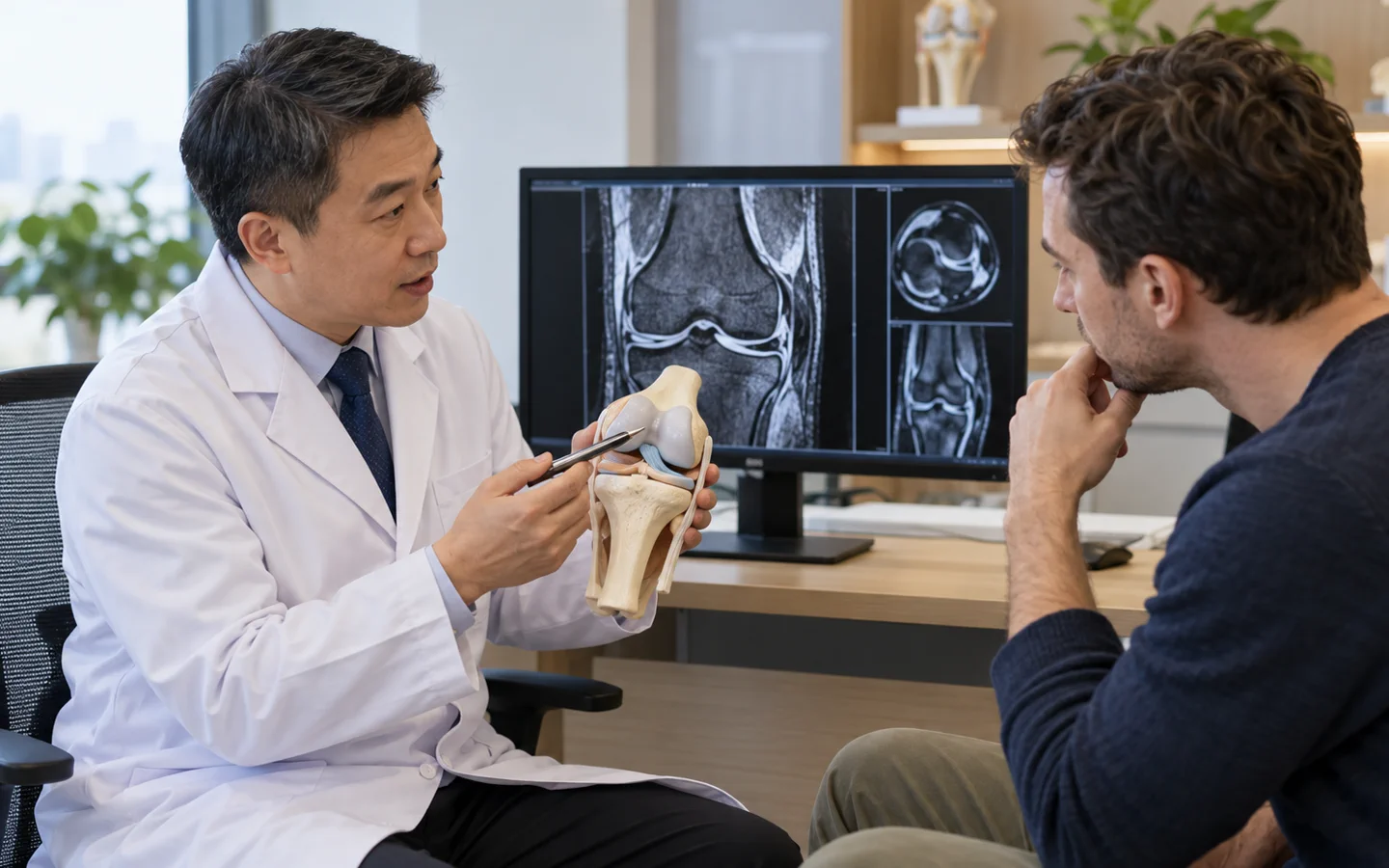
Chinese sports surgeon reviewing meniscus MRI with an international patient and knee model

Medical records & cost enquiry

Meniscus Surgery: assessment and cost questions

For Meniscus Surgery, the budget depends on the proposed care and the hospital. A useful estimate needs to distinguish:

  • Repair versus partial removal of damaged tissue
  • Whether ligament or other knee treatment is combined
  • Repair devices, rehabilitation and follow-up

Hospital medical fees, travel and our coordination services are separate. Any paid specialist review or coordination service is explained and agreed before you proceed.

Your next step

Start with your question

Tell us your diagnosis and what you need. Our free initial review checks the information and helps identify a suitable next step; it is not a specialist opinion or a hospital quotation.

Request a case-based estimate

Not ready to send records? Ask us first. Where hospital review is appropriate, we can help request an estimate. No travel commitment or mandatory proxy consultation.

Planning meniscus surgery in ChinaHospital review · individual costs · visit and follow-up

Plan the visit around tear assessment, repair versus removal and rehabilitation. Agree the assessment route before travel.

Records for the meniscus surgery review

Tell us what you already have: Knee MRI DICOM files and report; Weight-bearing knee X-rays; Injury mechanism and symptom timeline. Start with a short summary; after first contact we explain which records the receiving team needs and how to share them.

Confirm the proposed scope and costs

Before asking for a personal estimate, clarify: Repair versus partial removal of damaged tissue; Whether ligament or other knee treatment is combined; Repair devices, rehabilitation and follow-up. The receiving team confirms the proposed scope and hospital charges; coordination is agreed separately.

Visits and care after returning home

Ask whether the proposed operation is repair or removal and how associated knee injuries affect the estimate and rehabilitation plan. Tell us if you need interpretation or English-language documents, and confirm the relevant arrangements with the receiving team.

Repair, trim or rehabilitate?

The menisci distribute load, absorb shock and help stabilise the knee. Treatment depends on whether a tear is traumatic or degenerative, its location and shape, blood supply, tissue quality, symptoms, alignment, cartilage condition and associated ACL injury.

Repair stitches the tear to preserve tissue but needs biological healing and longer protection. Partial meniscectomy removes only unstable damaged tissue that cannot reasonably heal. Many degenerative tears improve with exercise-based care; an MRI finding alone is not a reason for arthroscopy.

A shorter operation can have a longer-term trade-off

Trimming may permit faster early recovery than repair, but removing meniscus tissue increases joint loading. The surgeon should explain why repair is or is not possible.

Who may be considered?

Surgery may be discussed when the history, examination and imaging agree, including:.

  • An acute repairable tear in a vascular area, especially in a younger active patient.
  • A displaced tear causing true mechanical locking or loss of motion.
  • A symptomatic tear combined with ACL reconstruction.
  • Persistent focal symptoms after suitable non-surgical treatment.
  • An unstable fragment that cannot be repaired and continues to cause symptoms.

What the hospital needs to assess

The clinician distinguishes pain, catching and stiffness from true locking, then examines joint-line tenderness, swelling, motion, ligaments and alignment. MRI defines tear pattern and associated injury; weight-bearing X-rays show arthritis. The final repairability decision may change during arthroscopy when tissue quality is seen directly.

Key points for this treatment
Preserve tissuerepair when biologically reasonable
Tear patternchanges both treatment and prognosis
Repair recoveryusually slower than trimming
Arthritis contextdegenerative tears need careful selection
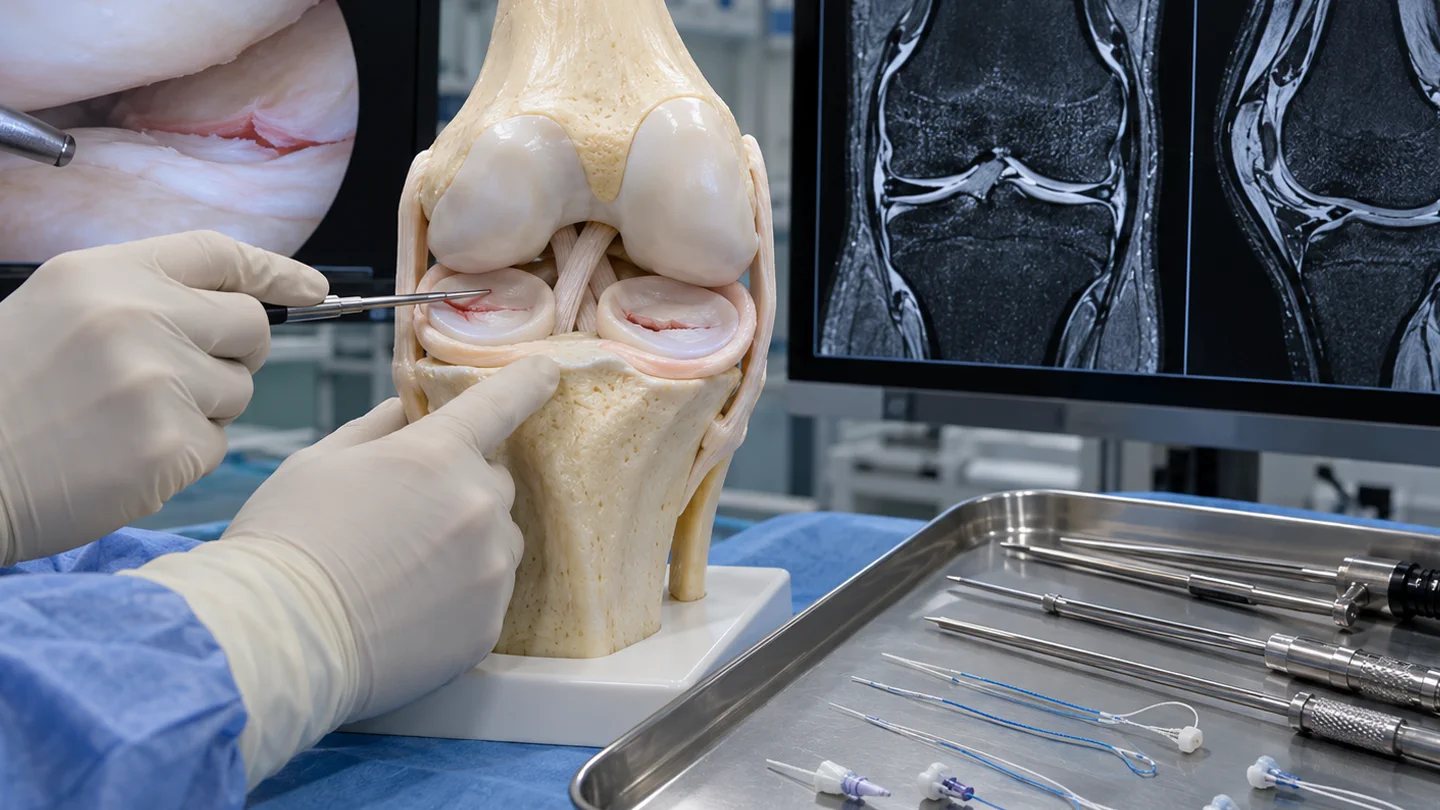
Knee model showing meniscus tear zones with arthroscopy tools and MRI used for repair planning
Location and tissue quality guide preservationLongitudinal, radial, root and complex tears behave differently and may require different sutures, tunnels or protection.

How meniscus surgery is performed

Through small arthroscopy portals, the surgeon inspects all knee compartments. Repair may use sutures placed inside-out, outside-in or with all-inside devices. Root repair may use a tibial tunnel and fixation. The surfaces are prepared to encourage healing while retaining as much healthy tissue as possible.

When a fragment is irreparable, partial meniscectomy smooths the unstable portion rather than removing the whole meniscus. Cartilage findings and knee alignment should be documented because they strongly affect expectations.

Meniscus repairPreserves tissue but requires healing protection
Root repairRestores attachment in selected root tears
Partial meniscectomyRemoves only irreparable unstable tissue
Non-surgical careOften first-line for degenerative tears without locking

Hospital stay and recovery

After partial meniscectomy, weight-bearing and motion often progress relatively quickly. After repair, a brace, crutches, motion limits or delayed loading may be required depending on tear and technique. Root and radial repairs often need stricter protection.

Rehabilitation restores swelling control, motion, strength and movement. Running, deep flexion and pivoting resume only after the repaired tissue and knee function are ready. A repair can fail even with good care, and symptoms may also come from existing cartilage disease.
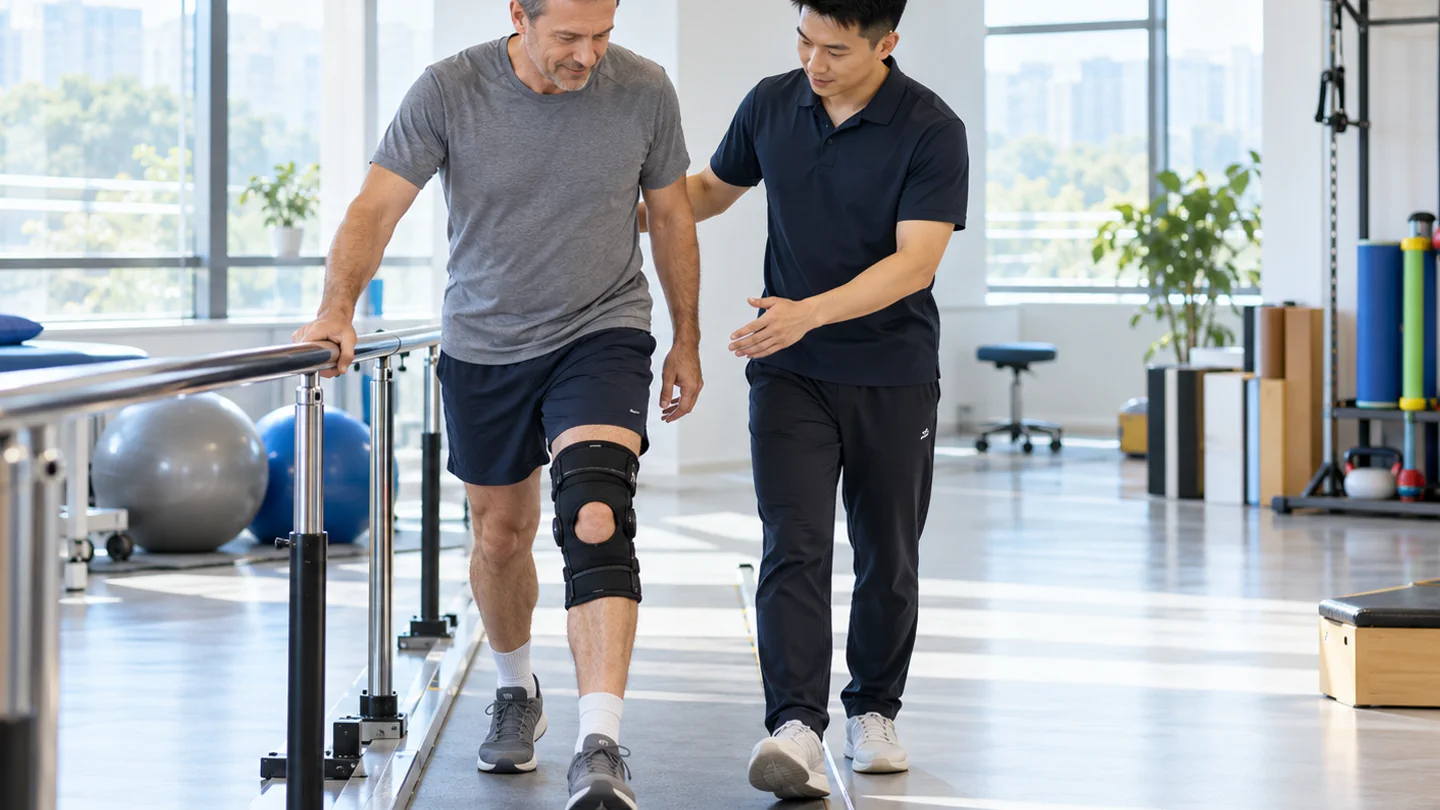
International patient performing balance and knee-control exercises with a Chinese physiotherapist after meniscus surgery
The operation determines the timelineA preserved, repaired meniscus usually needs more protection than a small trim—an important trade-off to understand before surgery.
After a trimEarlier loading when swelling and control permit
After repairProtection follows tear and fixation
RehabilitationMotion, strength and movement are rebuilt
ReturnActivity follows tissue healing and testing

Risks and realistic expectations

Risks include infection, blood clot, stiffness, nerve or vessel injury, persistent pain, recurrent tear, repair failure and need for further surgery. Removing meniscus tissue can accelerate cartilage wear; repair reduces tissue loss but cannot guarantee healing.

Seek urgent medical help

Fever, wound drainage, a rapidly swollen hot knee, calf swelling, chest pain, breathlessness, new foot weakness or a suddenly locked knee requires prompt assessment.

Before hospital review

Records for meniscus surgery assessment

The review should show tear morphology, arthritis and the real mechanical symptoms—not MRI language alone.

Knee MRI DICOM files and report
Weight-bearing knee X-rays
Injury mechanism and symptom timeline
Locking, swelling and instability history
Prior physiotherapy and medication
Previous knee surgery
Work, sport and travel plans
Medical history and clotting risk
Send original imaging when possible

Radiology reports are useful, but original DICOM files let the specialist examine anatomy, alignment, tissue quality and prior implants directly.

Tell us what you need

Ask about your care,
your hospital and your budget.

You can ask about suitability, an expert opinion, an appointment or the likely medical cost. If you are unsure, choose “Not sure — please advise”.

This enquiry is aboutMeniscus SurgeryNot sure — please advise

How a personal estimate is prepared

  1. Tell us about your case.Describe your diagnosis, main question and preferred city, if any.
  2. Share the relevant records.We explain what is needed and how to send it by WhatsApp or email.
  3. Request a hospital estimate.Where appropriate, we help request hospital review and a cost estimate. Any paid review is agreed first.

This is an enquiry, not an order or payment. Proxy consultation is not mandatory. Any service scope is agreed separately before you proceed.

Ask about Meniscus Surgery

A first enquiry is free. Email and permission to respond are required; the other details are optional. Any paid clinical review or coordination is discussed separately.

Included automatically so we know which procedure you are asking about.
A preference, not a confirmed appointment.
Please do not send passport numbers, card details or full medical files in this first enquiry. We will explain which records are needed next.

Send a short summary first. This is an enquiry, not an order, payment or confirmed appointment.

No booking or payment is made by sending this enquiry.
Editorial transparency

Medical sources

Patient information is based on established professional, government and health-service guidance. Content updated 5 October 2026. This is patient information, not an individual clinical assessment.