Home / Orthopedics / Spinal Fusion
Orthopedic procedure guide · 脊柱融合术

Spinal Fusion Surgery in China

Considering spinal fusion surgery in China? Start with the spinal diagnosis, fusion levels and implant scope. This guide helps you identify the relevant records, questions for the receiving team and the scope of an individual estimate before a visit is agreed.

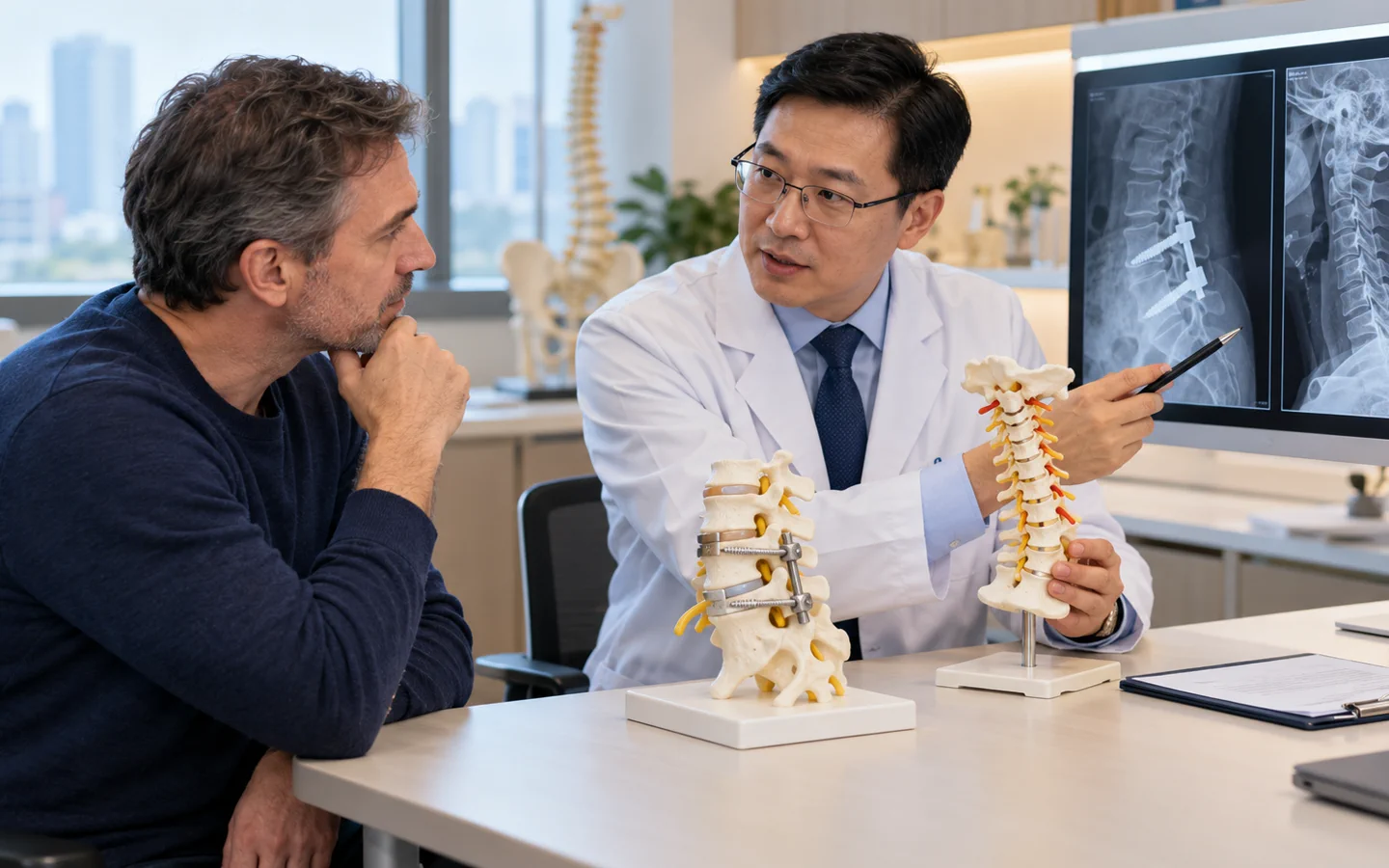
Chinese spine surgeon explaining fusion choices with cervical and lumbar models to an international patient

Medical records & cost enquiry

Spinal Fusion Surgery: assessment and cost questions

For Spinal Fusion, the budget depends on the proposed care and the hospital. A useful estimate needs to distinguish:

  • The spinal region and number of levels
  • Surgical approach, graft and implants
  • Admission and rehabilitation

Hospital medical fees, travel and our coordination services are separate. Any paid specialist review or coordination service is explained and agreed before you proceed.

Your next step

Start with your question

Tell us your diagnosis and what you need. Our free initial review checks the information and helps identify a suitable next step; it is not a specialist opinion or a hospital quotation.

Request a case-based estimate

Not ready to send records? Ask us first. Where hospital review is appropriate, we can help request an estimate. No travel commitment or mandatory proxy consultation.

Planning spinal fusion surgery in ChinaHospital review · individual costs · visit and follow-up

Plan the visit around the spinal diagnosis, fusion levels and implant scope. Agree the assessment route before travel.

Records for the spinal fusion surgery review

Tell us what you already have: Symptom and neurological history; Standing and flexion-extension X-rays; MRI and CT images with reports. Start with a short summary; after first contact we explain which records the receiving team needs and how to share them.

Confirm the proposed scope and costs

Before asking for a personal estimate, clarify: The spinal region and number of levels; Surgical approach, graft and implants; Admission and rehabilitation. The receiving team confirms the proposed scope and hospital charges; coordination is agreed separately.

Visits and care after returning home

Confirm the region and levels being considered, whether this is a first or revision procedure and how rehabilitation and later review would work. Tell us if you need interpretation or English-language documents, and confirm the relevant arrangements with the receiving team.

What is spinal fusion?

Spinal fusion is an operation intended to create a solid bridge of bone between two or more vertebrae. It can stabilise a painful or unstable segment, support alignment after deformity correction, or prevent instability after selected decompressions.

Screws, rods, plates or cages may hold the spine while bone graft heals, but the hardware is not the fusion itself. Fusion reduces motion at the treated level; it does not repair every source of back or neck pain and should be tied to a specific diagnosis.

Fusion is a family of operations, not one procedure

Cervical and lumbar fusion use different anatomy, approaches and recovery plans. The number of levels, need for decompression and reason for surgery determine far more than the word “fusion.”.

Who may be considered?

A specialist may consider fusion when instability or reconstruction is central to the problem. Examples include:.

  • Spondylolisthesis or another instability that matches symptoms and imaging.
  • Deformity such as scoliosis requiring structural correction.
  • A fracture, infection or tumour that has weakened the spine.
  • Selected recurrent disc disease or stenosis where decompression would leave instability.
  • Failure of a previous fusion or implant requiring revision.

What the hospital needs to assess

Evaluation typically combines symptoms and neurological examination with standing X-rays. Flexion-extension films may assess movement; MRI shows discs, nerves and soft tissues; CT shows bone and previous fusion. Bone density, nicotine use, diabetes, nutrition and medications can materially affect healing.

Key points for this treatment
Stabilitytwo or more vertebrae join
Bone graftfusion is a biological process
Many routesfront, back, side or combined
Monthsbone healing continues after discharge
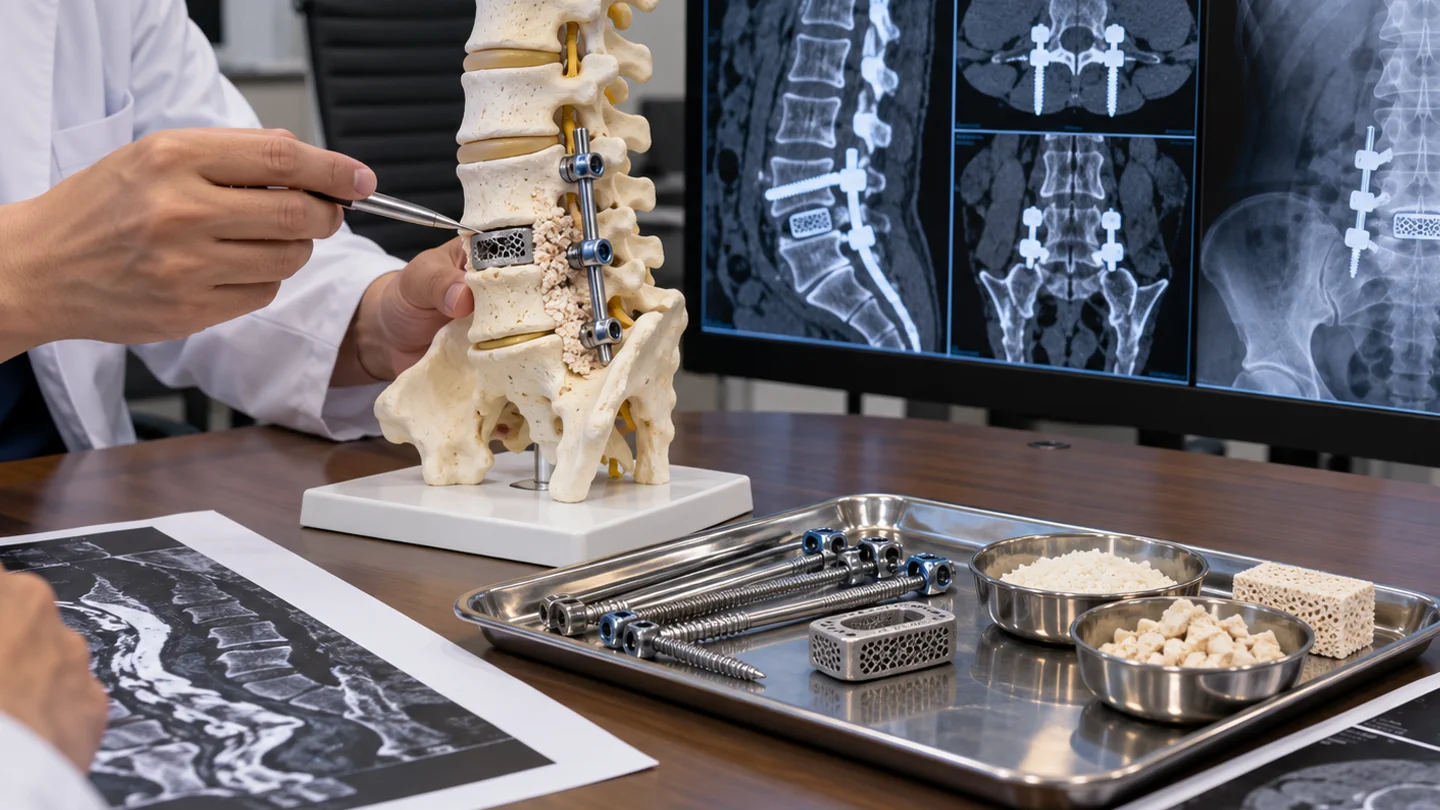
Lumbar fusion model with screws rods cage and bone graft beside CT and X-ray images
Hardware supports; bone must healApproach, graft, fixation and level selection are planned around the diagnosis, anatomy, bone quality and amount of decompression required.

How fusion is created

The surgeon exposes the target level from the front, back, side or a combination, removes tissue that needs decompression, prepares bony surfaces and places graft. A cage may restore disc height and hold graft between vertebral bodies; screws, rods or a plate provide temporary internal stability.

Over time, new bone should bridge the intended levels. “Minimally invasive,” navigation or robotic assistance describes how certain steps are performed, not a guarantee of a better indication or outcome.

ApproachChosen for access, decompression and alignment goals
GraftOwn bone, donor material or selected substitutes
InstrumentationSupports stability while fusion develops
Number of levelsAffects motion, complexity and recovery

Hospital stay and recovery

Walking and basic movement begin as medically safe. Restrictions on lifting, bending, driving and work differ by location and reconstruction. Some patients use a brace, but it is not universal.

Nicotine exposure can impair bone healing. Follow-up imaging checks alignment and hardware, yet solid fusion may take many months to demonstrate. Travel plans should include medication, wound review and access to urgent care.
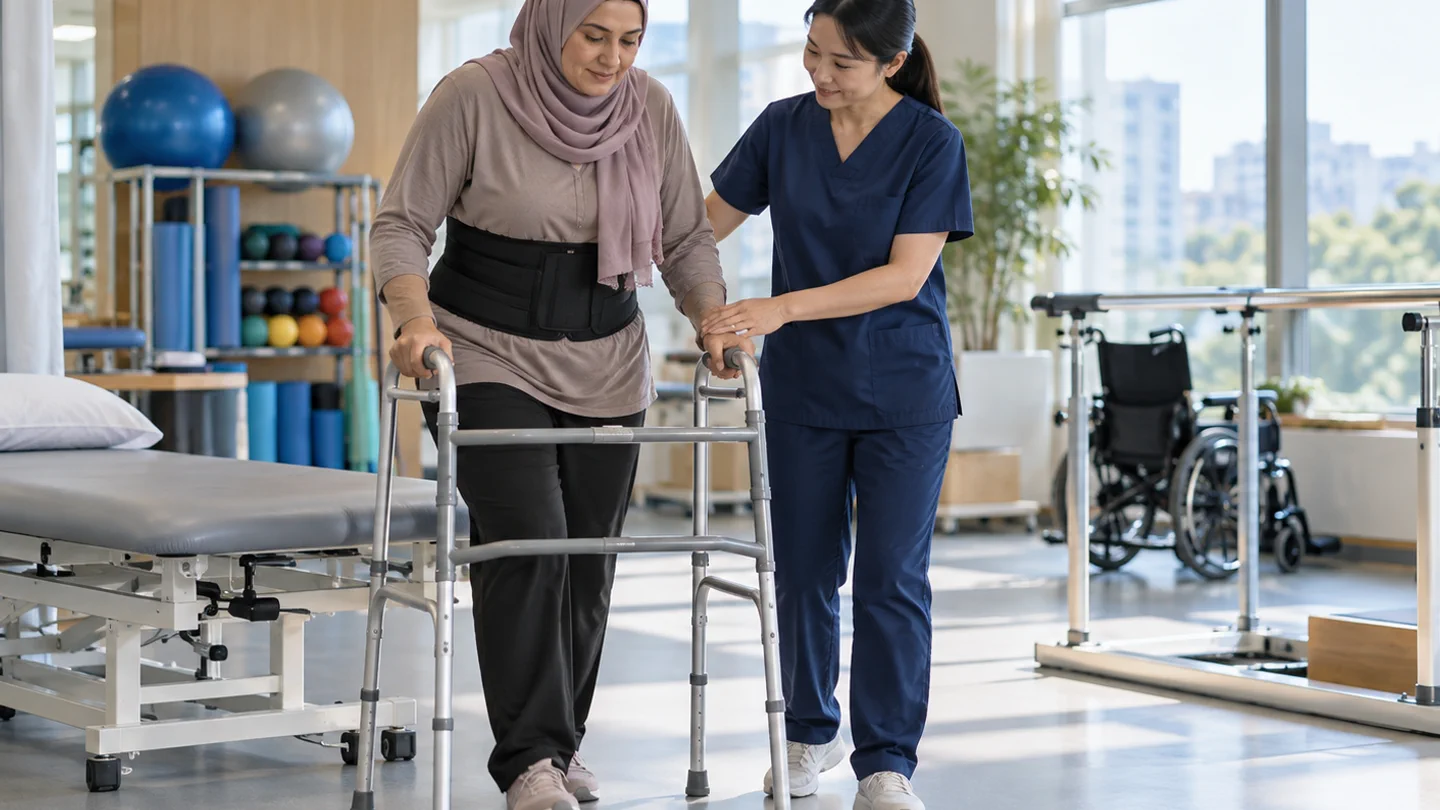
International patient walking with a frame under Chinese physiotherapist supervision after spinal fusion
Movement progresses without rushing fusionThe team balances early mobility with protection of the reconstruction and the patient’s neurological and medical condition.
Early phasePain control, wound and neurological checks
First weeksWalking and daily tasks with restrictions
Several monthsActivity progresses as healing is reviewed
Follow-upX-rays and sometimes CT assess the construct

Risks and realistic expectations

Risks include infection, bleeding, clot, anaesthetic complications, nerve injury, spinal-fluid leak, non-union, implant loosening or breakage, persistent symptoms and adjacent-level degeneration. Approach-specific risks can involve swallowing, voice, blood vessels, abdominal structures or positioning injury.

Seek urgent medical help

New weakness, loss of bladder or bowel control, fever, wound drainage, chest pain, breathlessness or rapidly escalating neck or back pain needs urgent assessment.

Before hospital review

Records for spinal fusion surgery assessment

The team needs to connect the proposed fusion to a specific mechanical or neurological problem.

Symptom and neurological history
Standing and flexion-extension X-rays
MRI and CT images with reports
Previous spine injections or therapy
Earlier operative notes and implant details
Bone-density results when relevant
Nicotine, medication and allergy history
Medical fitness and functional goals
Send original imaging when possible

Radiology reports are useful, but DICOM files let the spine team review levels, alignment, nerves, bone and previous implants directly.

Tell us what you need

Ask about your care,
your hospital and your budget.

You can ask about suitability, an expert opinion, an appointment or the likely medical cost. If you are unsure, choose “Not sure — please advise”.

This enquiry is aboutSpinal FusionNot sure — please advise

How a personal estimate is prepared

  1. Tell us about your case.Describe your diagnosis, main question and preferred city, if any.
  2. Share the relevant records.We explain what is needed and how to send it by WhatsApp or email.
  3. Request a hospital estimate.Where appropriate, we help request hospital review and a cost estimate. Any paid review is agreed first.

This is an enquiry, not an order or payment. Proxy consultation is not mandatory. Any service scope is agreed separately before you proceed.

Ask about Spinal Fusion

A first enquiry is free. Email and permission to respond are required; the other details are optional. Any paid clinical review or coordination is discussed separately.

Included automatically so we know which procedure you are asking about.
A preference, not a confirmed appointment.
Please do not send passport numbers, card details or full medical files in this first enquiry. We will explain which records are needed next.

Send a short summary first. This is an enquiry, not an order, payment or confirmed appointment.

No booking or payment is made by sending this enquiry.
Editorial transparency

Medical sources

Patient information is based on established spine and health-service guidance. Content updated 5 October 2026. This is patient information, not an individual clinical assessment.