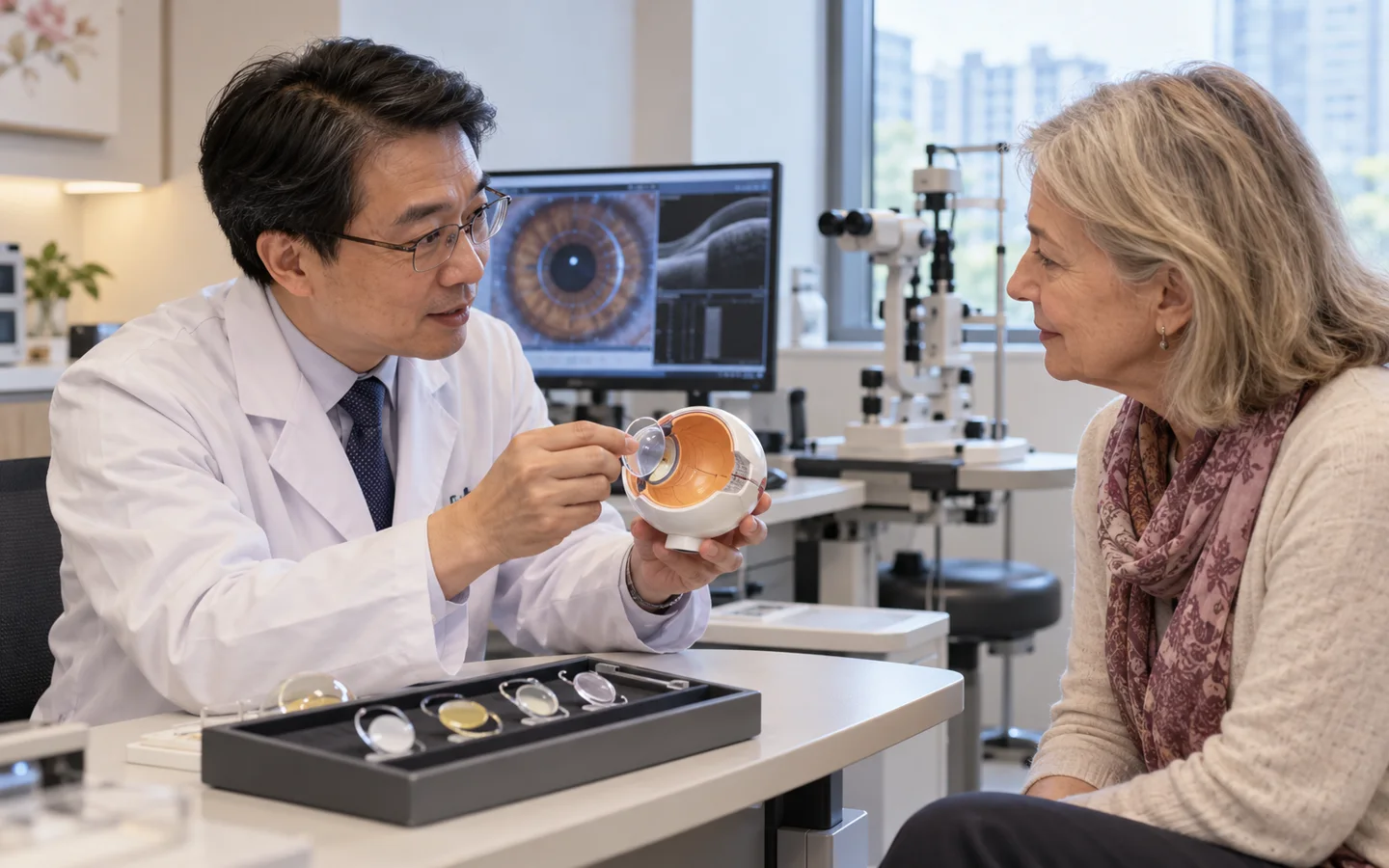
Cataract surgery replaces a cloudy lens with a clear artificial lens
The lens is usually broken into small pieces and removed through a small incision before an intraocular lens is inserted.
Visual outcome depends on more than the cataract. Macular disease, glaucoma, corneal irregularity, optic-nerve damage and previous refractive surgery can limit accuracy or improvement.
Distance, near, astigmatism and glasses expectations should be discussed using measurements and lifestyle priorities, not marketing labels.
Who may be considered?
Specialist review may help when the diagnosis, symptoms and previous treatment create a focused question about cataract surgery.
- A cataract interfering with reading, driving, work or necessary retinal assessment.
- Progressive glare or reduced contrast not adequately corrected by glasses.
- A patient whose ocular surface and retina have been evaluated.
- A patient who understands lens options and residual-glasses risk.
What the specialist team must confirm
Review dilated examination, optical biometry, corneal topography when needed, macular OCT, ocular surface, glaucoma status, previous eye surgery and desired distance and near tasks.
Key points for this treatment

From visual-needs assessment to stable refraction
The plan defines what surgery can improve, what disease may still limit vision and when the second eye should be considered.
Vision and eye pressure are checked during healing
Blur, light sensitivity and mild irritation may occur early. Prescribed drops and activity precautions reduce inflammation and infection risk.
Later review checks lens position, refraction, macula and posterior-capsule clouding. Glasses may still be useful even after a premium lens.
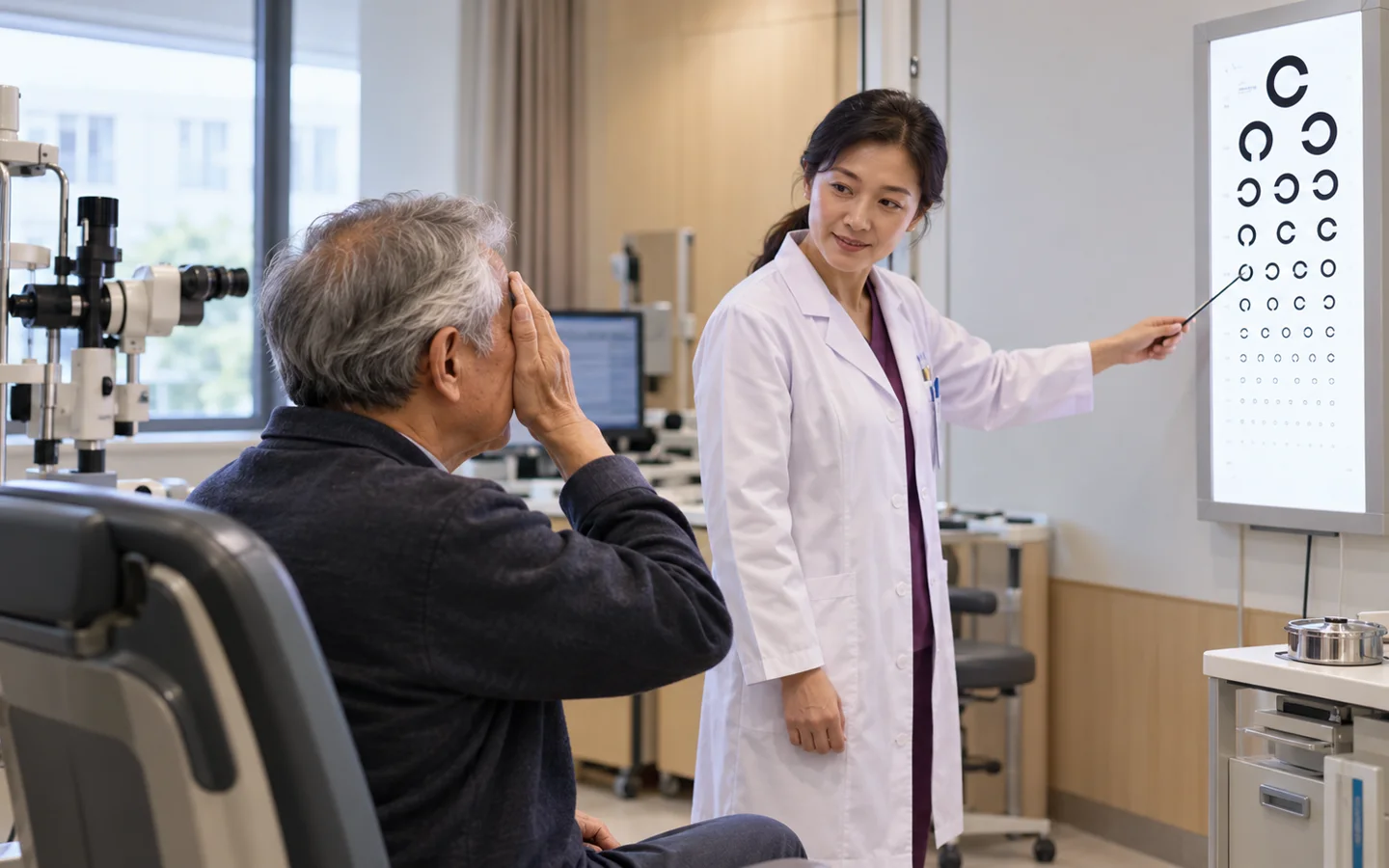
Risks, limits and realistic expectations
Risks include infection, inflammation, retinal detachment, swelling of the cornea or macula, pressure change, lens-position problems, glare, residual prescription and rare severe vision loss.
Severe eye pain, rapidly decreasing vision, increasing redness, flashes, a curtain-like shadow or nausea after surgery requires urgent ophthalmic assessment.