
Laser vision correction reshapes the cornea to reduce dependence on glasses
Different techniques create or avoid a corneal flap and have different healing profiles. None prevents age-related reading-glasses needs or future eye disease.
A normal-looking prescription is not enough. Corneal tomography, residual stromal thickness, ocular surface, pupil, occupation and visual priorities determine suitability.
Irregular tomography, unstable prescription, significant dry eye or unrealistic expectations can outweigh convenience benefits.
Who may be considered?
Specialist review may help when the diagnosis, symptoms and previous treatment create a focused question about laser vision correction.
- An adult with stable refractive error and healthy corneas.
- A patient whose prescription falls within the safe treatment range.
- A patient with manageable ocular-surface disease and realistic expectations.
- A patient who understands alternatives including glasses contact lenses and ICL.
What the specialist team must confirm
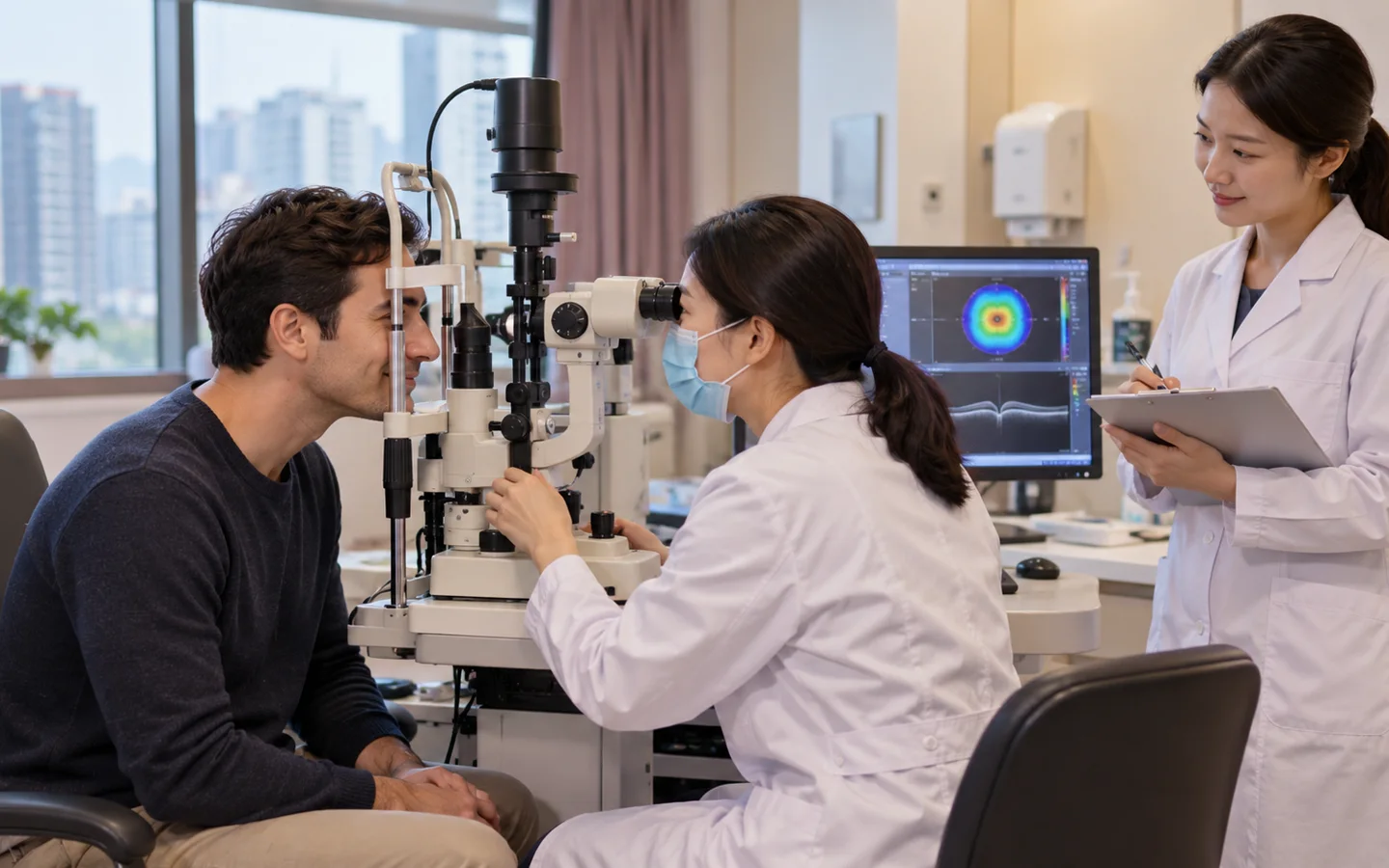
Review manifest and cycloplegic refraction, corneal topography and tomography, pachymetry, tear film and lids, pupil size, retinal health, pregnancy status, autoimmune disease and contact-lens history.
Key points for this treatment

From candidacy screening to stable binocular vision
The plan addresses both eyes, near-vision expectations, occupation, night driving and the possibility of residual correction.
Surface healing and dryness affect early quality
Vision can fluctuate with tear film and healing. Prescribed drops, hygiene and temporary activity limits reduce complications.
Later review checks refraction, corneal shape, dryness, haze or flap issues and whether an enhancement is safe or necessary.
Risks, limits and realistic expectations
Risks include dry eye, glare, halos, fluctuating or reduced quality of vision, under- or over-correction, infection, haze, flap problems, ectasia and need for further treatment.
Increasing pain, redness, discharge, light sensitivity or sudden visual decline after laser treatment requires urgent eye assessment.