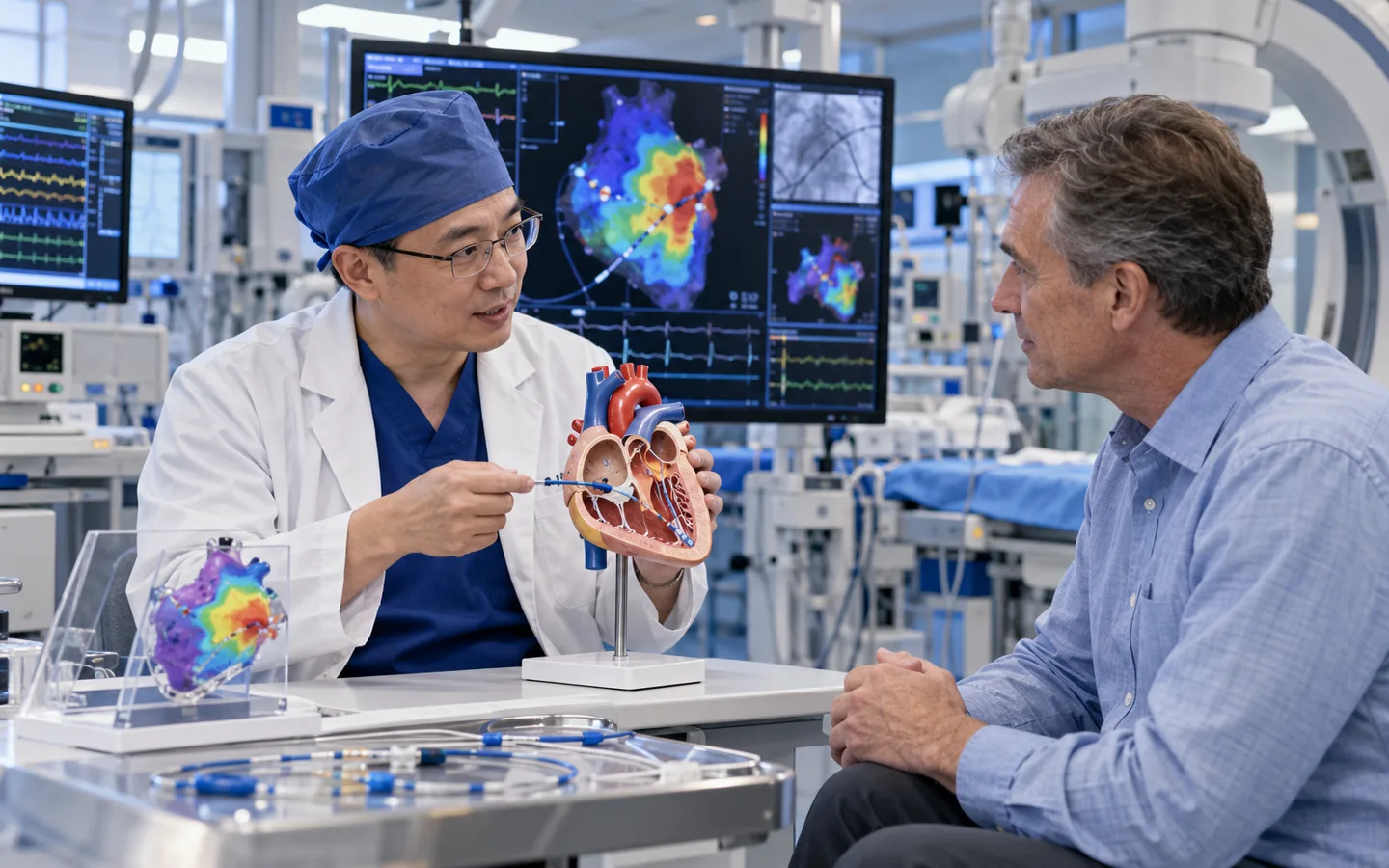
Ablation targets tissue responsible for an abnormal rhythm
Electrode catheters record electrical signals inside the heart. Radiofrequency, cryothermal or other energy is applied to interrupt a specific trigger or circuit.
The procedure varies substantially between a simple supraventricular tachycardia and complex atrial fibrillation or ventricular tachycardia. Diagnosis and prior rhythm documentation are essential.
A symptom description alone cannot reliably determine the correct ablation. Preserve ECGs, monitor strips and device recordings.
Who may be considered?
Specialist review may help when the diagnosis, symptoms and previous treatment create a focused question about catheter ablation for arrhythmia.
- Recurrent symptomatic SVT or typical atrial flutter.
- Symptomatic AF despite or instead of selected antiarrhythmic therapy.
- Selected ventricular tachycardia or frequent ventricular ectopy.
- An arrhythmia causing cardiomyopathy or recurrent hospital care.
What the specialist team must confirm
The electrophysiology team reviews 12-lead ECGs, ambulatory and device recordings, symptom correlation, heart structure and function, previous medicines or ablation, stroke and bleeding risk, sleep apnea, thyroid status and anesthesia risk.
Key points for this treatment
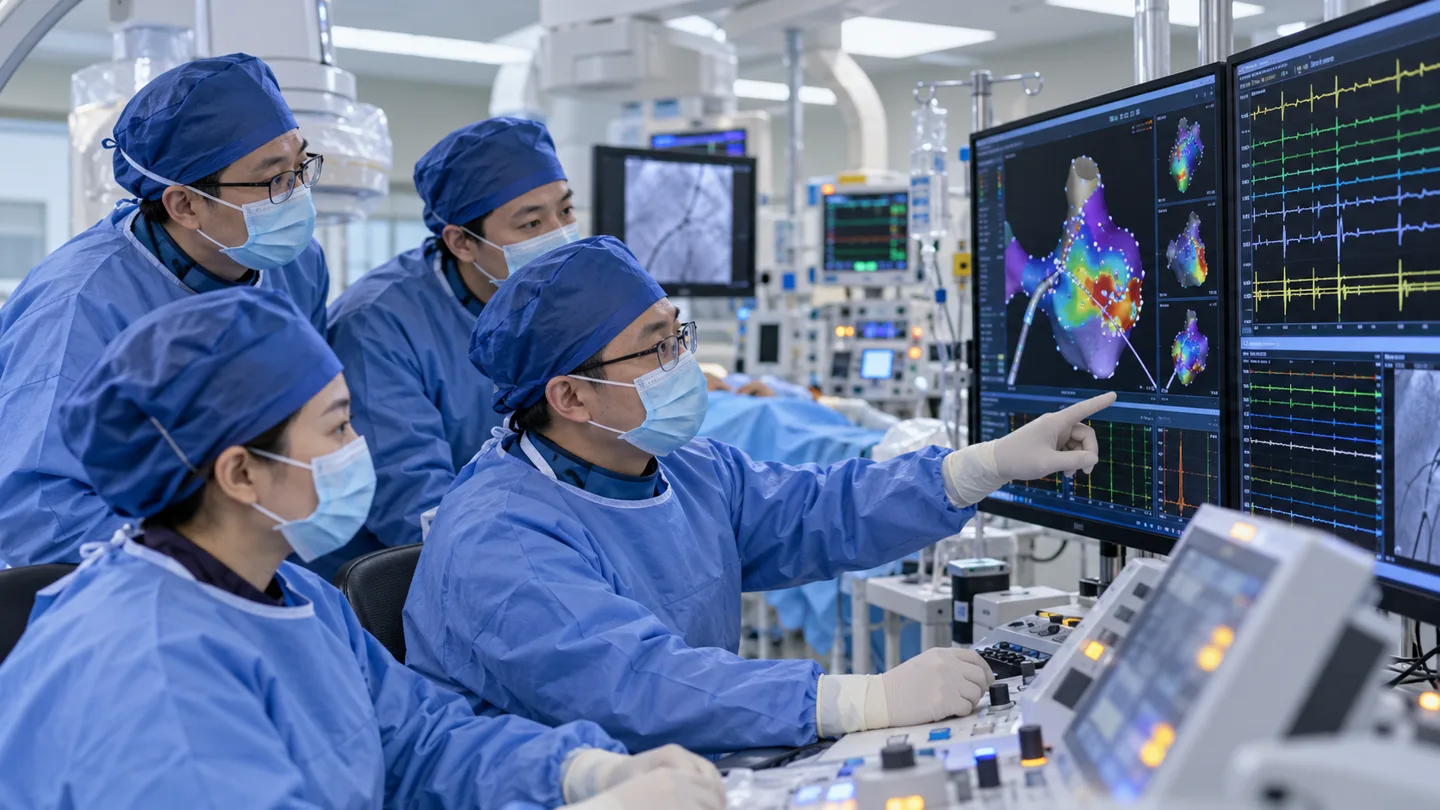
From rhythm proof to mechanism-specific ablation
The specialist distinguishes curative focal circuits from arrhythmias that may need repeat treatment and ongoing disease management.
A healing period precedes the long-term rhythm result
Palpitations can occur early after some ablations and do not always mean treatment failure. Access sites, rhythm and complications are reviewed.
Follow-up may include ECG, ambulatory or device monitoring. Anticoagulation for AF is based on stroke risk and specialist review, not symptoms alone.

Risks, limits and realistic expectations
Risks include bleeding, vascular injury, cardiac perforation, stroke, heart block, pulmonary-vein narrowing, esophageal injury in AF ablation, coronary injury, recurrence and death. Success varies by rhythm and underlying disease.
Chest pain, severe breathlessness, fainting, stroke symptoms, vomiting blood or sustained rapid rhythm after ablation needs urgent local care.