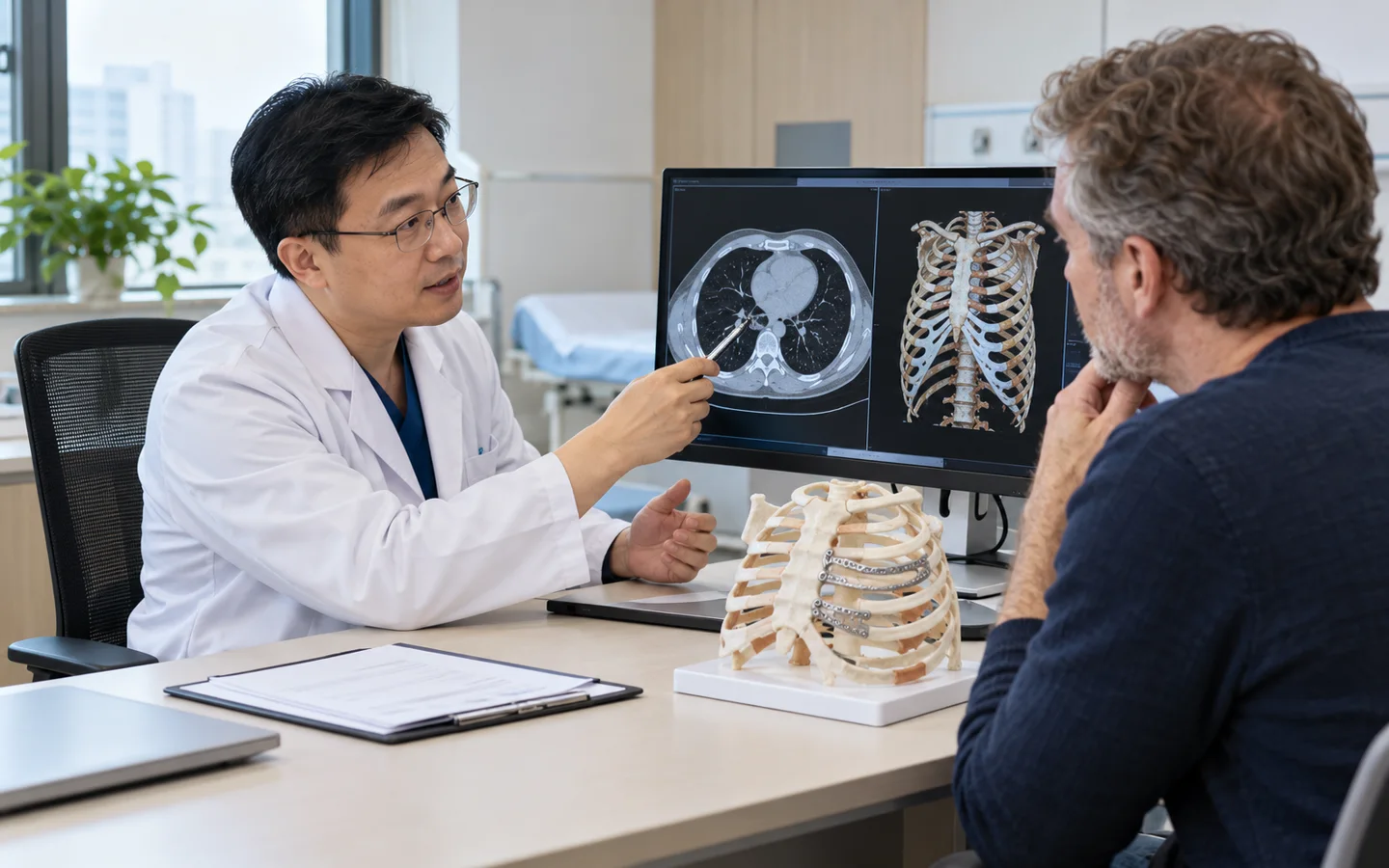
Reconstruction restores stability after part of the chest wall is removed
Tumor resection, infection, radiation injury or major trauma can leave a defect involving ribs, sternum, muscle or skin. Reconstruction may combine structural support with well-vascularized tissue coverage.
The safest plan depends on defect size and location, contamination, lung function, previous radiation and whether organs or major vessels are involved. A smaller defect may not require rigid reconstruction.
Ask which structures are expected to be removed, what material will replace them and how the team will manage an unexpectedly larger defect.
Who may be considered?
Specialist review may help when the diagnosis, symptoms and previous treatment create a focused question about chest wall resection and reconstruction.
- A primary or secondary chest-wall tumor considered resectable.
- A painful or unstable defect after previous surgery, infection or radiation.
- Complex chest trauma requiring restoration of stability.
- A sternum or rib defect needing durable soft-tissue coverage.
What the specialist team must confirm
The team reviews contrast CT or MRI, pathology, prior operations and radiation, skin and muscle quality, respiratory reserve, infection status, smoking, nutrition and the likelihood that lung, diaphragm or major-vessel resection will also be needed.
Key points for this treatment
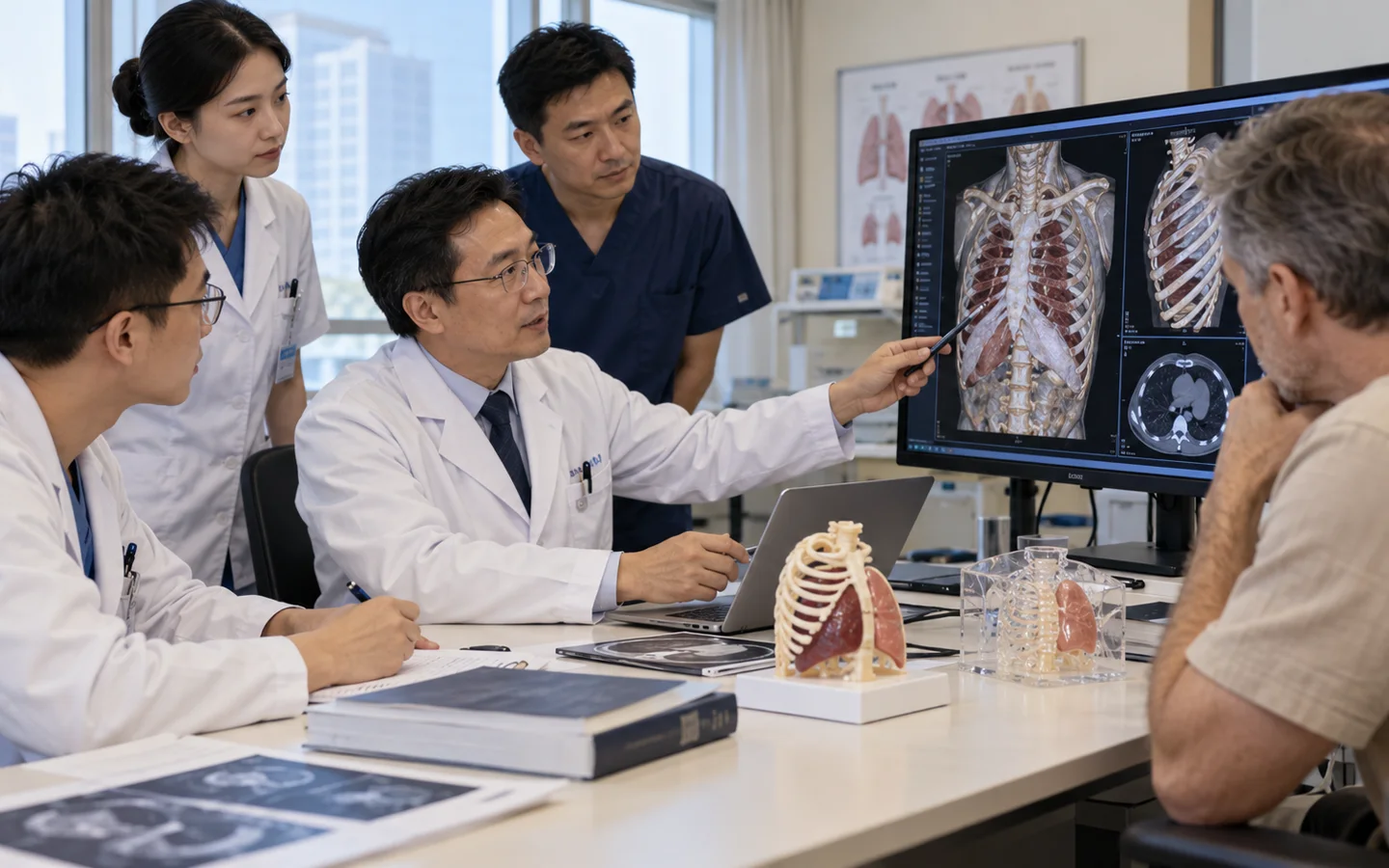
From defect mapping to coordinated reconstruction
Thoracic and reconstructive surgeons align oncologic or infection control with a closure that protects the lungs without making the chest excessively rigid.
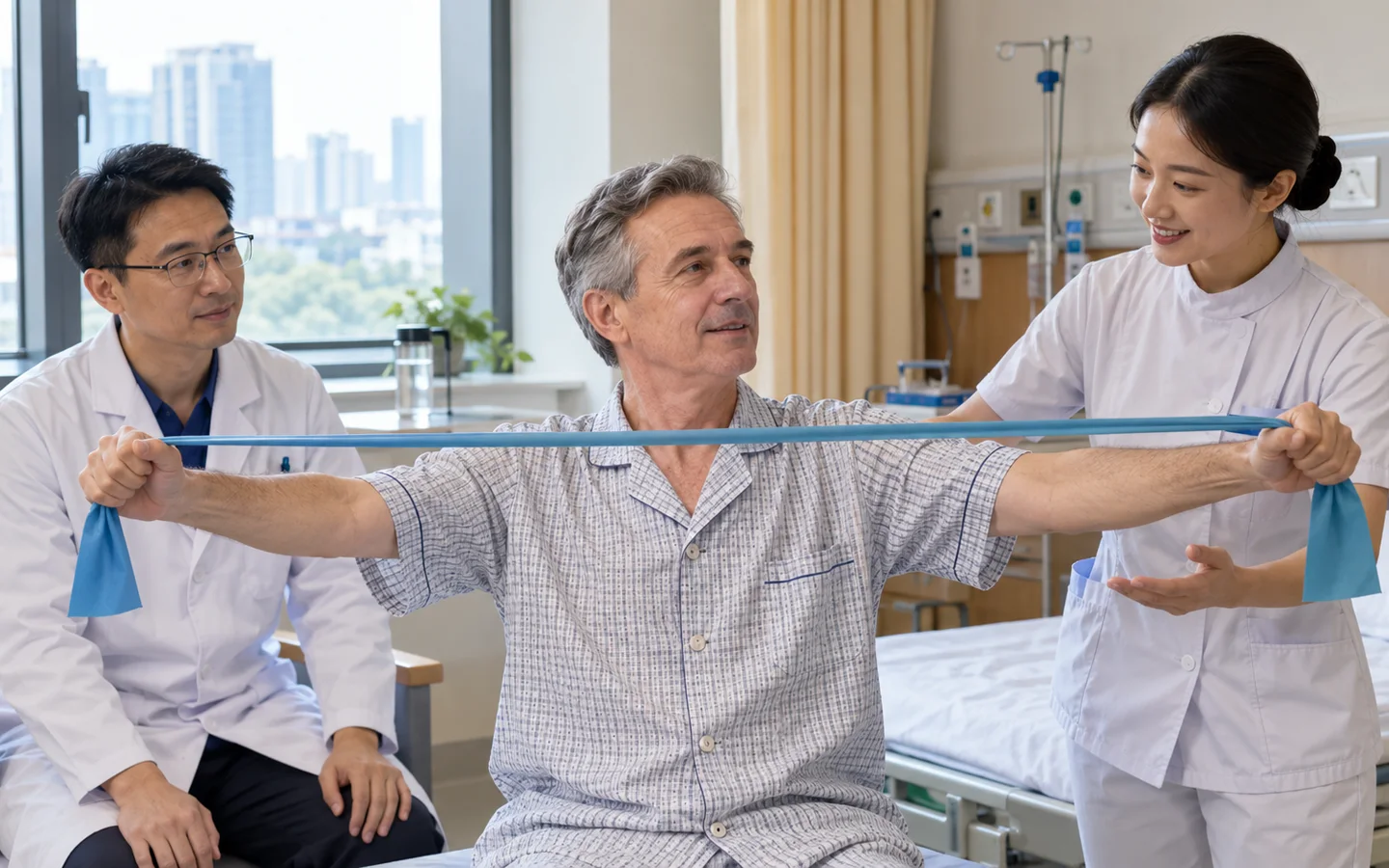
Recovery follows breathing mechanics and wound healing
Pain control, lung expansion, drains, wound perfusion and shoulder movement are monitored early. Some patients need temporary activity restrictions while plates, mesh or flaps settle.
Later review checks infection, material movement, respiratory function, contour and recurrence when reconstruction followed tumor surgery.
Risks, limits and realistic expectations
Risks include bleeding, infection, pneumonia, prolonged ventilation, chronic pain, material exposure or movement, flap failure, respiratory restriction, tumor recurrence and need for further reconstruction.
New breathing difficulty, fever, wound drainage, rapidly increasing swelling or sudden chest-wall instability requires urgent local assessment.