
Tracheal reconstruction removes a limited segment and reconnects healthy airway
Surgery may treat post-intubation stenosis, selected primary tracheal tumors, trauma or other focal disease. The diseased rings are removed and the remaining ends joined.
The safe resection length is limited. Location near the larynx or carina, previous radiation, infection, steroid use and poor tissue blood supply can increase risk or require a different plan.
Severe narrowing can deteriorate quickly. Stridor, inability to lie flat or rising oxygen needs require urgent local airway assessment rather than waiting for overseas review.
Who may be considered?
Specialist review may help when the diagnosis, symptoms and previous treatment create a focused question about tracheal resection and reconstruction.
- A short symptomatic benign tracheal stenosis not adequately managed endoscopically.
- A localized primary tracheal tumor considered completely resectable.
- Selected traumatic or inflammatory airway injury.
- A patient with sufficient healthy airway to permit low-tension reconstruction.
What the specialist team must confirm
The airway team reviews thin-slice CT with reconstruction, bronchoscopy, exact stenosis length and distance from vocal cords or carina, pathology, previous intubation and airway procedures, voice and swallowing, lung function, infection and prior radiotherapy.
Key points for this treatment
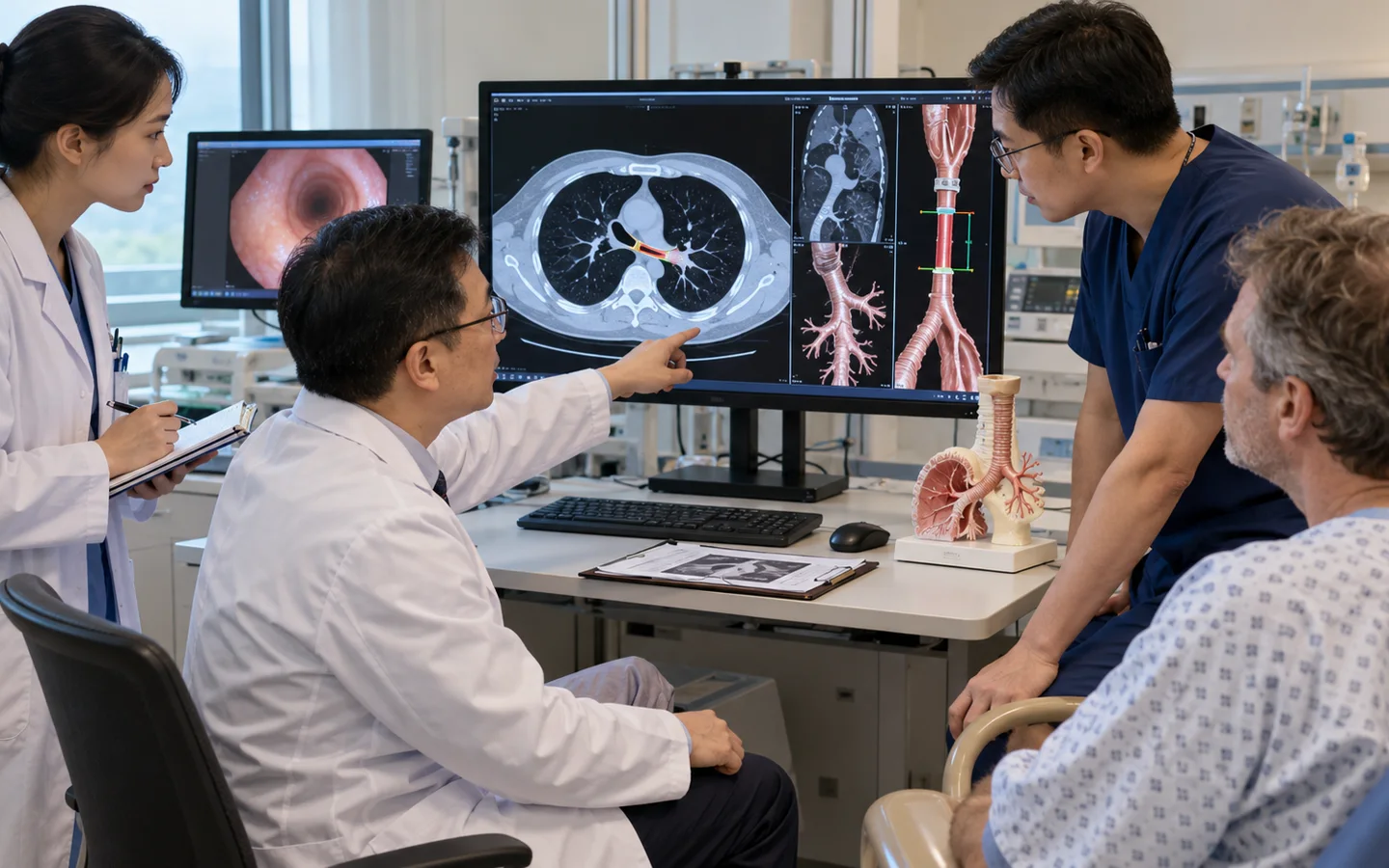
From airway mapping to tension-free reconstruction
Surgeons and anesthetists coordinate continuously because the operative field is also the patient’s breathing pathway.
The airway connection must heal without tension
Neck position, coughing, secretions and breathing are managed carefully. Bronchoscopy may assess healing when symptoms or protocol indicate.
Later follow-up checks narrowing, granulation, voice, swallowing and the original disease. Activity and neck-movement restrictions are individualized.

Risks, limits and realistic expectations
Risks include airway leak or separation, bleeding, infection, restenosis, granulation, recurrent-laryngeal-nerve injury, swallowing problems, need for tracheostomy, recurrent tumor and death.
Stridor, rapidly worsening breathlessness, blue lips, inability to clear secretions, coughing blood or sudden neck swelling requires emergency local care.