
Home / Thoracic Surgery / Pleurectomy and Decortication
Thoracic surgery patient guide · 胸膜切除与剥脱术

Pleurectomy & Decortication in China

Considering pleurectomy & decortication in China? Start with pleural diagnosis, disease extent and proposed operation. This guide helps you identify the relevant records, questions for the receiving team and the scope of an individual estimate before a visit is agreed.

Chinese thoracic surgeon explaining pleural peel removal and lung re expansion to an international patient

Medical records & cost enquiry

Pleurectomy & Decortication: assessment and cost questions

For Pleurectomy and Decortication, the budget depends on the proposed care and the hospital. A useful estimate needs to distinguish:

  • The pleural condition and extent of surgery
  • Reconstruction and associated procedures
  • Admission, rehabilitation and further treatment

Hospital medical fees, travel and our coordination services are separate. Any paid specialist review or coordination service is explained and agreed before you proceed.

Your next step

Start with your question

Tell us your diagnosis and what you need. Our free initial review checks the information and helps identify a suitable next step; it is not a specialist opinion or a hospital quotation.

Request a case-based estimate

Not ready to send records? Ask us first. Where hospital review is appropriate, we can help request an estimate. No travel commitment or mandatory proxy consultation.

Planning pleurectomy & decortication in ChinaHospital review · individual costs · visit and follow-up

Plan the visit around pleural diagnosis, disease extent and proposed operation. Agree the assessment route before travel.

Records for the pleurectomy & decortication review

Tell us what you already have: Contrast chest CT or PET DICOM; Pleural biopsy and pathology; Pleural-fluid cultures and cytology. Start with a short summary; after first contact we explain which records the receiving team needs and how to share them.

Confirm the proposed scope and costs

Before asking for a personal estimate, clarify: The pleural condition and extent of surgery; Reconstruction and associated procedures; Admission, rehabilitation and further treatment. The receiving team confirms the proposed scope and hospital charges; coordination is agreed separately.

Visits and care after returning home

Clarify the indication and ask how the team evaluates the proposed operation, rehabilitation and any associated treatment. Tell us if you need interpretation or English-language documents, and confirm the relevant arrangements with the receiving team.

Pleurectomy and decortication remove restrictive or diseased pleural tissue

Decortication peels dense tissue from the lung so it can re-expand, often after organized infection. Pleurectomy removes diseased parietal pleura and may be part of selected mesothelioma treatment.

The terms cover operations with very different extent. The team must state whether surgery is for infection, trapped lung, recurrent air leak, symptom relief or macroscopic tumor reduction.

Define the goal and expected completeness

For pleural cancer, surgery is usually part of multimodality care and may not remove microscopic disease; for empyema, source control and lung expansion are central.

Who may be considered?

Specialist review may help when the diagnosis, symptoms and previous treatment create a focused question about pleurectomy and decortication.

  • Organized empyema with a trapped lung despite drainage and antibiotics.
  • A symptomatic fibrous pleural peel preventing expansion.
  • Selected pleural mesothelioma within an experienced multidisciplinary programme.
  • Recurrent pleural disease requiring operative control in carefully assessed cases.

What the specialist team must confirm

The team reviews contrast CT or PET, pleural pathology and microbiology, drain history, lung expansion, pulmonary reserve, infection activity, cancer stage, diaphragm and chest-wall involvement and whether complete macroscopic resection is realistic.

Key points for this treatment
Targetdiseased pleura or fibrous peel
Goalexpand lung or reduce pleural disease
Indicationsempyema or selected mesothelioma
Recoveryair leak drains and breathing
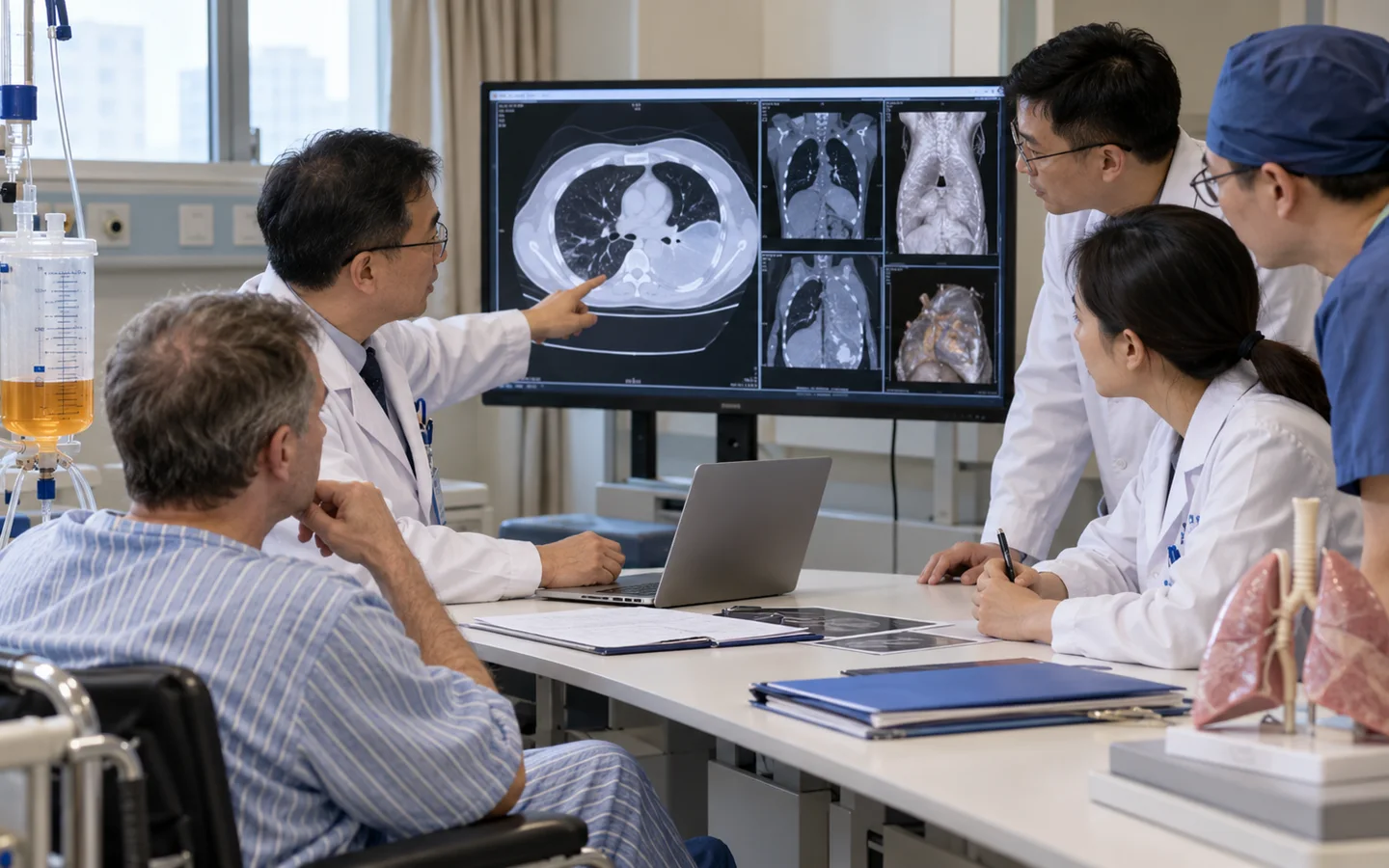
Chinese pleural disease team reviewing CT pathology and chest drain history before decortication
Pleural disease must be mapped over the whole hemithoraxImaging and operative findings guide how much pleura can be removed safely and whether lung, diaphragm or pericardium requires repair.

From pleural diagnosis to lung re-expansion or cytoreduction

The operation is justified only when its physiologic or symptom goal is clear and less-invasive drainage or systemic treatment is insufficient.

DefineSeparate infection trapped lung and tumor goals
ControlTreat sepsis fluid and nutrition
ReleaseRemove peel or diseased pleura
ExpandManage air leak drains and rehabilitation

Drains and lung expansion shape recovery

Multiple chest drains may remain while air and fluid output settle. Pain control and respiratory physiotherapy support expansion of a lung that may have been compressed for weeks.

For infection, cultures and antibiotics guide follow-up. For cancer, pathology and remaining disease determine systemic therapy, radiation or surveillance.

International patient completing deep breathing walking and drain follow up after pleurectomy decortication
Recovery can be gradual after a trapped lungThe lung and chest wall may need time to regain movement even after the restrictive peel is removed.
Expanded lungReduce drains as output settles
Persistent spaceAssess leak or nonexpanding lung
Infection controlComplete culture-directed therapy
Pleural cancerCoordinate multimodality follow-up

Risks, limits and realistic expectations

Risks include major bleeding, prolonged air leak, pneumonia, empyema, respiratory failure, diaphragm or nerve injury, incomplete lung expansion, persistent pain, recurrent pleural disease and death.

Do not delay urgent local care

Worsening breathlessness, fever, purulent drainage, coughing blood, fainting or rapidly increasing chest pain requires urgent local care.

Before hospital review

Records for pleurectomy & decortication assessment

A safe international review depends on dated source reports, original imaging and a complete treatment timeline—not a diagnosis label alone.

Contrast chest CT or PET DICOM
Pleural biopsy and pathology
Pleural-fluid cultures and cytology
Drain procedures and output history
Antibiotic and infection timeline
Pulmonary-function tests
Cancer staging and treatment records
Current medicines nutrition and performance status

Tell us what you need

Ask about your care,
your hospital and your budget.

You can ask about suitability, an expert opinion, an appointment or the likely medical cost. If you are unsure, choose “Not sure — please advise”.

This enquiry is aboutPleurectomy and DecorticationNot sure — please advise

How a personal estimate is prepared

  1. Tell us about your case.Describe your diagnosis, main question and preferred city, if any.
  2. Share the relevant records.We explain what is needed and how to send it by WhatsApp or email.
  3. Request a hospital estimate.Where appropriate, we help request hospital review and a cost estimate. Any paid review is agreed first.

This is an enquiry, not an order or payment. Proxy consultation is not mandatory. Any service scope is agreed separately before you proceed.

Ask about Pleurectomy and Decortication

A first enquiry is free. Email and permission to respond are required; the other details are optional. Any paid clinical review or coordination is discussed separately.

Included automatically so we know which procedure you are asking about.
A preference, not a confirmed appointment.
Please do not send passport numbers, card details or full medical files in this first enquiry. We will explain which records are needed next.

Send a short summary first. This is an enquiry, not an order, payment or confirmed appointment.

No booking or payment is made by sending this enquiry.
Editorial transparency

Medical sources

Patient information is based on established government and professional guidance. Content updated 5 October 2026. This is patient information, not an individual clinical assessment.