Home / ENT (Ear, Nose & Throat) / Tympanoplasty
ENT patient guide · 鼓室成形术

Tympanoplasty in China

Considering tympanoplasty in China? Start with ear findings, hearing tests and repair scope. This guide helps you identify the relevant records, questions for the receiving team and the scope of an individual estimate before a visit is agreed.

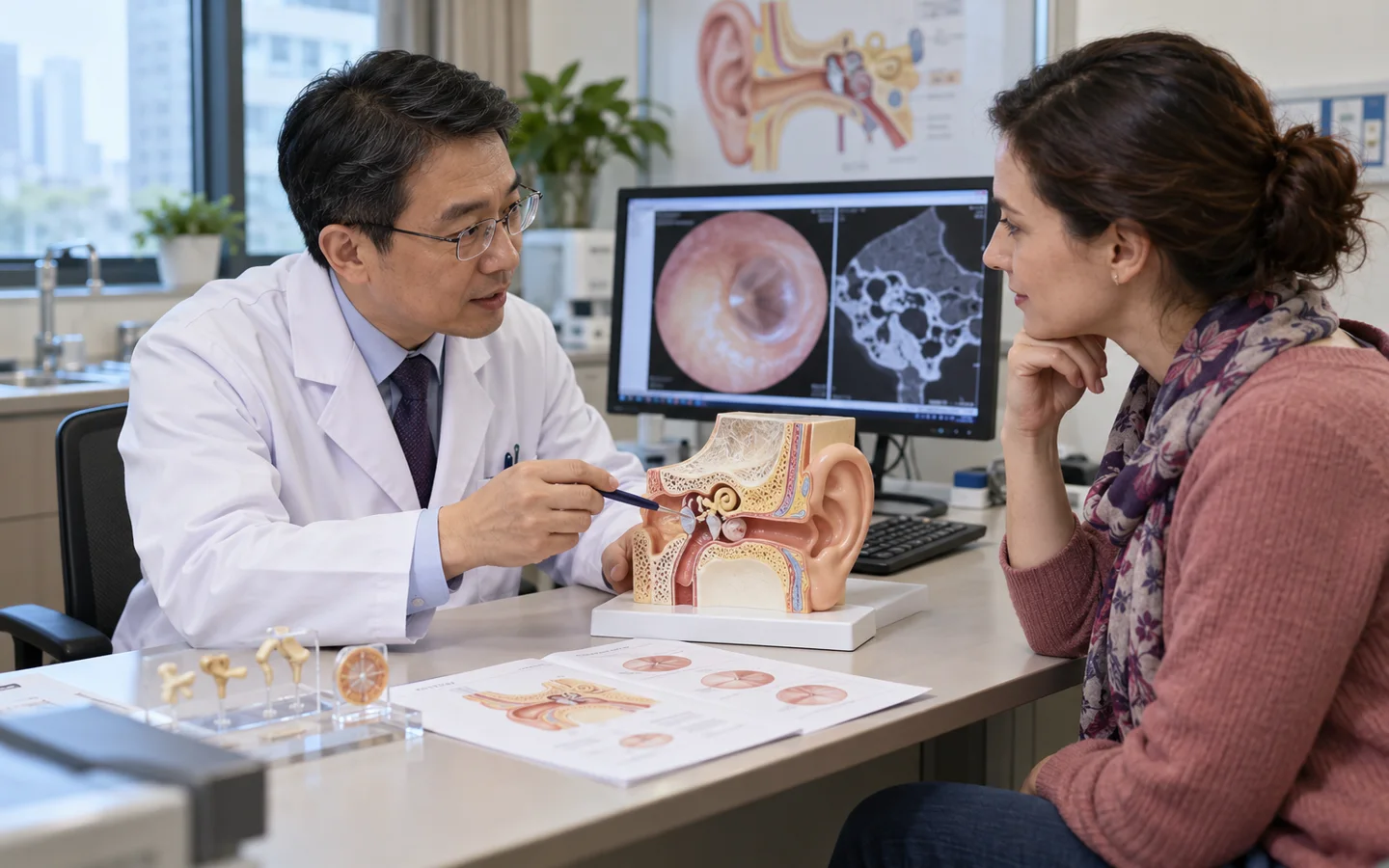
Chinese ENT specialist explaining eardrum repair and middle-ear hearing reconstruction using an anatomical ear model to a fully clothed international patient

Medical records & cost enquiry

Tympanoplasty: assessment and cost questions

For Tympanoplasty, the budget depends on the proposed care and the hospital. A useful estimate needs to distinguish:

  • Eardrum and middle-ear findings
  • Graft, hearing-bone repair or other procedures
  • Postoperative ear and hearing care

Hospital medical fees, travel and our coordination services are separate. Any paid specialist review or coordination service is explained and agreed before you proceed.

Your next step

Start with your question

Tell us your diagnosis and what you need. Our free initial review checks the information and helps identify a suitable next step; it is not a specialist opinion or a hospital quotation.

Request a case-based estimate

Not ready to send records? Ask us first. Where hospital review is appropriate, we can help request an estimate. No travel commitment or mandatory proxy consultation.

Planning tympanoplasty in ChinaHospital review · individual costs · visit and follow-up

Plan the visit around ear findings, hearing tests and repair scope. Agree the assessment route before travel.

Records for the tympanoplasty review

Tell us what you already have: Ear microscopy findings; Pure-tone and speech audiograms; Tympanometry if possible. Start with a short summary; after first contact we explain which records the receiving team needs and how to share them.

Confirm the proposed scope and costs

Before asking for a personal estimate, clarify: Eardrum and middle-ear findings; Graft, hearing-bone repair or other procedures; Postoperative ear and hearing care. The receiving team confirms the proposed scope and hospital charges; coordination is agreed separately.

Visits and care after returning home

Ask whether the proposed repair involves additional ear surgery and how later hearing and ear checks would be scheduled. Tell us if you need interpretation or English-language documents, and confirm the relevant arrangements with the receiving team.

Tympanoplasty: diagnosis, function and long-term planning

Tympanoplasty is considered when a persistent eardrum perforation, retraction or middle-ear damage causes infection, drainage or conductive hearing loss.

The plan must distinguish a simple membrane defect from cholesteatoma, ossicular erosion, Eustachian-tube dysfunction or active infection because each changes access and hearing expectations.

Who may be considered?

Specialist review may help when a perforation does not heal, drainage recurs or conductive hearing loss affects daily life.

  • A persistent traumatic or infectious eardrum perforation.
  • Chronic ear discharge after medical treatment.
  • Retraction or middle-ear disease requiring a stable barrier.
  • A patient with realistic hearing and water-protection goals.

What the specialist team must confirm

Review otomicroscopy, pure-tone and speech audiometry, tympanometry when possible, culture during active drainage, temporal-bone CT for suspected cholesteatoma or ossicular disease and previous ear operations.

Key points for this treatment
Repairseardrum and sometimes ossicles
Before surgerydry ear and hearing tests
Goalsafe ear plus useful hearing
Follow-upgraft healing over months
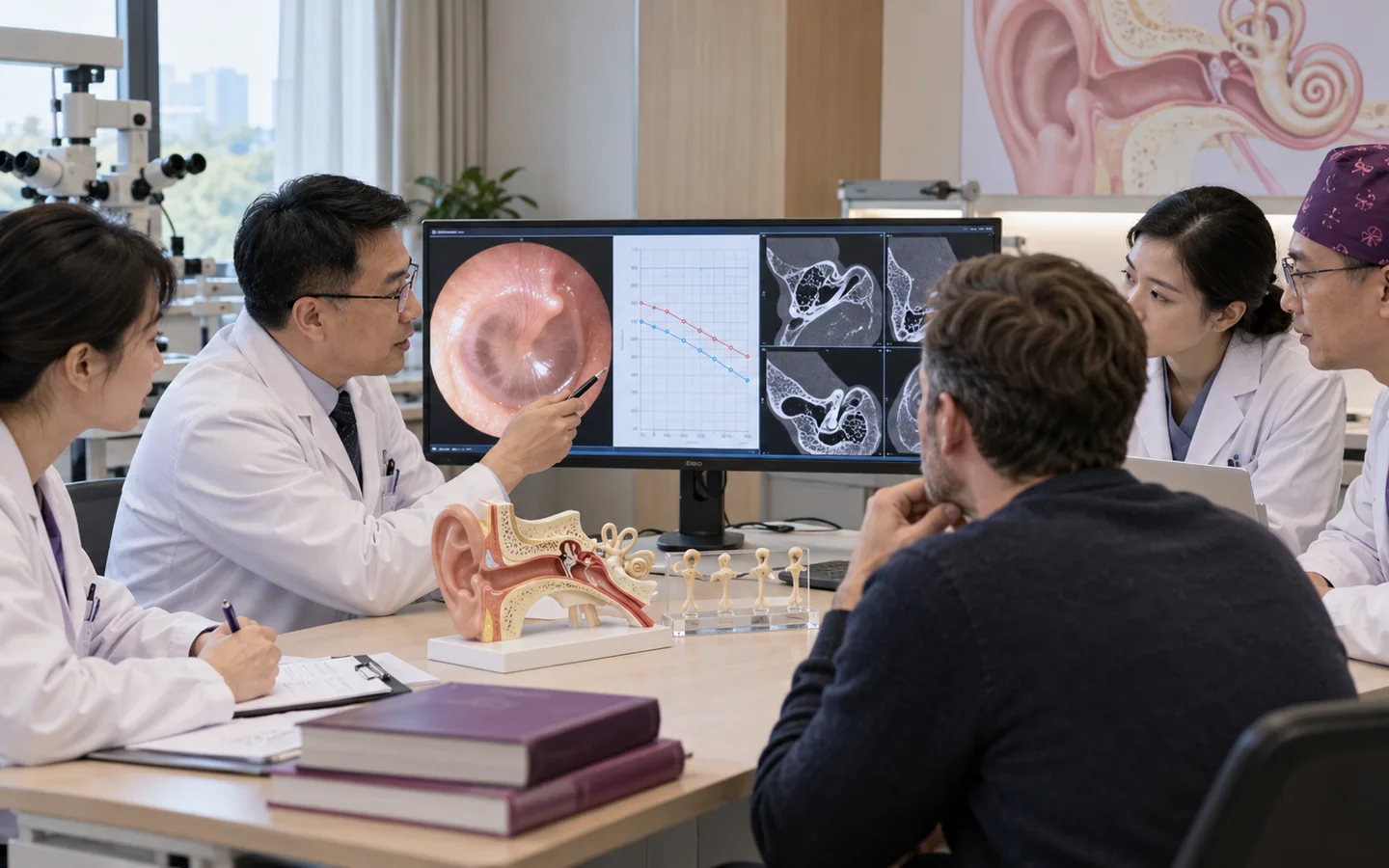
Chinese multidisciplinary ENT team reviewing otoscopy audiograms temporal-bone images graft choice and ossicular condition
A dry intact membrane is not the only outcomeThe team should separately explain infection control, graft closure and likely hearing improvement.

From chronic perforation to a stable hearing ear

Surgical access, graft material and ossicular reconstruction depend on the location and condition of the remaining eardrum.

DefineMap perforation and middle ear
ControlTreat infection and inflammation
RepairPlace graft and reconstruct if needed
TestConfirm healing and hearing

The graft needs protection while hearing settles

Packing, pressure precautions and keeping the ear dry are commonly required while the graft attaches.

Microscopy and audiometry document closure, middle-ear aeration and whether residual conductive loss needs further treatment.

Fully clothed international patient completing microscopic eardrum graft healing and repeat hearing testing with a Chinese ENT clinician
Hearing may remain muffled during early healingPacking, swelling and middle-ear fluid can delay the final audiogram.
Graft intactRepeat hearing test
Persistent gapObserve or discuss revision
Ossicular lossConsider staged reconstruction
DrainageCulture and reassess disease

Risks, limits and realistic expectations

Risks include graft failure, infection, altered taste, tinnitus, dizziness, persistent or worse hearing loss, facial-nerve injury and recurrent middle-ear disease.

Do not delay urgent local care

Increasing pain, fever, facial weakness, severe vertigo, sudden hearing loss or persistent foul drainage requires urgent ENT review.

Before hospital review

Records for tympanoplasty assessment

A safe international review depends on dated source reports, original imaging and a complete treatment timeline—not a diagnosis label alone.

Ear microscopy findings
Pure-tone and speech audiograms
Tympanometry if possible
Temporal-bone CT DICOM if performed
Culture and antibiotic history
Previous ear operation notes
Timeline of drainage and infections
Current hearing-aid use

Tell us what you need

Ask about your care,
your hospital and your budget.

You can ask about suitability, an expert opinion, an appointment or the likely medical cost. If you are unsure, choose “Not sure — please advise”.

This enquiry is aboutTympanoplastyNot sure — please advise

How a personal estimate is prepared

  1. Tell us about your case.Describe your diagnosis, main question and preferred city, if any.
  2. Share the relevant records.We explain what is needed and how to send it by WhatsApp or email.
  3. Request a hospital estimate.Where appropriate, we help request hospital review and a cost estimate. Any paid review is agreed first.

This is an enquiry, not an order or payment. Proxy consultation is not mandatory. Any service scope is agreed separately before you proceed.

Ask about Tympanoplasty

A first enquiry is free. Email and permission to respond are required; the other details are optional. Any paid clinical review or coordination is discussed separately.

Included automatically so we know which procedure you are asking about.
A preference, not a confirmed appointment.
Please do not send passport numbers, card details or full medical files in this first enquiry. We will explain which records are needed next.

Send a short summary first. This is an enquiry, not an order, payment or confirmed appointment.

No booking or payment is made by sending this enquiry.
Editorial transparency

Medical sources

Patient information is based on established government and professional guidance. Content updated 5 October 2026. This is patient information, not an individual clinical assessment.