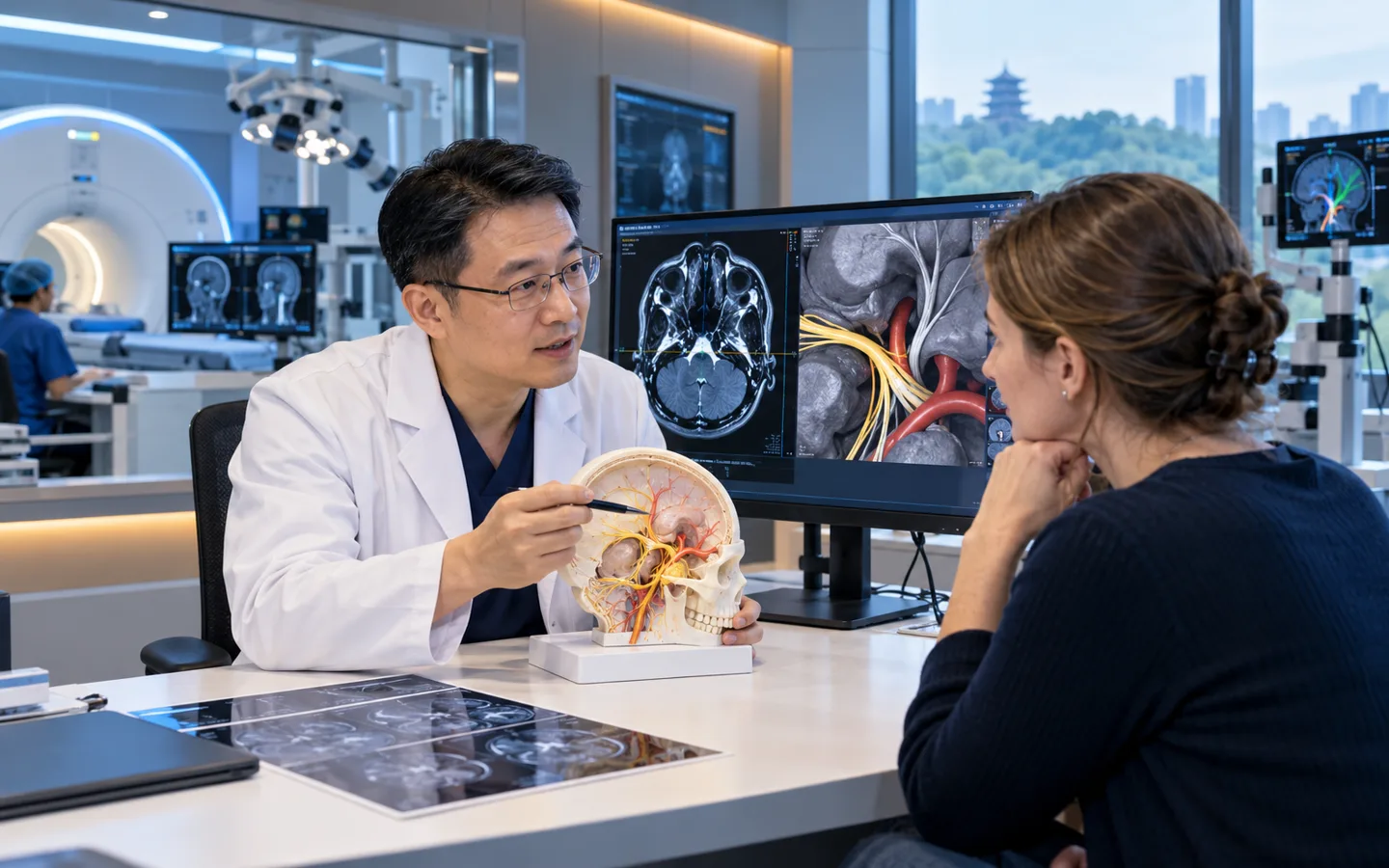
Microvascular decompression moves a vessel away from a cranial nerve
Through a small opening behind the ear, the surgeon identifies a vessel compressing a cranial nerve and places separation material or repositions the vessel.
The operation is used mainly for classical trigeminal neuralgia and hemifacial spasm. Diagnosis rests on the symptom pattern and examination; MRI supports planning and excludes other causes.
Incidental vessel contact is common. Surgery should not be based on an MRI image without a compatible clinical diagnosis.
Who may be considered?
Specialist review may help when the diagnosis, symptoms and previous treatment create a focused question about microvascular decompression.
- Classical trigeminal neuralgia with medication failure or intolerance.
- Hemifacial spasm causing significant disability.
- A patient seeking durable decompression rather than destructive nerve treatment.
- Recurrent symptoms after previous treatment requiring specialist reassessment.
What the specialist team must confirm
The team reviews pain or spasm pattern, triggers, side and neurologic examination, medicine response, high-resolution cranial-nerve MRI, hearing, previous injections or procedures, surgical health and alternative percutaneous or radiosurgical options.
Key points for this treatment
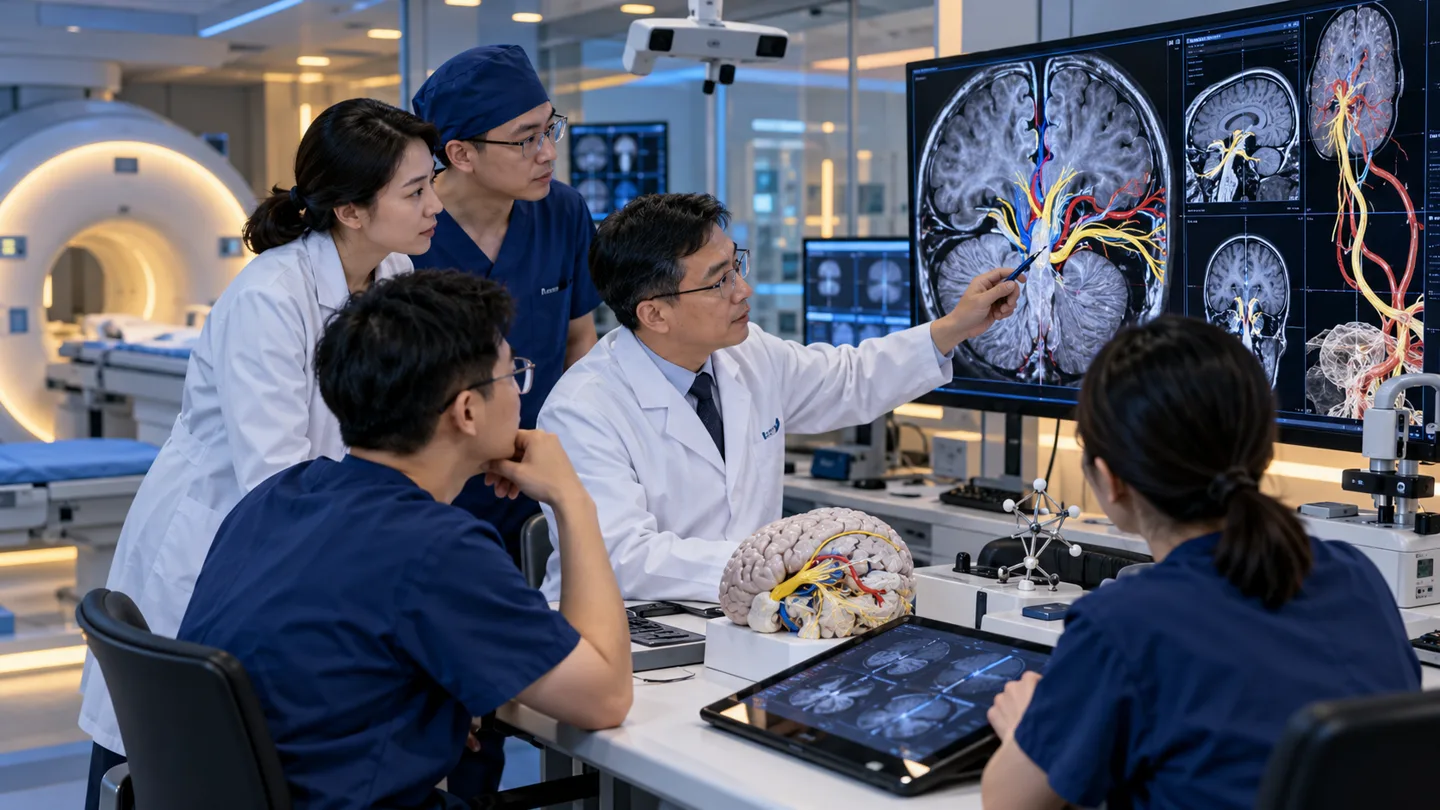
From syndrome confirmation to nerve-preserving decompression
The operation aims to relieve compression without intentionally damaging the nerve, unlike some alternative procedures.
Relief may be immediate, but recurrence remains possible
Early monitoring includes hearing, facial function, balance, cerebrospinal-fluid leakage and wound care. Medicines are tapered only with clinical advice.
Long-term review tracks recurrent pain or spasm and any sensory, hearing or balance change.
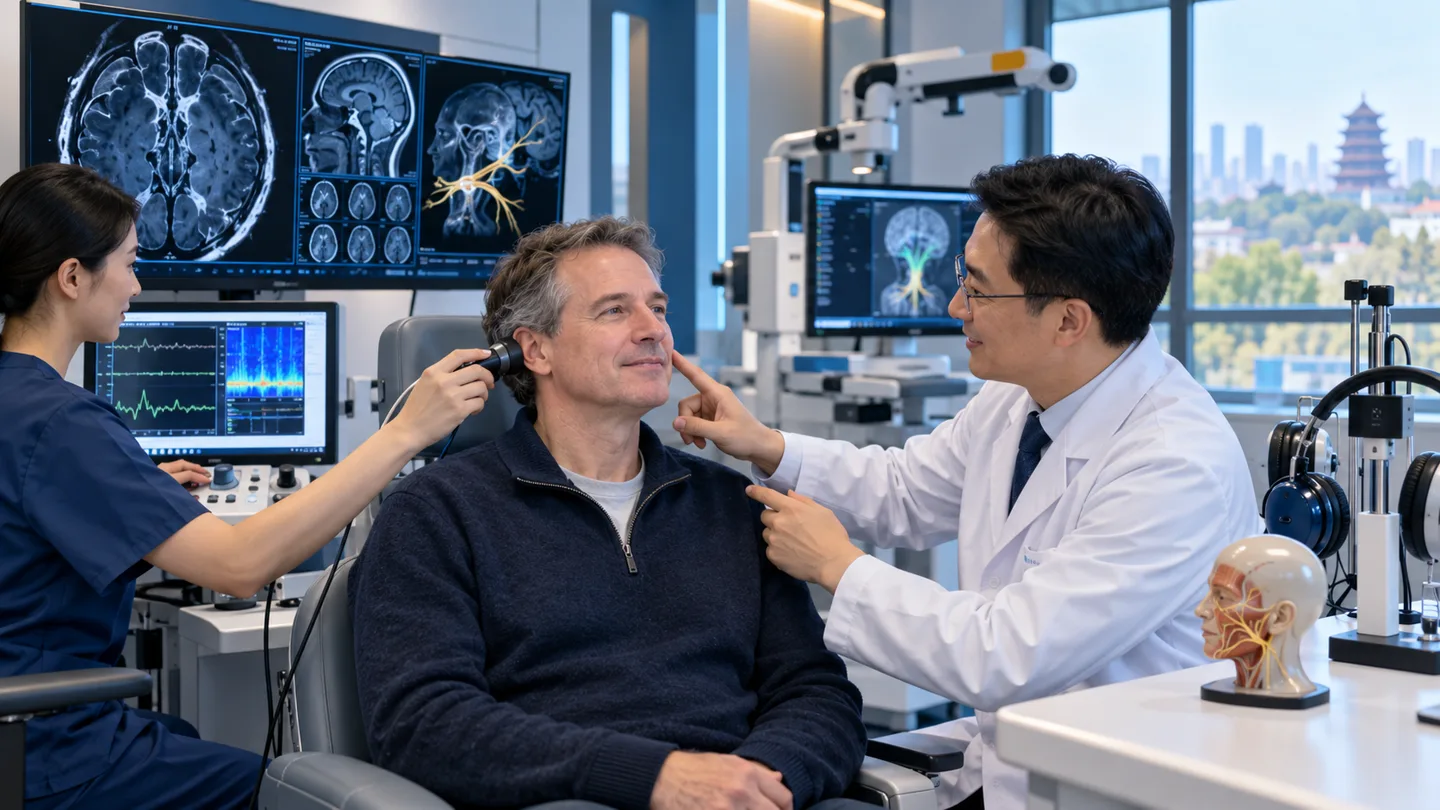
Risks, limits and realistic expectations
Risks include hearing loss, facial weakness or numbness, balance problems, cerebrospinal-fluid leak, infection, bleeding, stroke, persistent symptoms, recurrence and death. Not every facial pain syndrome responds.
New facial weakness with other neurologic symptoms, severe headache, fever, clear wound fluid or reduced consciousness requires urgent local care.