Replantation is time-critical reconstruction
Replantation attempts to reattach a completely amputated digit, hand or limb. Revascularisation restores blood flow to an incompletely amputated part. Both require immediate trauma assessment and microsurgical resources. They are not suitable for delayed elective travel.
The first priority is the patient: control bleeding with direct pressure, treat shock and reach emergency care. Wrap the amputated part in clean damp gauze, seal it in a waterproof bag, then place that bag on ice or cold water. Do not place tissue directly on ice, freeze it, scrub it or delay transport while seeking a distant hospital.
This page cannot triage an emergency. The receiving trauma centre must coordinate transfer; ischaemia time, mechanism and the patient’s condition determine what is possible.
Who may be considered?
The microsurgical team weighs likely function against the burden and risk. Factors include:.
- Level and number of amputated parts, with the thumb and multiple digits often prioritised.
- Clean sharp injury versus crush, avulsion, contamination or segmental damage.
- Warm and cold ischaemia time and how the part was stored.
- Patient age, health, smoking, other injuries and ability to tolerate a long operation.
- Expected sensation, motion, rehabilitation and whether revision amputation may offer better function.
What the hospital needs to assess
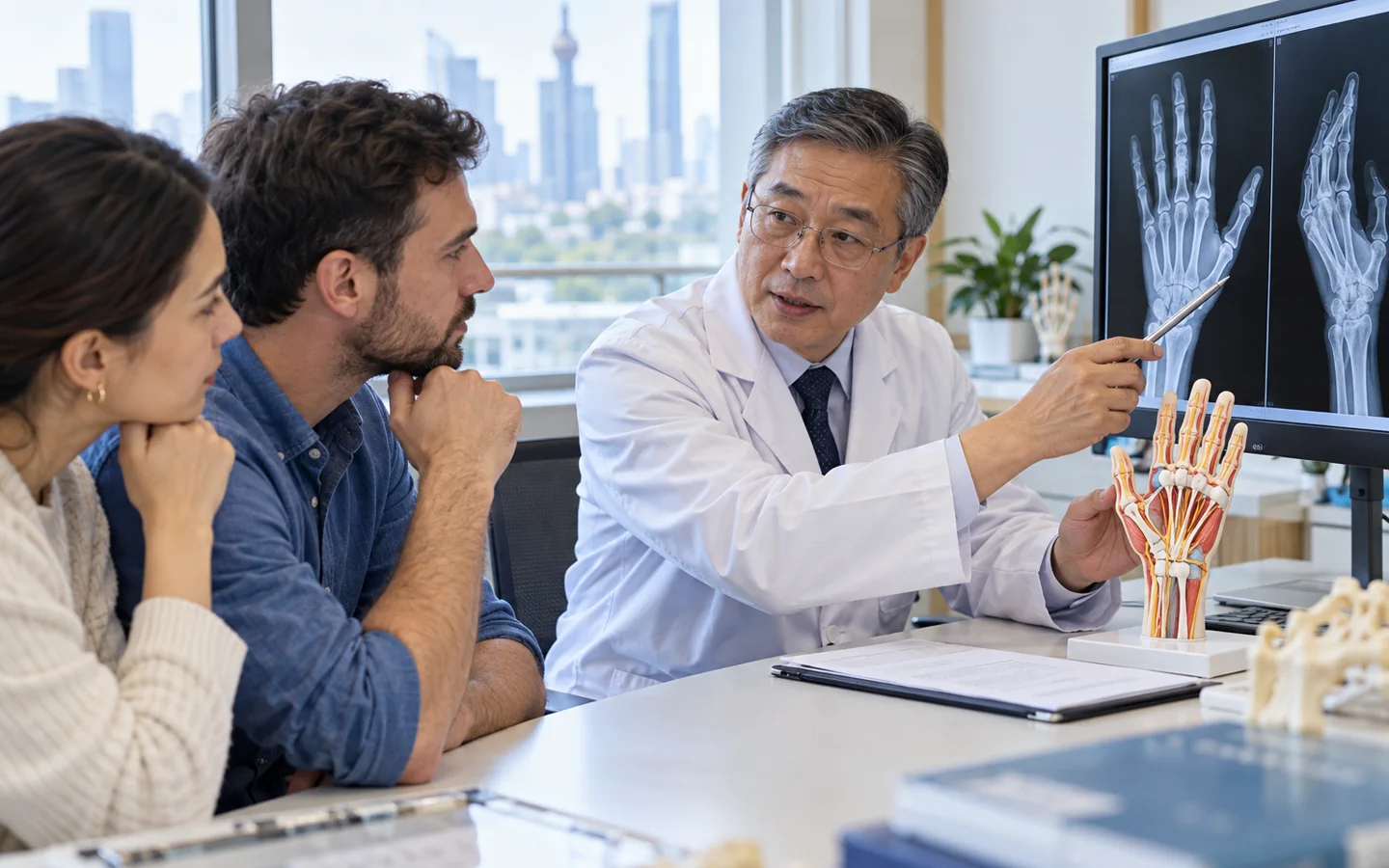
Emergency evaluation includes circulation, tissue damage, X-rays and associated trauma. The team records mechanism, exact time, storage conditions and pre-existing hand function. For later reconstruction, they assess bone union, tendons, nerves, scars, vascular status and the patient’s practical goals.
Key points for this treatment
How replantation and reconstruction are performed
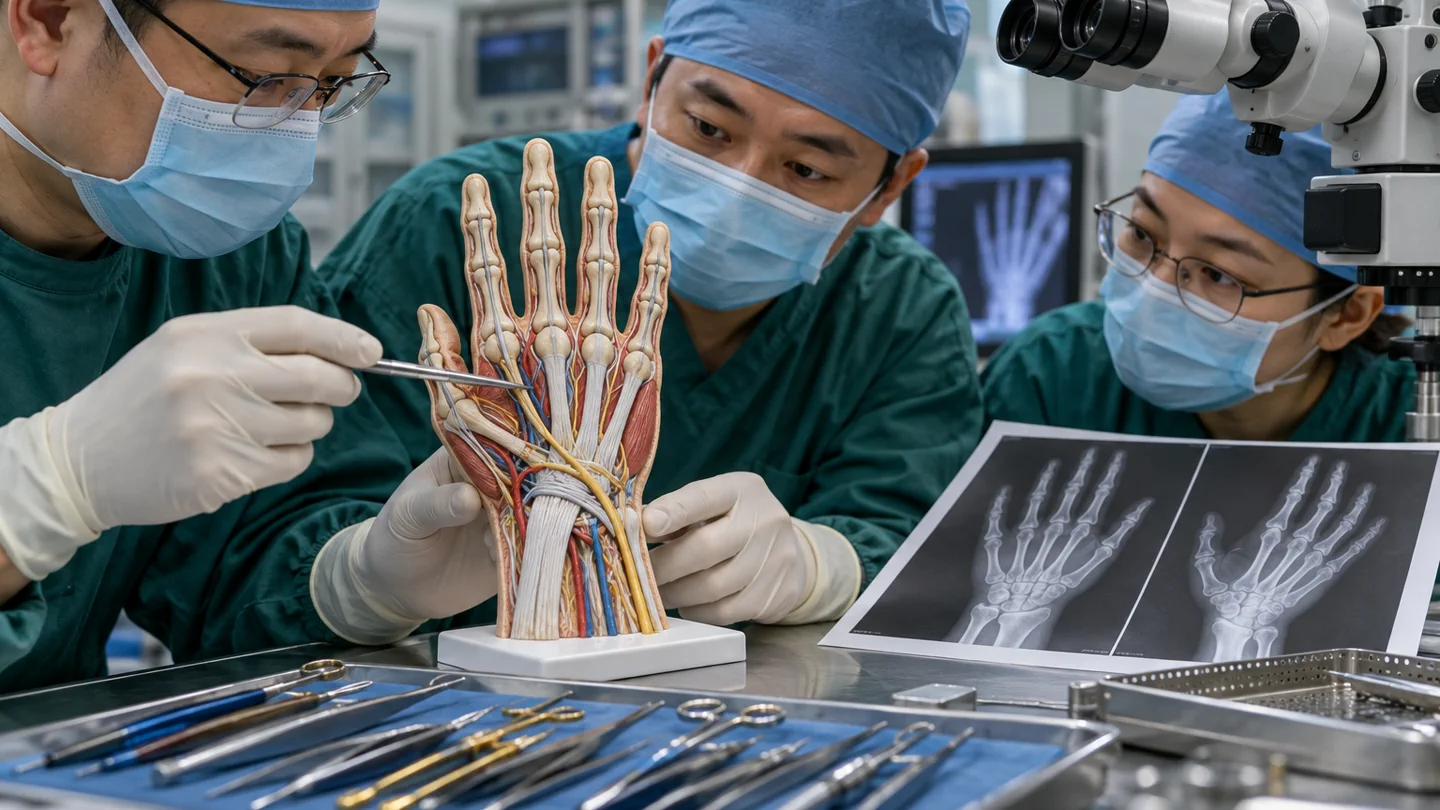
Damaged tissue is cleaned, bone is shortened and stabilised, then tendons, arteries, veins, nerves and skin are repaired under magnification. Vein grafts or soft-tissue coverage may be needed. Close monitoring checks colour, temperature and blood flow; selected cases use medicinal leeches for venous congestion.
If replantation is not feasible or fails, revision amputation, local or free-flap coverage, toe transfer, tendon transfer, nerve reconstruction or prosthetic rehabilitation may support function. A technically surviving part is not automatically a useful hand, so the functional plan matters from the start.
Hospital stay and recovery
Monitoring is intensive during the first days. Nicotine must be avoided because it constricts vessels. The hand may require warming, anticoagulation or further surgery, and loss of the replanted part remains possible.
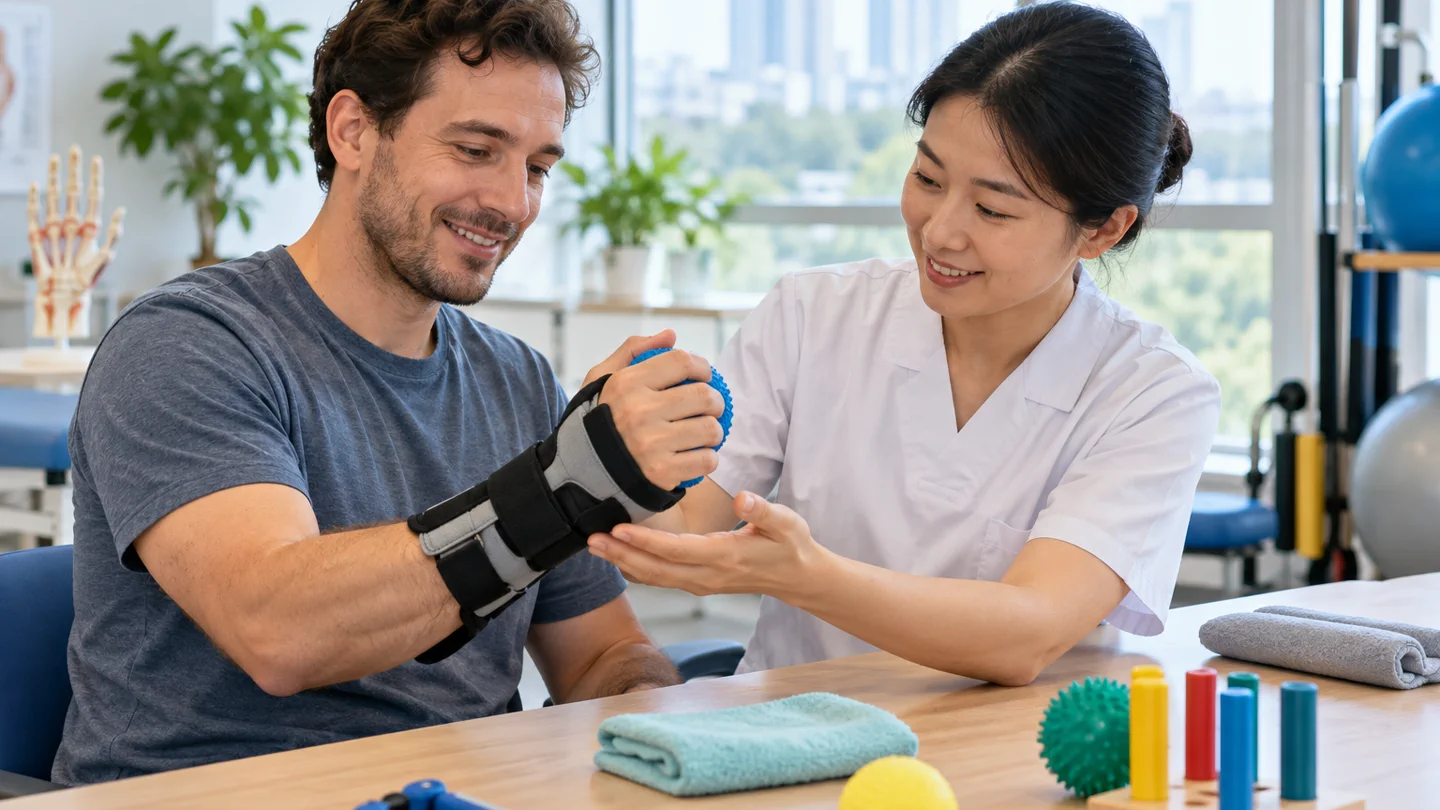
Hand therapy is prolonged and highly specific. Tendon gliding, joint motion, scar care, splinting and sensory re-education must protect each repaired structure. Nerves recover slowly, and stiffness, cold intolerance, pain and altered sensation are common.
Risks and realistic expectations
Risks include failure of blood flow and loss of the part, infection, bleeding, blood clots, bone non-union, tendon adhesion or rupture, stiffness, nerve pain, poor sensation, cold intolerance, chronic pain and multiple further operations. The emotional impact can also be substantial.
A new amputation, uncontrolled bleeding, a replanted part becoming pale, blue, cold or increasingly painful, fever, spreading redness or wound drainage requires immediate emergency contact with the treating team.