Home / Cardiac Surgery / Heart Valve Repair
Cardiac surgery patient guide · 心脏瓣膜修复术

Heart Valve Repair in China

Considering heart valve repair in China? Start with valve imaging, repair assessment and operation scope. This guide helps you identify the relevant records, questions for the receiving team and the scope of an individual estimate before a visit is agreed.

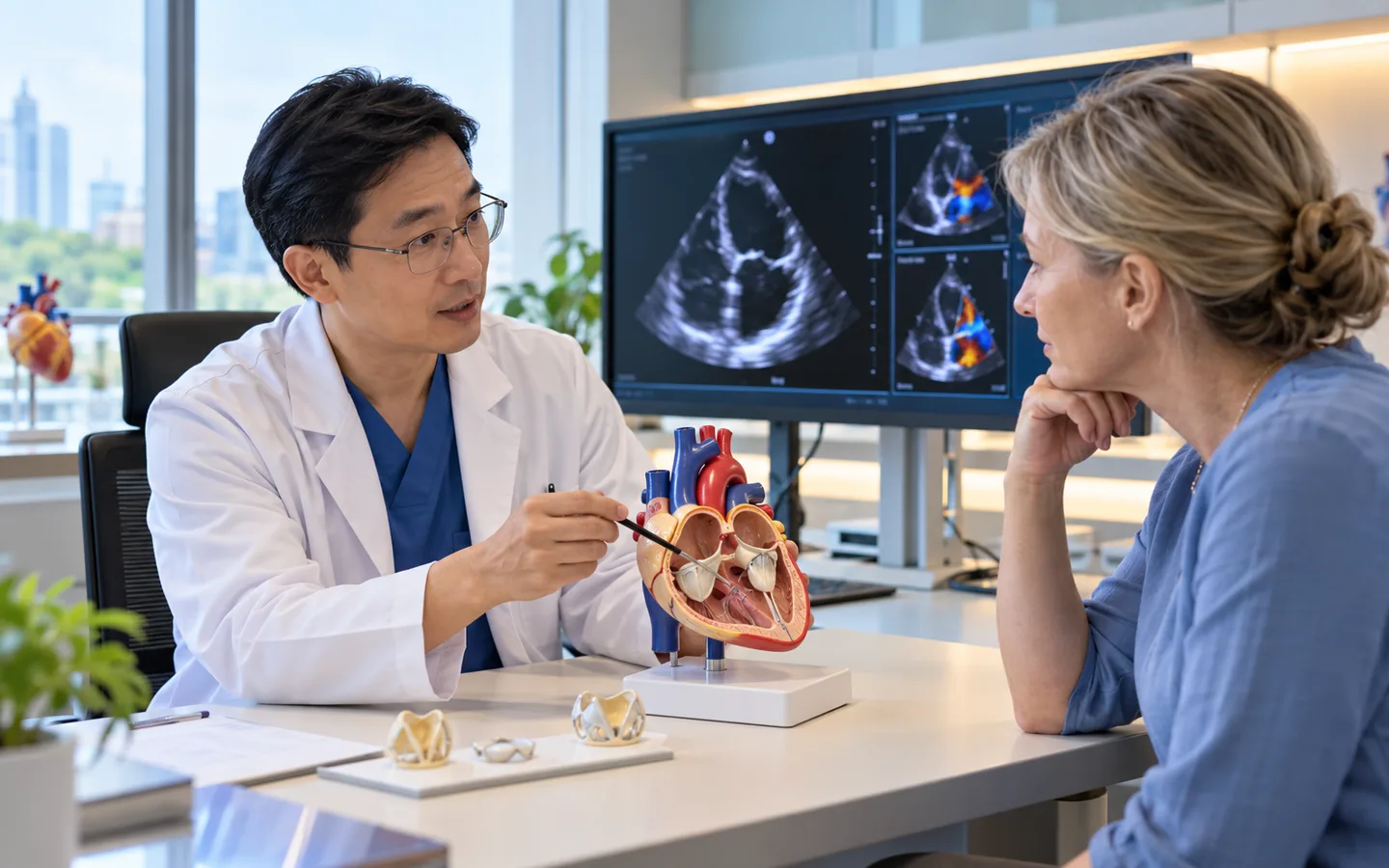
Chinese valve surgeon explaining native heart valve repair options to an international patient

Medical cost reference

Indicative · not a quotation

Heart Valve Repair costs in China

US$21,100–33,300

Original USD reference

Other currencies are approximate equivalents, not a quote or payment rate. Reference FX: ECB · 2 October 2026. Local snapshot, not live.

Surgical valve repair only, not transcatheter TEER; valve and approach need confirmation.

This published reference range is a starting point for planning, not a fixed price or a China-wide average. Cities, public and private hospitals, procedure details and individual care needs affect costs. The hospital must confirm what is included and provide an estimate after reviewing your case.

  • The valve and surgical repair approach
  • Whether other heart procedures are combined
  • Admission, monitoring and rehabilitation

Hospital medical fees, travel and our coordination services are separate. Any paid specialist review or coordination service is explained and agreed before you proceed.

Your next step

Start with your question

Tell us your diagnosis and what you need. Our free initial review checks the information and helps identify a suitable next step; it is not a specialist opinion or a hospital quotation.

Request a case-based estimate

Not ready to send records? Ask us first. Where hospital review is appropriate, we can help request an estimate. No travel commitment or mandatory proxy consultation.

Planning heart valve repair in ChinaHospital review · individual costs · visit and follow-up

Plan the visit around valve imaging, repair assessment and operation scope. Agree the assessment route before travel.

Records for the heart valve repair review

Tell us what you already have: All echocardiography reports and images; Cardiac MRI or CT if performed; Rhythm monitoring and ECGs. Start with a short summary; after first contact we explain which records the receiving team needs and how to share them.

Confirm the proposed scope and costs

Review the published reference below with the receiving team. Confirm the particular procedure, hospital and items included in your own estimate; the reference is not a confirmed quotation.

Visits and care after returning home

Ask whether repair is appropriate for the particular valve and how admission, follow-up imaging and prescribed care would be coordinated. Tell us if you need interpretation or English-language documents, and confirm the relevant arrangements with the receiving team.

Repair reshapes or supports the patient’s own valve

Valve repair may reshape an annulus, support leaflets, repair chords or close defects so blood moves in the correct direction. The exact technique depends on the valve and mechanism of disease.

A technically possible repair is not automatically a durable repair. Mechanism, tissue quality, surgeon experience and the likelihood of significant residual leakage must be considered.

Ask about repair durability

Request the centre’s experience with the specific lesion and what would trigger conversion to valve replacement during surgery.

Who may be considered?

Specialist review may help when the diagnosis, symptoms and previous treatment create a focused question about surgical valve repair.

  • Severe valve leakage causing symptoms or heart enlargement.
  • Degenerative mitral disease with anatomy suited to durable repair.
  • Functional leakage requiring a broader heart-failure strategy.
  • Valve disease being addressed during another necessary cardiac operation.

What the specialist team must confirm

Review includes detailed transthoracic and transesophageal echocardiography, valve mechanism, chamber size and function, pulmonary pressure, rhythm, coronary assessment, surgical risk and previous interventions.

Key points for this treatment

Goalpreserve native valve tissue
Common focusmitral or tricuspid regurgitation
Evidenceecho anatomy and severity
Follow-upresidual leak and heart remodeling
Chinese cardiac team planning mitral valve repair with echocardiography and a heart model
Mechanism guides the repairLeaflet motion, annular shape, chordal support and ventricular function determine which repair components are needed.

From echocardiographic mechanism to a durable repair

Planning starts with why the valve fails, not simply how severe the leakage appears.

DefineIdentify valve and leakage mechanism
PredictEstimate repair feasibility and durability
RepairRestore coaptation and valve geometry
VerifyUse intraoperative echo before completion

Follow the repaired valve and the recovering heart

Postoperative echo checks residual leakage, gradients and ventricular function. Rhythm, fluid balance and anticoagulation needs are individualized.

Later follow-up tracks symptoms, heart remodeling, rhythm and whether leakage or narrowing returns. Dental care and endocarditis-prevention advice should be clarified.

International patient attending echocardiography follow-up after successful heart valve repair
A successful repair still needs surveillanceSymptoms, echo measurements and rhythm together show whether the valve and heart remain stable.
Durable repairContinue scheduled valve surveillance
Residual leakDefine severity and clinical impact
Rhythm changeTreat atrial arrhythmia when needed
ConversionReplacement may be required if repair is unsafe

Risks, limits and realistic expectations

Repair may not be possible or durable, and replacement may be required. Risks include bleeding, infection, stroke, rhythm problems, residual regurgitation, stenosis, reoperation and death.

Do not delay urgent local care

Sudden breathlessness, chest pain, fainting, new weakness or signs of acute heart failure require emergency local assessment.

Before hospital review

Records for heart valve repair assessment

A safe international review depends on dated source reports, original imaging and a complete treatment timeline—not a diagnosis label alone.

All echocardiography reports and images
Cardiac MRI or CT if performed
Rhythm monitoring and ECGs
Coronary angiography when indicated
Previous valve intervention reports
Current medicines and anticoagulation
Dental and infection history
Functional and surgical-risk assessment

Tell us what you need

Ask about your care,
your hospital and your budget.

You can ask about suitability, an expert opinion, an appointment or the likely medical cost. If you are unsure, choose “Not sure — please advise”.

This enquiry is aboutHeart Valve RepairNot sure — please advise

How a personal estimate is prepared

  1. Tell us about your case.Describe your diagnosis, main question and preferred city, if any.
  2. Share the relevant records.We explain what is needed and how to send it by WhatsApp or email.
  3. Request a hospital estimate.Where appropriate, we help request hospital review and a cost estimate. Any paid review is agreed first.

This is an enquiry, not an order or payment. Proxy consultation is not mandatory. Any service scope is agreed separately before you proceed.

Ask about Heart Valve Repair

A first enquiry is free. Email and permission to respond are required; the other details are optional. Any paid clinical review or coordination is discussed separately.

Included automatically so we know which procedure you are asking about.
A preference, not a confirmed appointment.
Please do not send passport numbers, card details or full medical files in this first enquiry. We will explain which records are needed next.

Send a short summary first. This is an enquiry, not an order, payment or confirmed appointment.

No booking or payment is made by sending this enquiry.
Editorial transparency

Medical sources

Patient information is based on established government and professional guidance. Content updated 5 October 2026. This is patient information, not an individual clinical assessment.