
Home / Ophthalmology / ICL Implantation
Ophthalmology patient guide · ICL晶体植入术

ICL Eye Surgery in China

Considering ICL eye surgery in China? Start with eye measurements, lens scope and postoperative checks. This guide helps you identify the relevant records, questions for the receiving team and the scope of an individual estimate before a visit is agreed.

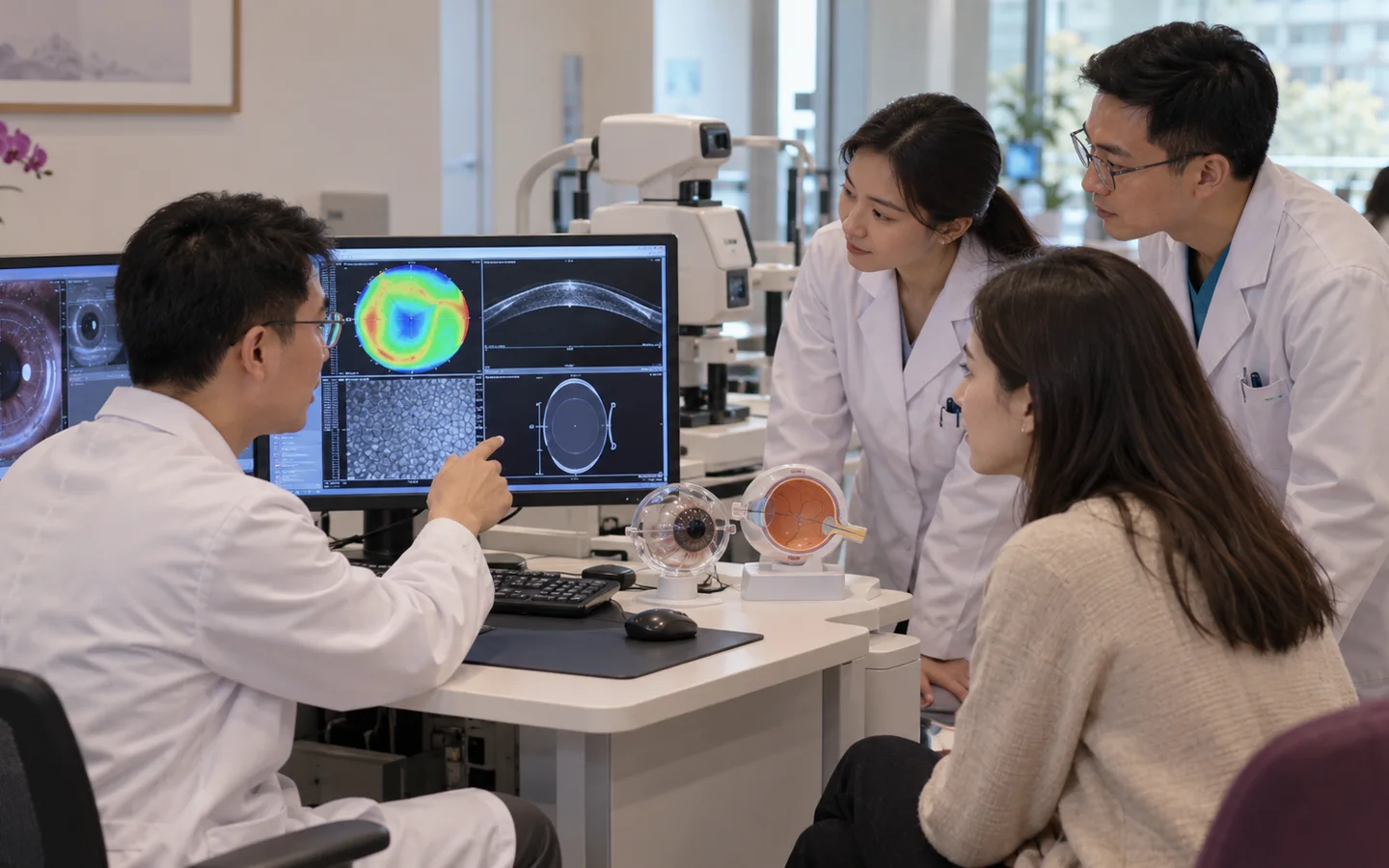
Chinese refractive eye surgeon explaining implantable collamer lens position to an international adult patient with an eye model

Medical cost reference

Indicative · not a quotation

ICL Eye Surgery costs in China

US$4,400–5,800

Original USD reference

Other currencies are approximate equivalents, not a quote or payment rate. Reference FX: ECB · 2 October 2026. Local snapshot, not live.

Both eyes; lens model, astigmatism correction and examination scope need confirmation.

This published reference range is a starting point for planning, not a fixed price or a China-wide average. Cities, public and private hospitals, procedure details and individual care needs affect costs. The hospital must confirm what is included and provide an estimate after reviewing your case.

  • One eye or both eyes
  • Lens model and astigmatism correction
  • Eye examinations and postoperative monitoring

Hospital medical fees, travel and our coordination services are separate. Any paid specialist review or coordination service is explained and agreed before you proceed.

Your next step

Start with your question

Tell us your diagnosis and what you need. Our free initial review checks the information and helps identify a suitable next step; it is not a specialist opinion or a hospital quotation.

Request a case-based estimate

Not ready to send records? Ask us first. Where hospital review is appropriate, we can help request an estimate. No travel commitment or mandatory proxy consultation.

Planning ICL eye surgery in ChinaHospital review · individual costs · visit and follow-up

Plan the visit around eye measurements, lens scope and postoperative checks. Agree the assessment route before travel.

Records for the ICL eye surgery review

Tell us what you already have: Stable refraction history; Cycloplegic refraction; Corneal topography or tomography. Start with a short summary; after first contact we explain which records the receiving team needs and how to share them.

Confirm the proposed scope and costs

Review the published reference below with the receiving team. Confirm the particular procedure, hospital and items included in your own estimate; the reference is not a confirmed quotation.

Visits and care after returning home

Confirm whether the estimate covers one eye or both, the proposed lens and the eye team's review schedule. Tell us if you need interpretation or English-language documents, and confirm the relevant arrangements with the receiving team.

An implantable collamer lens adds optical power without removing the natural lens

The foldable lens is inserted through a small incision and positioned behind the iris. It may suit selected adults with myopia who are not ideal corneal-laser candidates.

The operation is intraocular and carries different risks from laser correction. Anterior-chamber depth, endothelial health, pupil, angle, prescription stability and retinal condition matter.

Reversible does not mean risk-free

Although the lens can be removed, cataract, pressure problems, endothelial loss or retinal events may not be fully reversible.

Who may be considered?

Specialist review may help when the diagnosis, symptoms and previous treatment create a focused question about implantable collamer lens surgery.

  • An adult within the approved refractive and age range for the chosen lens.
  • Stable myopia with or without treatable astigmatism.
  • Adequate anterior-chamber depth and endothelial-cell reserve.
  • No uncontrolled glaucoma, cataract, active inflammation or unstable retinal disease.

What the specialist team must confirm

Review cycloplegic refraction, anterior-chamber depth, angle, white-to-white or other sizing measures, endothelial cells, corneal tomography, pupil size, lens clarity, pressure and dilated retina.

Key points for this treatment
Correctsselected myopia and astigmatism
Preservesthe natural crystalline lens
Positionbehind iris in front of natural lens
Monitoringpressure vault lens and endothelium
Chinese refractive surgery team reviewing chamber depth corneal tomography endothelial count and lens sizing
Sizing and internal anatomy are centralLens power is only one parameter; safe space, vault and angle anatomy affect long-term eye health.

From refractive screening to long-term implant surveillance

Both eyes are assessed individually and postoperative reviews look beyond visual acuity to implant position and ocular health.

QualifyConfirm stable prescription and eye health
SizeMeasure chamber angle and cornea
ImplantPosition lens behind iris
MonitorCheck pressure vault lens and retina

Early pressure and long-term lens checks matter

Vision may improve quickly, but early pressure, inflammation and lens position require review. Prescribed drops and activity precautions support healing.

Long-term checks monitor cataract, endothelial cells, angle, pressure, vault, refraction and retina. Glasses may still be needed for some tasks.

International adult patient receiving eye pressure vault and visual acuity checks after ICL implantation
Sharp vision is not the only safety measureA comfortable eye with normal pressure and stable internal structures defines successful follow-up.
Target visionContinue scheduled surveillance
High or low vaultAssess observation or exchange
Pressure riseTreat cause promptly
Lens changeEvaluate cataract or implant interaction

Risks, limits and realistic expectations

Risks include infection, inflammation, pressure rise, glare or halos, residual prescription, lens rotation, cataract, endothelial-cell loss, retinal detachment and additional surgery.

Do not delay urgent local care

Severe pain, headache with nausea, rapidly reduced vision, marked redness, flashes or a curtain shadow after implantation requires urgent ophthalmic review.

Before hospital review

Records for ICL eye surgery assessment

A safe international review depends on dated source reports, original imaging and a complete treatment timeline—not a diagnosis label alone.

Stable refraction history
Cycloplegic refraction
Corneal topography or tomography
Anterior-chamber depth and angle
Endothelial-cell count
Eye pressure and glaucoma history
Dilated retinal examination
Previous eye surgery and medicines

Tell us what you need

Ask about your care,
your hospital and your budget.

You can ask about suitability, an expert opinion, an appointment or the likely medical cost. If you are unsure, choose “Not sure — please advise”.

This enquiry is aboutICL ImplantationNot sure — please advise

How a personal estimate is prepared

  1. Tell us about your case.Describe your diagnosis, main question and preferred city, if any.
  2. Share the relevant records.We explain what is needed and how to send it by WhatsApp or email.
  3. Request a hospital estimate.Where appropriate, we help request hospital review and a cost estimate. Any paid review is agreed first.

This is an enquiry, not an order or payment. Proxy consultation is not mandatory. Any service scope is agreed separately before you proceed.

Ask about ICL Implantation

A first enquiry is free. Email and permission to respond are required; the other details are optional. Any paid clinical review or coordination is discussed separately.

Included automatically so we know which procedure you are asking about.
A preference, not a confirmed appointment.
Please do not send passport numbers, card details or full medical files in this first enquiry. We will explain which records are needed next.

Send a short summary first. This is an enquiry, not an order, payment or confirmed appointment.

No booking or payment is made by sending this enquiry.
Editorial transparency

Medical sources

Patient information is based on established government and professional guidance. Content updated 5 October 2026. This is patient information, not an individual clinical assessment.