
Home / Ophthalmology / Pediatric Strabismus Surgery
Ophthalmology patient guide · 儿童斜视手术

Children's Strabismus Surgery in China

Considering children's strabismus surgery in China? Start with eye measurements, prior treatment and surgical review. This guide helps you identify the relevant records, questions for the receiving team and the scope of an individual estimate before a visit is agreed.

Chinese pediatric ophthalmologist explaining strabismus muscle surgery to an international child and parent using an eye model

Medical records & cost enquiry

Children's Strabismus Surgery: assessment and cost questions

For Pediatric Strabismus Surgery, the budget depends on the proposed care and the hospital. A useful estimate needs to distinguish:

  • The eye alignment problem and muscle plan
  • One or both eyes and previous procedures
  • Anaesthesia and postoperative eye care

Hospital medical fees, travel and our coordination services are separate. Any paid specialist review or coordination service is explained and agreed before you proceed.

Your next step

Start with your question

Tell us your diagnosis and what you need. Our free initial review checks the information and helps identify a suitable next step; it is not a specialist opinion or a hospital quotation.

Request a case-based estimate

Not ready to send records? Ask us first. Where hospital review is appropriate, we can help request an estimate. No travel commitment or mandatory proxy consultation.

Planning children's strabismus surgery in ChinaHospital review · individual costs · visit and follow-up

Plan the visit around eye measurements, prior treatment and surgical review. Agree the assessment route before travel.

Records for the children's strabismus surgery review

Tell us what you already have: Visual acuity by eye over time; Cycloplegic refraction; Alignment measurements across visits. Start with a short summary; after first contact we explain which records the receiving team needs and how to share them.

Confirm the proposed scope and costs

Before asking for a personal estimate, clarify: The eye alignment problem and muscle plan; One or both eyes and previous procedures; Anaesthesia and postoperative eye care. The receiving team confirms the proposed scope and hospital charges; coordination is agreed separately.

Visits and care after returning home

Ask how examination, surgery if appropriate and later eye reviews would be scheduled with the child's ongoing local eye care. Tell us if you need interpretation or English-language documents, and confirm the relevant arrangements with the receiving team.

Strabismus surgery changes eye-muscle balance to improve alignment

One or more muscles are weakened, strengthened or repositioned, sometimes in both eyes. The procedure treats alignment but does not directly cure reduced vision from amblyopia.

Measurements may vary with glasses, fatigue and gaze direction. Neurological or restrictive causes require different investigation and prognosis.

Alignment and vision development are parallel treatments

Glasses, patching or atropine may still be needed before and after surgery even when the eyes look straighter.

Who may be considered?

Specialist review may help when the diagnosis, symptoms and previous treatment create a focused question about pediatric strabismus surgery.

  • Persistent childhood strabismus not adequately managed with glasses or observation.
  • Alignment affecting binocular development, head posture or psychosocial function.
  • A pattern requiring muscle surgery after stable measurements.
  • A child whose family can continue amblyopia and follow-up care.

What the specialist team must confirm

Review visual acuity in each eye, cycloplegic refraction, amblyopia treatment, alignment at distance and near, gaze pattern, stereopsis, head posture, neurological signs and previous muscle surgery.

Key points for this treatment

Adjustseye-muscle position
Goalsalignment function and development
Does not replaceglasses or amblyopia therapy
Planningmeasurements across visits
Chinese pediatric eye team reviewing alignment measurements refraction binocular testing and muscle plan
Repeated measurements improve the muscle planThe target angle, gaze pattern and binocular potential are assessed across visits rather than from one photograph.

From visual development assessment to stable alignment

Families are prepared for redness, temporary double vision and the possibility that alignment changes as the child grows.

CorrectOptimize glasses and amblyopia care
MeasureDocument angle gaze and binocular function
AlignReposition selected eye muscles
DevelopContinue visual and alignment follow-up

Healing and visual development continue after surgery

The eyes may be red, gritty and watery for days to weeks. Drops, hygiene and activity guidance are provided.

Alignment, double vision, stereopsis and amblyopia therapy are reassessed. Some children need further surgery or continued glasses.
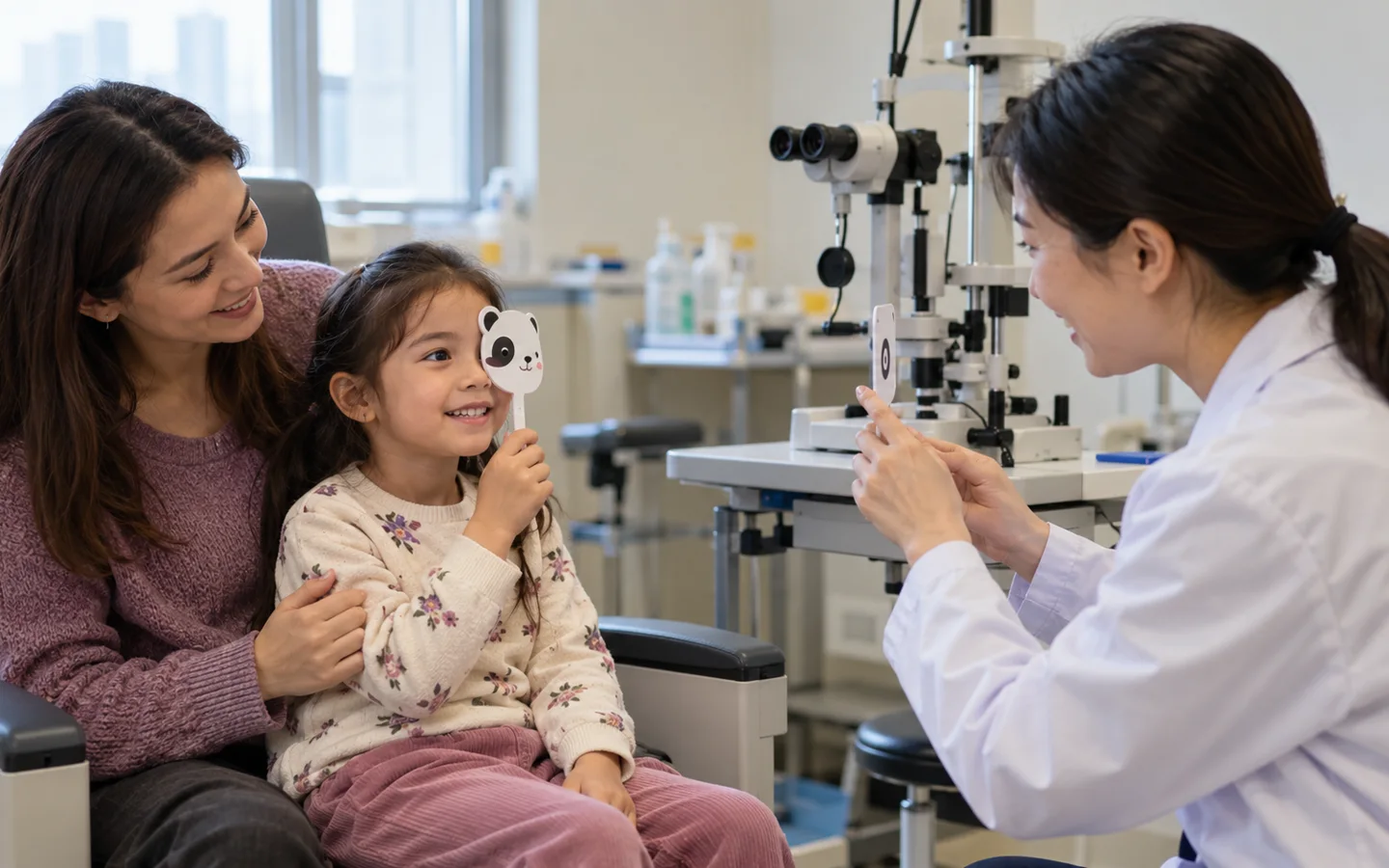
International child completing playful eye alignment follow up with parent and pediatric ophthalmology clinician
A straight appearance is not the only endpointEqual visual development, comfortable head posture and useful binocular function remain important.
Alignment improvedContinue development checks
Residual deviationObserve prism or further surgery
Amblyopia persistsContinue targeted treatment
Double visionReview adaptation and alignment

Risks, limits and realistic expectations

Risks include under- or over-correction, need for repeat surgery, temporary or persistent double vision, infection, slipped muscle, scarring and very rare loss of vision.

Do not delay urgent local care

Severe pain, marked swelling, fever, pus, inability to move the eye or sudden visual decline after surgery requires urgent pediatric eye review.

Before hospital review

Records for children's strabismus surgery assessment

A safe international review depends on dated source reports, original imaging and a complete treatment timeline—not a diagnosis label alone.

Visual acuity by eye over time
Cycloplegic refraction
Alignment measurements across visits
Amblyopia patching or atropine history
Binocular and stereopsis testing
Head posture photographs if useful
Neurological or developmental records
Prior eye-muscle surgery notes

Tell us what you need

Ask about your care,
your hospital and your budget.

You can ask about suitability, an expert opinion, an appointment or the likely medical cost. If you are unsure, choose “Not sure — please advise”.

This enquiry is aboutPediatric Strabismus SurgeryNot sure — please advise

How a personal estimate is prepared

  1. Tell us about your case.Describe your diagnosis, main question and preferred city, if any.
  2. Share the relevant records.We explain what is needed and how to send it by WhatsApp or email.
  3. Request a hospital estimate.Where appropriate, we help request hospital review and a cost estimate. Any paid review is agreed first.

This is an enquiry, not an order or payment. Proxy consultation is not mandatory. Any service scope is agreed separately before you proceed.

Ask about Pediatric Strabismus Surgery

A first enquiry is free. Email and permission to respond are required; the other details are optional. Any paid clinical review or coordination is discussed separately.

Included automatically so we know which procedure you are asking about.
A preference, not a confirmed appointment.
Please do not send passport numbers, card details or full medical files in this first enquiry. We will explain which records are needed next.

Send a short summary first. This is an enquiry, not an order, payment or confirmed appointment.

No booking or payment is made by sending this enquiry.
Editorial transparency

Medical sources

Patient information is based on established government and professional guidance. Content updated 5 October 2026. This is patient information, not an individual clinical assessment.