
Surgery treats the leak and reduces the space in which pneumothorax can recur
VATS may identify and staple leaking blebs or bullae. Mechanical or chemical pleurodesis, or limited pleurectomy, helps the lung adhere to the chest wall.
Not every pneumothorax needs surgery. Recurrence, persistent air leak, bilateral disease, high-risk occupation and underlying lung disease influence the decision and technique.
Primary spontaneous pneumothorax in a young otherwise healthy person is different from pneumothorax caused by emphysema, infection, cancer or another lung disorder.
Who may be considered?
Specialist review may help when the diagnosis, symptoms and previous treatment create a focused question about surgery for recurrent pneumothorax.
- Recurrent pneumothorax on the same or opposite side.
- A persistent air leak or lung that does not remain expanded.
- Bilateral pneumothorax or a first event in a high-risk occupation.
- Selected secondary pneumothorax where surgery is tolerable.
What the specialist team must confirm
Review includes chest X-rays and CT, event and drain timeline, smoking or vaping, underlying cystic or emphysematous disease, family history, lung function, occupational risk and whether menstruation or another pattern suggests a specific cause.
Key points for this treatment
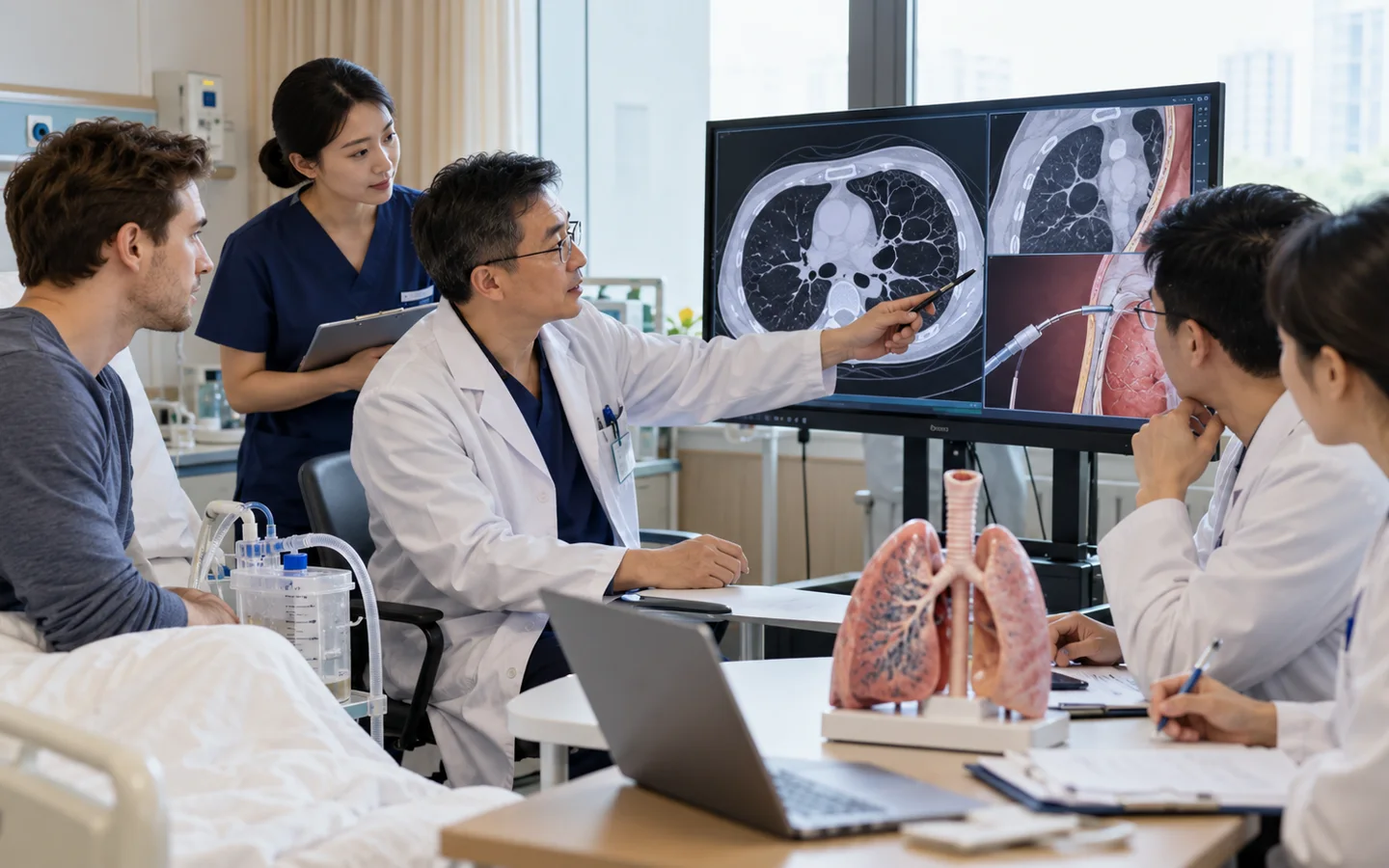
From air-leak history to recurrence prevention
The operative plan balances recurrence reduction against pain, bleeding and the future implications of pleural adhesion.
The drain confirms that the repair has sealed
Air leak and chest imaging guide drain removal. Pain control and movement are important because pleural treatment can make deep breathing uncomfortable.
Later advice covers flying, diving, smoking cessation, underlying disease and what to do if sudden one-sided chest pain or breathlessness returns.

Risks, limits and realistic expectations
Risks include bleeding, prolonged air leak, infection, pain, numbness, incomplete pleurodesis, recurrence, reduced future pleural access and complications related to underlying lung disease.
Sudden chest pain, rapidly worsening breathlessness, blue lips, fainting or a new oxygen requirement needs emergency local assessment.