Home / Orthopedics / Revision Knee Replacement
Complex joint reconstruction guide · 膝关节翻修术

Revision Knee Replacement in China

Considering revision knee replacement in China? Start with previous surgery, implant details and revision complexity. This guide helps you identify the relevant records, questions for the receiving team and the scope of an individual estimate before a visit is agreed.

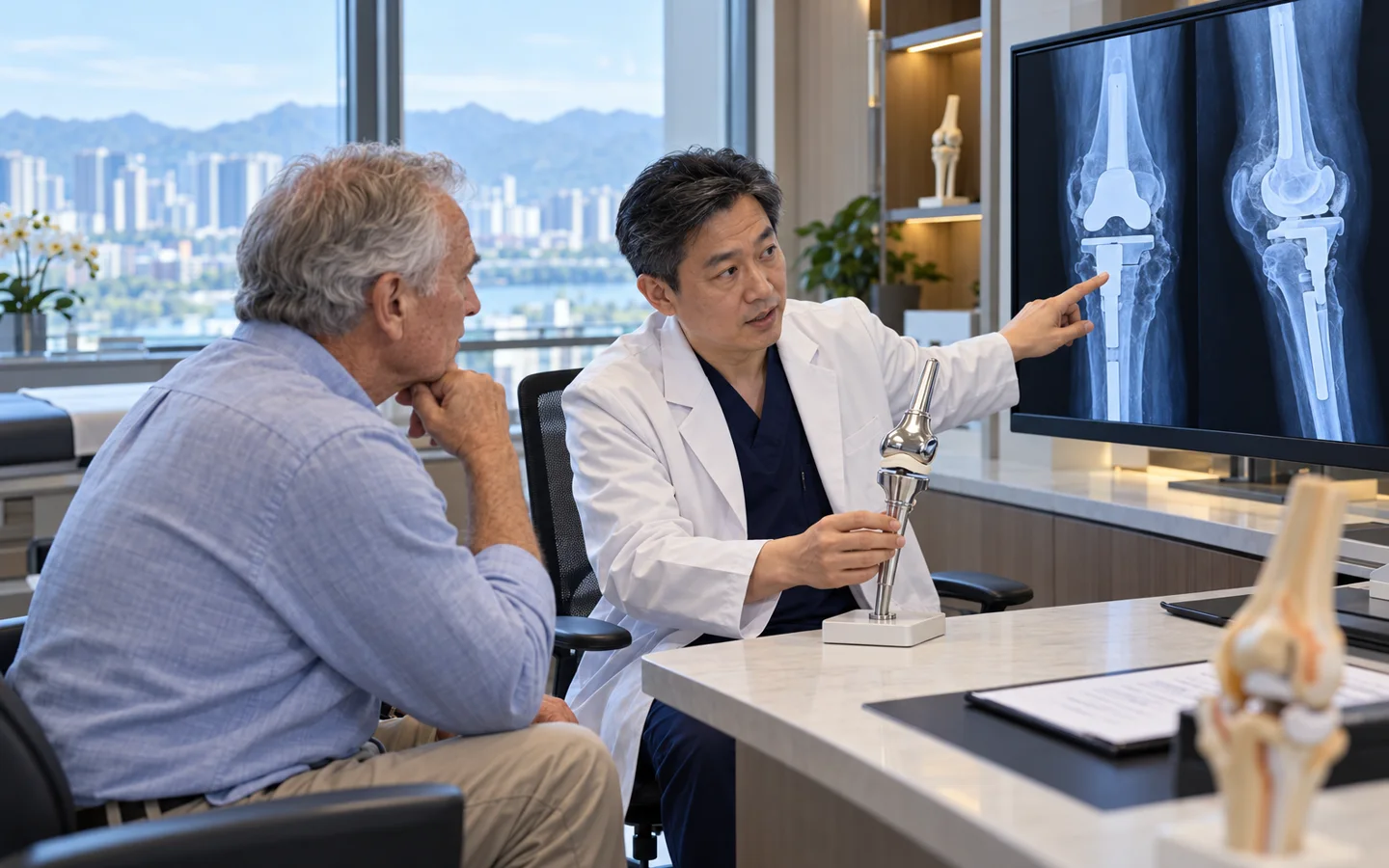
Revision-joint surgeon explaining a stemmed knee implant and radiographs to an international patient

Medical records & cost enquiry

Revision Knee Replacement: assessment and cost questions

For Revision Knee Replacement, the budget depends on the proposed care and the hospital. A useful estimate needs to distinguish:

  • Reason for revision and existing implants
  • Bone defects, infection assessment and new components
  • Staged surgery, admission and rehabilitation

Hospital medical fees, travel and our coordination services are separate. Any paid specialist review or coordination service is explained and agreed before you proceed.

Your next step

Start with your question

Tell us your diagnosis and what you need. Our free initial review checks the information and helps identify a suitable next step; it is not a specialist opinion or a hospital quotation.

Request a case-based estimate

Not ready to send records? Ask us first. Where hospital review is appropriate, we can help request an estimate. No travel commitment or mandatory proxy consultation.

Planning revision knee replacement in ChinaHospital review · individual costs · visit and follow-up

Plan the visit around previous surgery, implant details and revision complexity. Agree the assessment route before travel.

Records for the revision knee replacement review

Tell us what you already have: Original operation report and implant stickers; All later knee procedure reports; Serial X-rays from before and after replacement. Start with a short summary; after first contact we explain which records the receiving team needs and how to share them.

Confirm the proposed scope and costs

Before asking for a personal estimate, clarify: Reason for revision and existing implants; Bone defects, infection assessment and new components; Staged surgery, admission and rehabilitation. The receiving team confirms the proposed scope and hospital charges; coordination is agreed separately.

Visits and care after returning home

Ask how the team assesses the reason for revision, what reconstruction or stages are proposed and what postoperative support is needed. Tell us if you need interpretation or English-language documents, and confirm the relevant arrangements with the receiving team.

What is revision knee replacement?

Revision knee replacement is a second operation on a knee that already contains an artificial joint. The surgeon may exchange one component, several components or the whole implant. The procedure can also require removal of old cement, treatment of infection, repair of damaged soft tissue and reconstruction of missing bone.

Revision is generally longer and more complex than primary knee replacement. Specialised implants may use longer stems for fixation inside the femur or tibia, and metal augments or bone graft may be required when bone has been lost.

The diagnosis comes before the implant choice

Pain after knee replacement does not automatically mean that another replacement is needed. Infection, loosening, instability, fracture, alignment, referred pain and medical causes must be assessed systematically.

Why might a knee replacement need revision?

Loosening and wear

The implant may lose fixation to the bone, or the plastic bearing may wear. Symptoms can include pain with activity, swelling or progressive change on X-ray. Wear particles may contribute to bone loss around the implant.

Infection

Joint-replacement infection can occur soon after surgery or years later. Persistent wound drainage, fever, increasing pain and swelling are concerning, but some infections present more subtly. Blood tests and joint aspiration may be needed; antibiotics taken before cultures can make diagnosis more difficult and should be discussed with the treating team.

Instability or stiffness

Ligament imbalance or damage can make the knee feel as though it gives way. Scar tissue and other factors can lead to severe stiffness. The team must identify whether therapy, bracing or another procedure could help before recommending component revision.

Fracture or component problems

A fracture around the implant, component breakage, malposition or progressive bone loss may require complex reconstruction. The plan depends on which components remain well fixed and the amount and quality of bone available.

How the cause is investigated

The revision team will review the original operation, implant details, onset of symptoms and any previous infection treatment. Examination assesses the wound, motion, stability, limb alignment, gait and possible pain sources outside the knee.

  • X-rays: standing and comparison images can show component position, loosening, wear, fracture and bone loss.
  • Blood tests: inflammatory markers can contribute to infection assessment but do not diagnose every case alone.
  • Joint aspiration: fluid may be tested for cell count and cultured for bacteria when infection is suspected.
  • CT, MRI or nuclear imaging: selected when additional information about rotation, bone, soft tissue or loosening is needed.
Do not hide previous infection treatment

Send dates and results of every culture, aspiration, washout, antibiotic course and implant procedure. The exact organism and prior treatment can change the revision strategy.

Key points for this treatment
Complexmore planning than primary surgery
One or morecomponents may be replaced
Infectionmust be actively investigated
Longerrecovery may be required
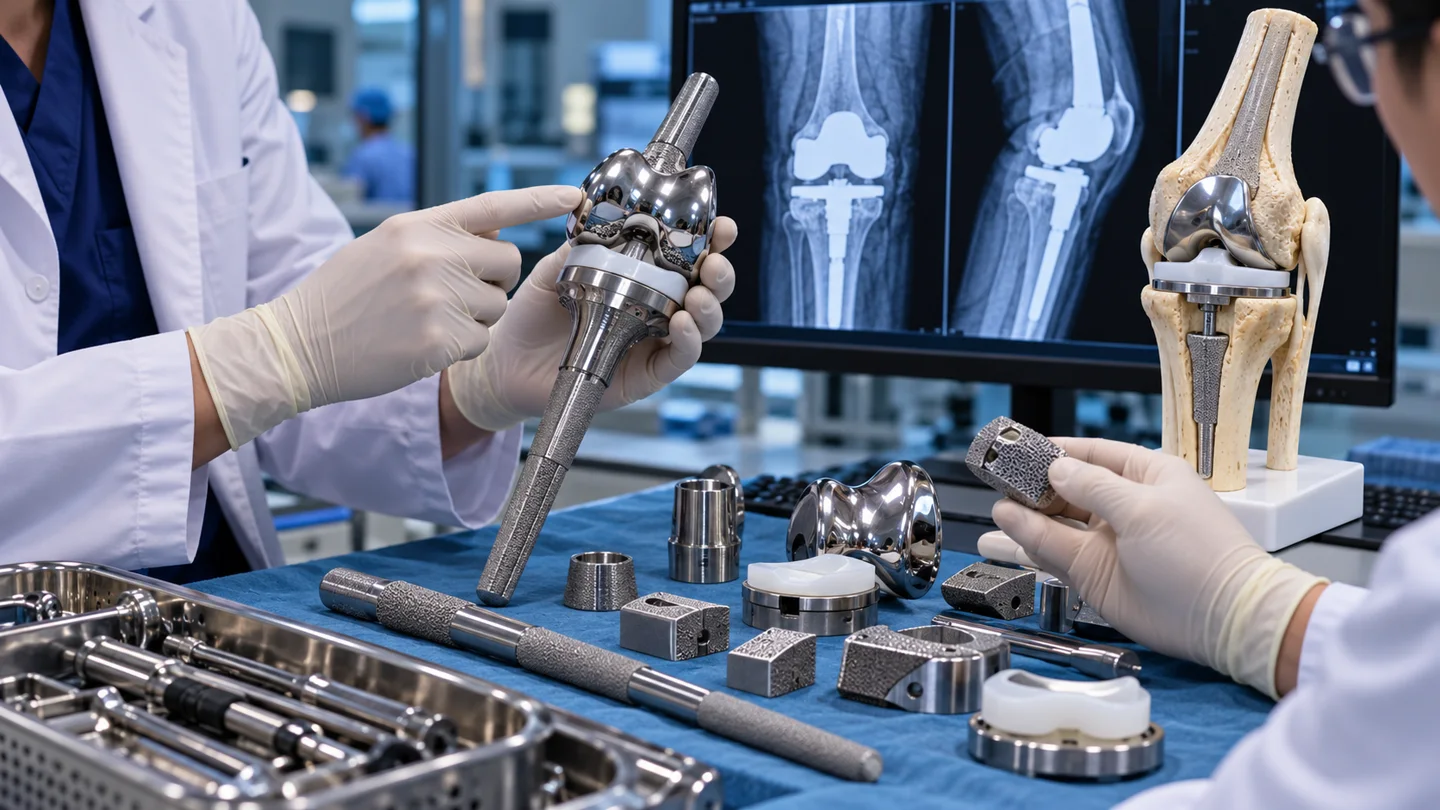
Stemmed revision knee components and augments being reviewed during complex surgical planning
Reconstruction must match the problemStemmed components, augments, constraint and fixation are selected according to bone loss, ligament function, implant stability and infection status.

How revision surgery works

The surgeon normally uses or extends the previous incision. Samples may be collected for culture. Loose or failed components and old cement are removed while preserving as much bone as possible. The team then reconstructs bone defects, balances the soft tissues and implants the components needed for stability.

Is every component replaced?

No. If only one part has failed and the remaining components are well fixed, correctly positioned and compatible, a limited exchange may be possible. In other cases, all components must be removed. The final plan may change after direct examination during surgery.

One-stage or two-stage treatment for infection?

Some infections can be treated with debridement and exchange of the plastic bearing while retaining fixed components. Other cases require component removal. A two-stage approach places an antibiotic spacer and gives antimicrobial treatment before a later reimplantation; selected centers may use a one-stage exchange in carefully chosen cases. The organism, duration of infection, bone and soft tissue, patient health and local expertise shape the decision.

Bone loss and implant constraint

Metal augments, cones, sleeves, longer stems or bone graft may be needed to rebuild support. When ligaments cannot provide adequate stability, a more constrained implant may be required. These choices are case-specific and cannot be determined from a diagnosis label alone.

Hospital stay and recovery

Revision recovery is often slower and less predictable than recovery from a first knee replacement. Weight-bearing instructions depend on fixation, bone reconstruction and any fracture or soft-tissue repair. Pain control, clot prevention, wound monitoring and physiotherapy begin in hospital, but some patients need longer walking-aid use or additional rehabilitation.

International patient practising a supervised sit-to-stand exercise after revision knee replacement
Recovery is individualThe rehabilitation plan must respect fixation, bone quality, wound condition, infection treatment and the surgeon’s weight-bearing restrictions.
In hospitalWound, cultures, pain, mobility and medical status monitored
Early weeksWalking aids and home support often required
Follow-upReview healing, infection results, motion and implant position
Longer termStrength and function may continue improving for months

International patients should not plan their return flight until the revision team confirms that the wound, mobility, clot risk and any culture or antibiotic plan are stable. A clear handover to a clinician and physiotherapist at home is essential.

Risks and expected results

Revision surgery has a higher complication risk than primary knee replacement. Important risks include infection or persistent infection, wound-healing problems, blood clots, bleeding, stiffness, instability, fracture, nerve or blood-vessel injury, medical or anaesthetic complications, further bone loss and the possibility of another revision.

Many patients gain pain relief and improved stability and function, but complete pain relief or full restoration of movement cannot be guaranteed. Outcome depends heavily on the reason for failure, condition of the bone and soft tissues, infection status and general health.

Seek urgent medical help

New wound drainage, fever, rapidly increasing pain or swelling, sudden chest pain, shortness of breath or calf swelling requires urgent clinical assessment.

Before hospital review

Revision-case records checklist

Revision review needs the history of the existing implant as well as current symptoms and tests.

Original operation report and implant stickers
All later knee procedure reports
Serial X-rays from before and after replacement
Current weight-bearing X-rays and full-length alignment view
CT, MRI or nuclear images and reports, if obtained
Blood inflammatory-marker results
Aspiration, culture and pathology results
All antibiotic names, doses and dates
Wound photographs and drainage history, if relevant
Medication list, allergies and medical conditions
Current walking aids and functional limits
Contact details for the current treating team
Implant identification matters

The manufacturer, model, size and date of the existing components can affect compatibility and the instruments needed. Send implant labels or the original operative record whenever possible.

Tell us what you need

Ask about your care,
your hospital and your budget.

You can ask about suitability, an expert opinion, an appointment or the likely medical cost. If you are unsure, choose “Not sure — please advise”.

This enquiry is aboutRevision Knee ReplacementNot sure — please advise

How a personal estimate is prepared

  1. Tell us about your case.Describe your diagnosis, main question and preferred city, if any.
  2. Share the relevant records.We explain what is needed and how to send it by WhatsApp or email.
  3. Request a hospital estimate.Where appropriate, we help request hospital review and a cost estimate. Any paid review is agreed first.

This is an enquiry, not an order or payment. Proxy consultation is not mandatory. Any service scope is agreed separately before you proceed.

Ask about Revision Knee Replacement

A first enquiry is free. Email and permission to respond are required; the other details are optional. Any paid clinical review or coordination is discussed separately.

Included automatically so we know which procedure you are asking about.
A preference, not a confirmed appointment.
Please do not send passport numbers, card details or full medical files in this first enquiry. We will explain which records are needed next.

Send a short summary first. This is an enquiry, not an order, payment or confirmed appointment.

No booking or payment is made by sending this enquiry.
Editorial transparency

Medical sources

Patient information is based on established orthopedic guidance. Content updated 5 October 2026. This is patient information, not an individual clinical assessment.