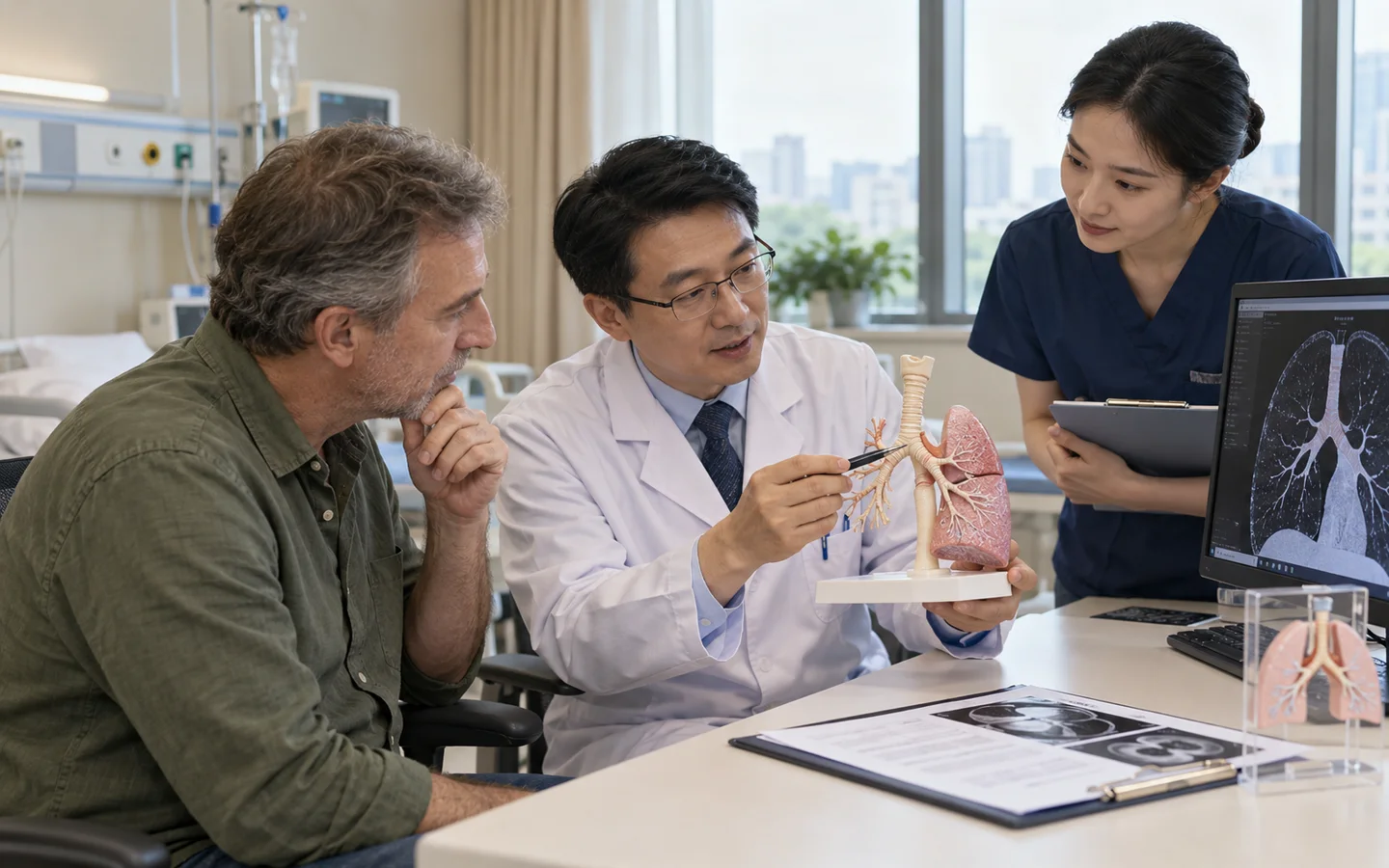
Sleeve lobectomy combines lung resection with airway reconstruction
For selected central tumors, the surgeon removes a lobe and a short involved segment of main bronchus, then reconnects the remaining airway. Vascular reconstruction may occasionally be added.
The operation can preserve more lung than pneumonectomy, but only when clear margins, nodal treatment and a well-perfused tension-free airway connection are achievable.
Ask how bronchoscopy, frozen-section margins and anastomotic blood supply will be assessed and when pneumonectomy would still be necessary.
Who may be considered?
Specialist review may help when the diagnosis, symptoms and previous treatment create a focused question about bronchial sleeve lobectomy.
- A central lung cancer involving a lobar bronchus but not requiring whole-lung removal.
- A selected low-grade airway tumor.
- A patient who would benefit substantially from preserved lung volume.
- Disease that remains completely resectable with airway reconstruction.
What the specialist team must confirm
Review includes thin-slice CT, PET, bronchoscopy with exact endobronchial extent, nodal staging, tissue diagnosis, pulmonary and cardiac reserve and the relationship of tumor to the pulmonary artery and remaining bronchus.
Key points for this treatment
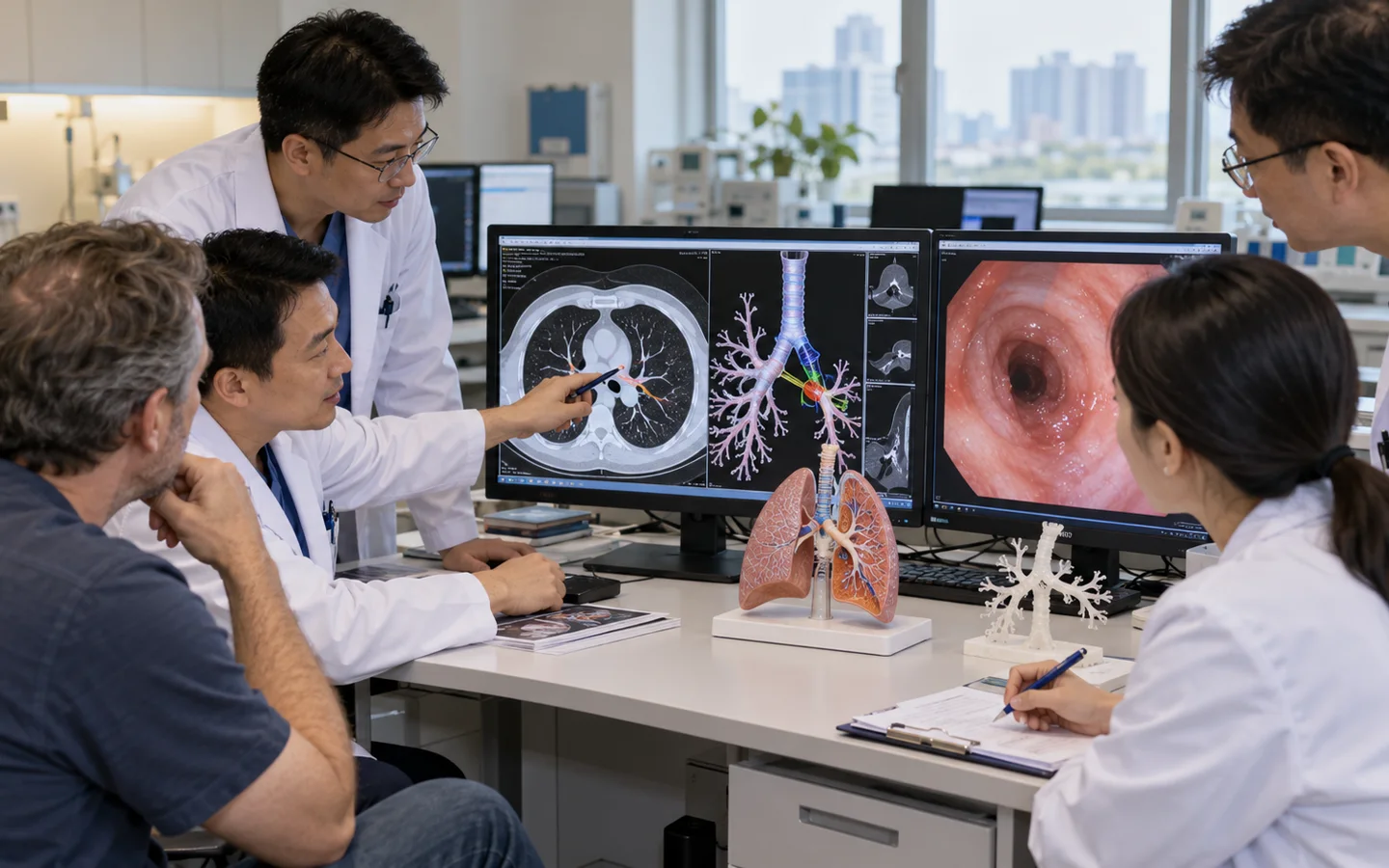
From bronchoscopy mapping to lung-preserving airway reconstruction
Sleeve resection is appropriate when it provides oncologic clearance comparable to a larger resection and a safe airway connection.
The airway anastomosis needs surveillance
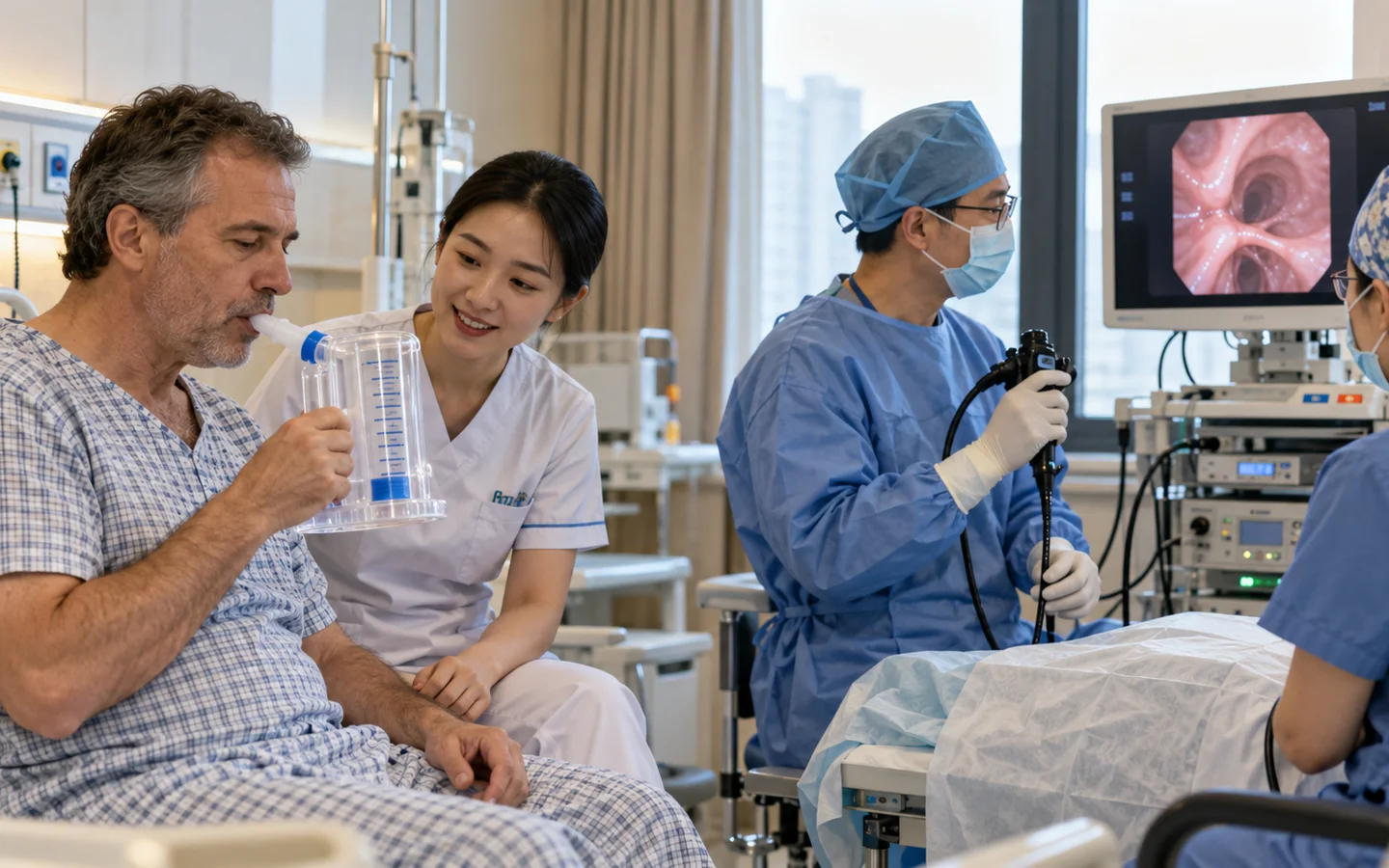
Early care watches air leak, secretion clearance, pneumonia and blood supply to the reconstructed bronchus. Bronchoscopy may be used when clinically indicated.
Later review considers narrowing, granulation, recurrent tumor and how much lung function was preserved. Pulmonary rehabilitation supports adaptation.
Risks, limits and realistic expectations
Risks include bleeding, pneumonia, prolonged air leak, airway leak, anastomotic narrowing or separation, reduced blood supply, conversion to pneumonectomy, recurrence and death.
Severe breathlessness, coughing blood, high fever, noisy breathing, fainting or sudden chest pain requires urgent local assessment.