Home / Thoracic Surgery / Thymectomy
Thoracic surgery patient guide · 胸腺切除术

Thymectomy in China

Considering thymectomy in China? Start with the surgical indication, chest imaging and prior therapy. This guide helps you identify the relevant records, questions for the receiving team and the scope of an individual estimate before a visit is agreed.

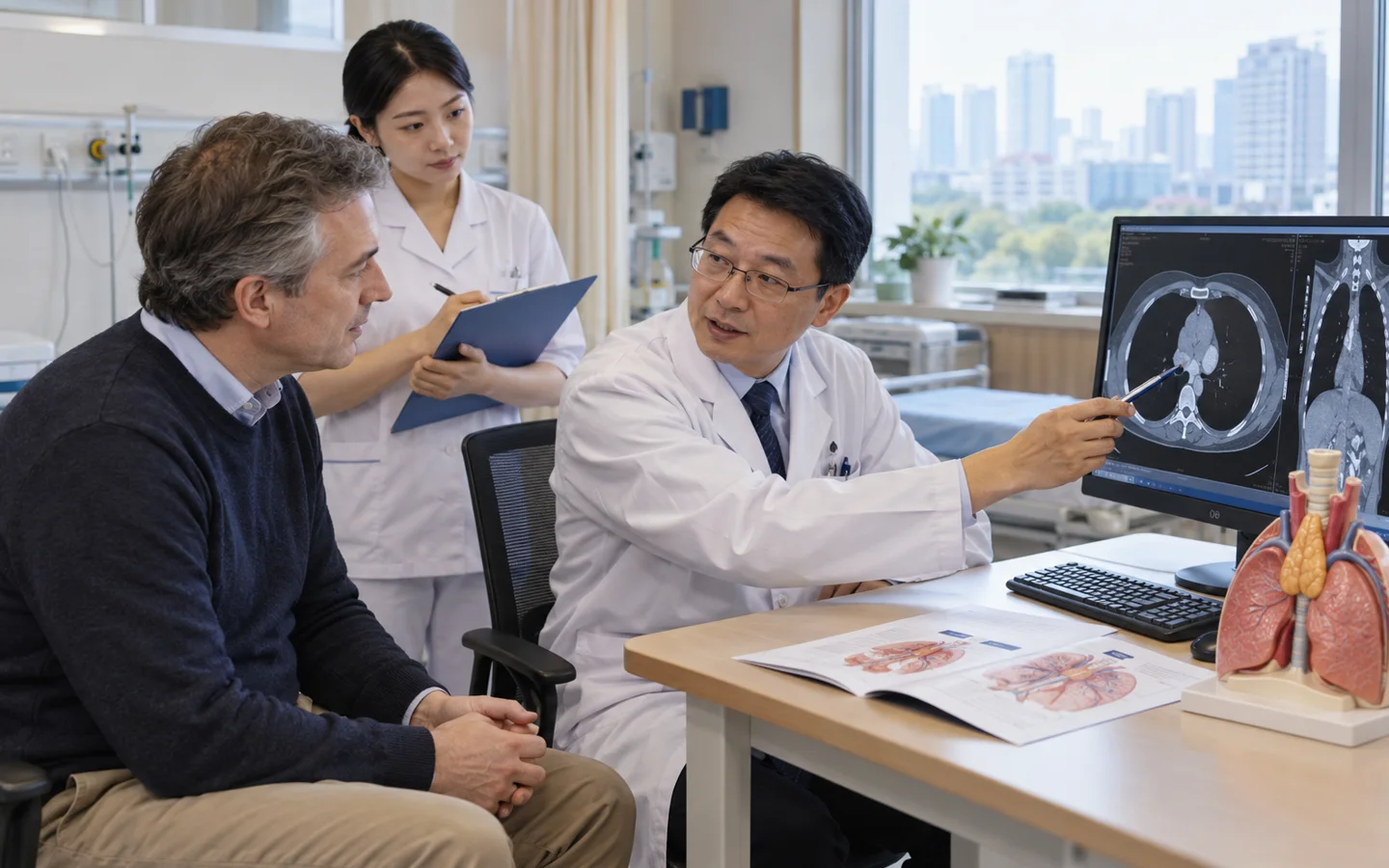
Chinese thoracic surgeon explaining thymectomy and myasthenia considerations to an international patient

Medical records & cost enquiry

Thymectomy: assessment and cost questions

For Thymectomy, the budget depends on the proposed care and the hospital. A useful estimate needs to distinguish:

  • The condition and extent of removal
  • Open, minimally invasive or robotic approach
  • Admission and neurological or cancer follow-up

Hospital medical fees, travel and our coordination services are separate. Any paid specialist review or coordination service is explained and agreed before you proceed.

Your next step

Start with your question

Tell us your diagnosis and what you need. Our free initial review checks the information and helps identify a suitable next step; it is not a specialist opinion or a hospital quotation.

Request a case-based estimate

Not ready to send records? Ask us first. Where hospital review is appropriate, we can help request an estimate. No travel commitment or mandatory proxy consultation.

Planning thymectomy in ChinaHospital review · individual costs · visit and follow-up

Plan the visit around the surgical indication, chest imaging and prior therapy. Agree the assessment route before travel.

Records for the thymectomy review

Tell us what you already have: Contrast chest CT or MRI DICOM; Pathology and biopsy reports; Neurology and myasthenia history. Start with a short summary; after first contact we explain which records the receiving team needs and how to share them.

Confirm the proposed scope and costs

Before asking for a personal estimate, clarify: The condition and extent of removal; Open, minimally invasive or robotic approach; Admission and neurological or cancer follow-up. The receiving team confirms the proposed scope and hospital charges; coordination is agreed separately.

Visits and care after returning home

Clarify whether the proposed operation relates to a thymic lesion or another indication, and ask how relevant specialists coordinate aftercare. Tell us if you need interpretation or English-language documents, and confirm the relevant arrangements with the receiving team.

Thymectomy has different goals in tumor and autoimmune disease

For a thymic epithelial tumor, surgery aims at complete en-bloc removal while protecting or deliberately managing involved structures. For selected myasthenia gravis, thymectomy may improve long-term disease control.

The extent of tumor invasion, thymus size, previous treatment and respiratory and neurologic stability determine whether minimally invasive or open access is appropriate.

Neurologic preparation is part of surgical safety

Patients with myasthenia need coordinated medication, respiratory assessment and a plan for postoperative weakness or crisis.

Who may be considered?

Specialist review may help when the diagnosis, symptoms and previous treatment create a focused question about thymectomy.

  • A resectable thymoma or thymic carcinoma within a multidisciplinary plan.
  • Selected generalized myasthenia gravis after neurologic assessment.
  • A thymic cyst or other lesion causing symptoms or diagnostic concern.
  • A patient whose imaging shows a feasible complete resection.

What the specialist team must confirm

Review includes contrast CT or MRI, tumor stage and relation to vessels, pericardium and phrenic nerves, antibody and neurologic history, swallowing and breathing weakness, pulmonary tests, medicines such as pyridostigmine or immunotherapy and prior biopsy or treatment.

Key points for this treatment
Targetthymus and surrounding fatty tissue
Reasonsthymic tumor or selected myasthenia
Accessrobotic VATS sternotomy or open
Planningnerve vessel and crisis prevention
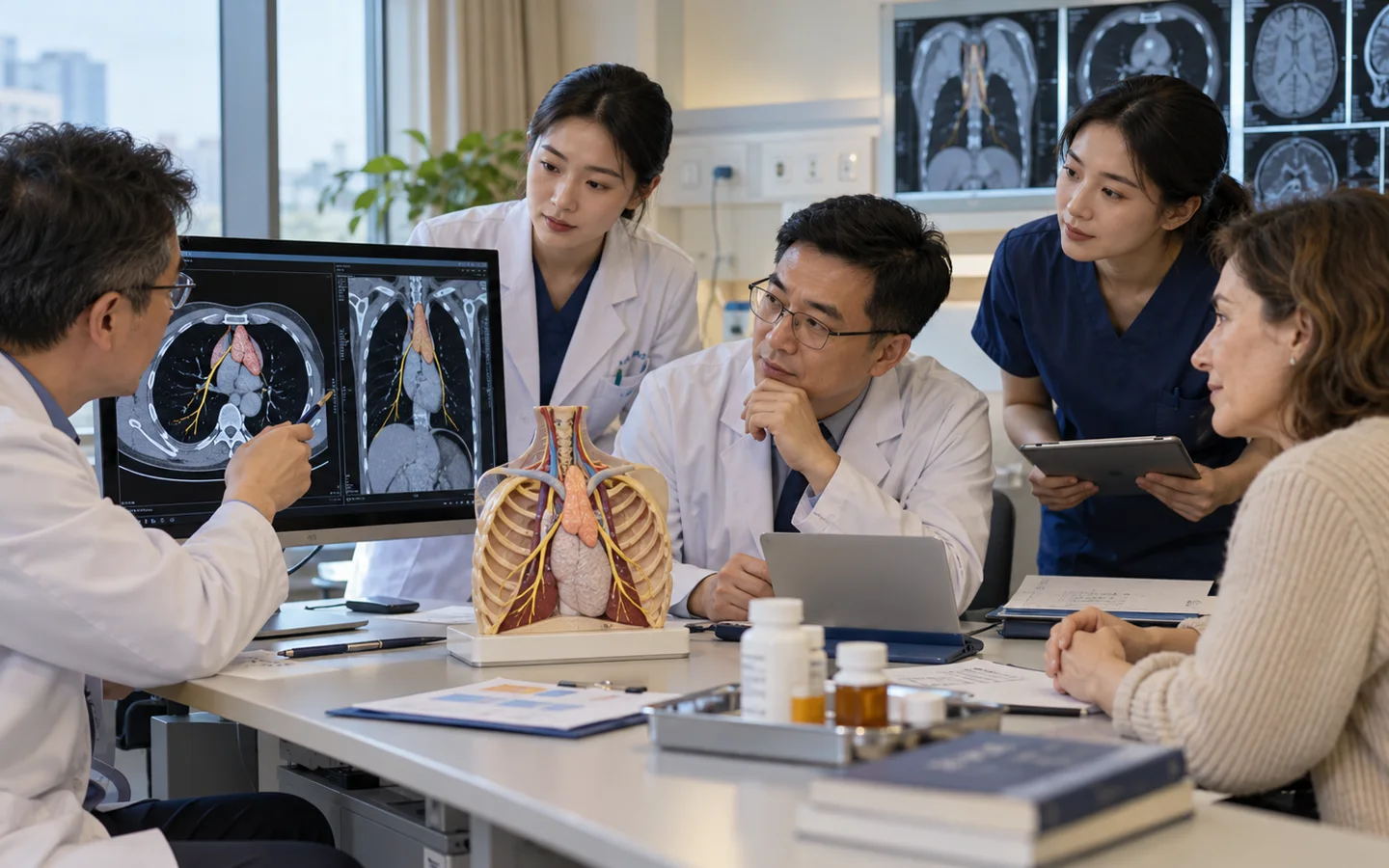
Chinese thoracic and neurology team reviewing thymus CT phrenic nerves and perioperative medication plan
Tumor anatomy and neuromuscular reserve guide accessThe plan must account for both complete thymic tissue removal and the patient’s ability to breathe and clear secretions after surgery.

From neurologic or tumor assessment to complete thymectomy

The team selects an approach that can achieve the intended extent without compromising vascular control or postoperative respiratory safety.

ClassifyDefine tumor or myasthenia objective
StabilizeOptimize neurologic and respiratory status
RemoveExcise thymus and required tissue
MonitorProtect breathing nerve and wound function

Neurologic benefit may take time

After surgery, breathing strength, swallowing, secretions, pain and signs of myasthenic weakness are monitored. Tumor cases follow final pathology and margin review.

Myasthenia medicines are not stopped automatically; neurologists adjust treatment according to symptoms over months or years. Cancer surveillance depends on stage and histology.
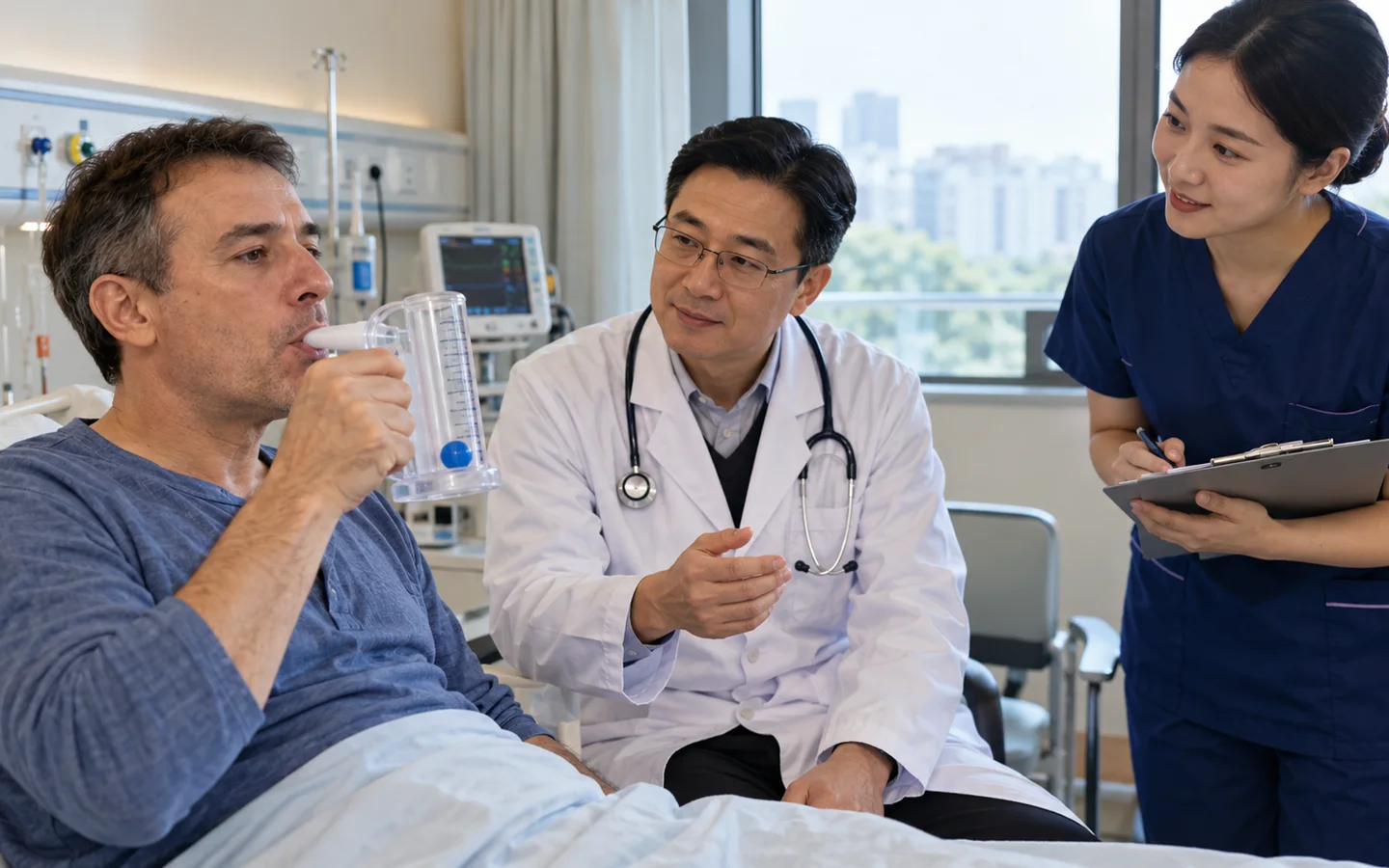
International patient completing respiratory strength and neurologic follow up after thymectomy
Surgery does not instantly reset myastheniaPatients continue specialist neurologic follow-up while the longer-term response becomes clear.
Stable breathingProgress mobilisation safely
Myasthenic weaknessEscalate respiratory support early
Tumor marginPlan surveillance or adjuvant care
Long-term symptomsAdjust neurologic treatment

Risks, limits and realistic expectations

Risks include bleeding, infection, phrenic or recurrent-laryngeal-nerve injury, diaphragm weakness, myasthenic crisis, incomplete tumor resection, conversion to open surgery, recurrence and death.

Do not delay urgent local care

Rapidly worsening weakness, difficulty swallowing or breathing, new voice change, fever or severe chest pain needs urgent local assessment.

Before hospital review

Records for thymectomy assessment

A safe international review depends on dated source reports, original imaging and a complete treatment timeline—not a diagnosis label alone.

Contrast chest CT or MRI DICOM
Pathology and biopsy reports
Neurology and myasthenia history
Antibody electrophysiology and respiratory tests
Medication and crisis history
Pulmonary and cardiac assessment
Previous chemotherapy or radiotherapy
Current swallowing breathing and functional status

Tell us what you need

Ask about your care,
your hospital and your budget.

You can ask about suitability, an expert opinion, an appointment or the likely medical cost. If you are unsure, choose “Not sure — please advise”.

This enquiry is aboutThymectomyNot sure — please advise

How a personal estimate is prepared

  1. Tell us about your case.Describe your diagnosis, main question and preferred city, if any.
  2. Share the relevant records.We explain what is needed and how to send it by WhatsApp or email.
  3. Request a hospital estimate.Where appropriate, we help request hospital review and a cost estimate. Any paid review is agreed first.

This is an enquiry, not an order or payment. Proxy consultation is not mandatory. Any service scope is agreed separately before you proceed.

Ask about Thymectomy

A first enquiry is free. Email and permission to respond are required; the other details are optional. Any paid clinical review or coordination is discussed separately.

Included automatically so we know which procedure you are asking about.
A preference, not a confirmed appointment.
Please do not send passport numbers, card details or full medical files in this first enquiry. We will explain which records are needed next.

Send a short summary first. This is an enquiry, not an order, payment or confirmed appointment.

No booking or payment is made by sending this enquiry.
Editorial transparency

Medical sources

Patient information is based on established government and professional guidance. Content updated 5 October 2026. This is patient information, not an individual clinical assessment.