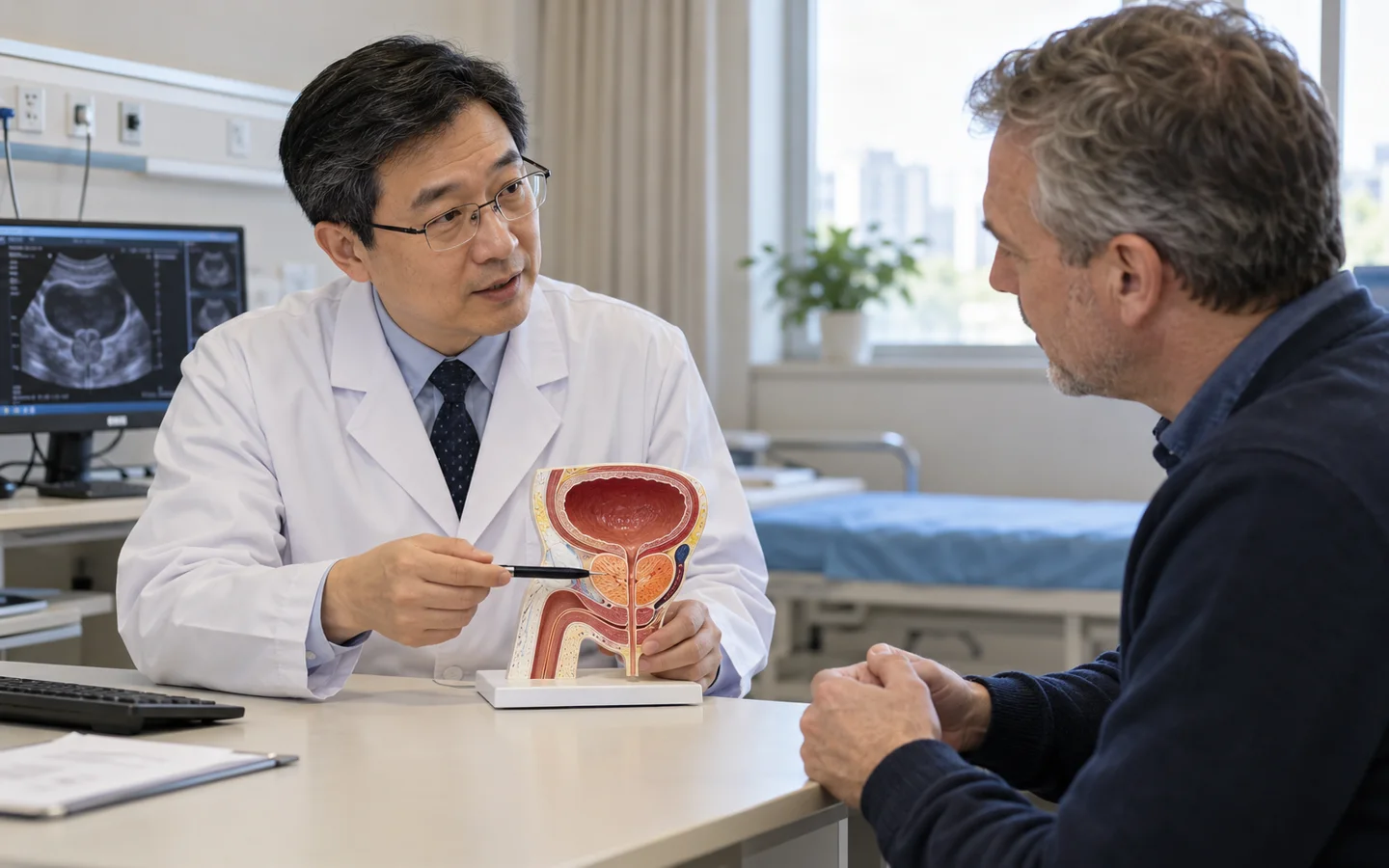
TURP creates a wider urinary channel through the prostate
An electrical resection loop removes pieces of obstructing prostate tissue from inside the urethra. The outer prostate remains.
The procedure treats obstruction, not prostate cancer itself or bladder weakness. Alternative laser, steam, implant and open techniques may fit different gland sizes and priorities.
Ask how prostate volume, anticoagulation, ejaculation priorities and available expertise affect selection.
Who may be considered?
Specialist review may help when the diagnosis, symptoms and previous treatment create a focused question about TURP.
- Moderate or severe benign prostate symptoms despite medication.
- Recurrent retention, infection, bladder stones or kidney effects from obstruction.
- A prostate size and anatomy appropriate for transurethral resection.
- A patient prepared for catheter recovery and ejaculation change.
What the specialist team must confirm
Review symptoms, flow, residual, prostate volume, urinalysis, renal function, PSA assessment, cystoscopy when needed, bladder contractility and bleeding or anesthesia risk.
Key points for this treatment

From lower urinary tract assessment to improved emptying
The plan distinguishes expected improvements in stream and retention from symptoms that may persist because of bladder overactivity.
Bleeding and urinary irritation settle gradually
A catheter and irrigation may be used until urine clears. Frequency, burning and urgency are common during early healing.
Later review considers flow, residual urine, infection, continence and pathology. Retrograde ejaculation is common and should be discussed before surgery.

Risks, limits and realistic expectations
Risks include bleeding, transfusion, infection, fluid or electrolyte disturbance, incontinence, urethral or bladder-neck narrowing, reoperation, erectile change and retrograde ejaculation.
Inability to urinate, heavy bleeding or clots, fever, confusion, chest symptoms or severe lower abdominal pain needs urgent local assessment.