Home / Urology / Urethroplasty
Urology patient guide · 尿道成形术

Urethroplasty in China

Considering urethroplasty in China? Start with stricture history, previous procedures and reconstruction. This guide helps you identify the relevant records, questions for the receiving team and the scope of an individual estimate before a visit is agreed.

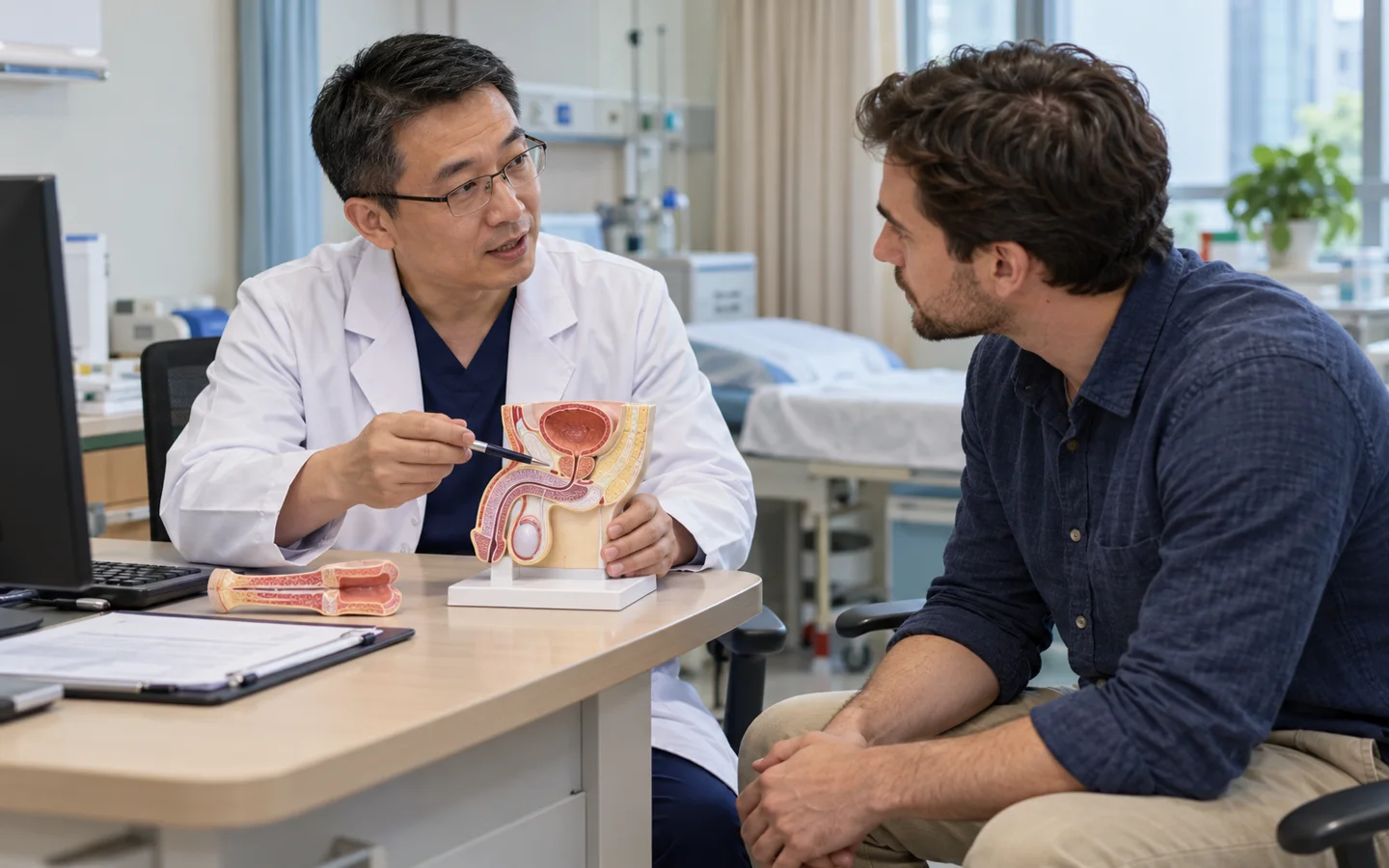
Chinese reconstructive urologist explaining urethral stricture repair to an international adult patient with an anatomical model

Medical records & cost enquiry

Urethroplasty: assessment and cost questions

For Urethroplasty, the budget depends on the proposed care and the hospital. A useful estimate needs to distinguish:

  • Length and location of the narrowing
  • Graft, repair technique and previous procedures
  • Catheter care and follow-up testing

Hospital medical fees, travel and our coordination services are separate. Any paid specialist review or coordination service is explained and agreed before you proceed.

Your next step

Start with your question

Tell us your diagnosis and what you need. Our free initial review checks the information and helps identify a suitable next step; it is not a specialist opinion or a hospital quotation.

Request a case-based estimate

Not ready to send records? Ask us first. Where hospital review is appropriate, we can help request an estimate. No travel commitment or mandatory proxy consultation.

Planning urethroplasty in ChinaHospital review · individual costs · visit and follow-up

Plan the visit around stricture history, previous procedures and reconstruction. Agree the assessment route before travel.

Records for the urethroplasty review

Tell us what you already have: Retrograde urethrogram images; Voiding cystourethrogram if available; Cystoscopy report. Start with a short summary; after first contact we explain which records the receiving team needs and how to share them.

Confirm the proposed scope and costs

Before asking for a personal estimate, clarify: Length and location of the narrowing; Graft, repair technique and previous procedures; Catheter care and follow-up testing. The receiving team confirms the proposed scope and hospital charges; coordination is agreed separately.

Visits and care after returning home

Ask which urethral studies are needed, what repair is proposed and how catheter management and later flow assessment would be handled. Tell us if you need interpretation or English-language documents, and confirm the relevant arrangements with the receiving team.

Urethroplasty reconstructs a scarred urethra for durable urine flow

Short strictures may be excised and reconnected; longer or complex segments may require oral mucosal grafts, flaps or staged surgery.

Repeated dilation or urethrotomy can alter scar length and tissue quality. Prior trauma, infection, radiation and lichen sclerosus change technique and recurrence risk.

The stricture map determines the repair

Do not compare techniques without knowing location, length, previous procedures and the condition of surrounding tissue.

Who may be considered?

Specialist review may help when the diagnosis, symptoms and previous treatment create a focused question about urethroplasty.

  • Recurrent or long urethral stricture.
  • Poor durability after dilation or internal urethrotomy.
  • Traumatic urethral disruption requiring reconstruction.
  • Complex narrowing after hypospadias repair, radiation or inflammatory disease.

What the specialist team must confirm

Review retrograde urethrogram and voiding study, cystoscopy, urinary flow and residual, infection, continence, erectile function, prior instruments, trauma and tissue or skin disease.

Key points for this treatment

Treatsurethral scar narrowing
Planningurethrogram and endoscopy
Techniquesanastomosis graft or staged repair
Outcomeflow emptying and recurrence
Chinese reconstructive urology team reviewing urethrogram stricture length graft options and catheter plan
Length and tissue quality select the techniqueAnastomotic, graft and staged repairs solve different problems and carry different functional tradeoffs.

From complete stricture mapping to durable flow review

The team plans reconstruction beyond the visible narrow point and documents how catheter removal will be tested.

MapDefine the entire scarred segment
PrepareControl infection and rest urethra
RebuildExcise reconnect or augment
TestConfirm healing flow and emptying

Catheter healing is followed by recurrence surveillance

A catheter remains while the repair seals. Imaging or endoscopic assessment before removal varies by case.

Urinary flow, symptoms and residual urine are monitored because recurrence can develop gradually. Sexual, continence or perineal symptoms should also be reviewed.

International adult patient reviewing urine flow testing and catheter removal after urethroplasty
A stronger stream is not the only outcomeComfort, continence, emptying and avoidance of repeated instrumentation all matter.
Open flowContinue symptom and flow review
Narrow recurrenceDefine site before treatment
Leak at repairExtend drainage or intervene
Functional issueAssess continence or sexual effects

Risks, limits and realistic expectations

Risks include bleeding, infection, urine leak, recurrent stricture, fistula, altered ejaculation, erectile or continence change, oral graft discomfort and further reconstruction.

Do not delay urgent local care

Fever, catheter blockage, severe bladder pain, rapidly increasing perineal swelling or inability to pass urine after catheter removal requires urgent local care.

Before hospital review

Records for urethroplasty assessment

A safe international review depends on dated source reports, original imaging and a complete treatment timeline—not a diagnosis label alone.

Retrograde urethrogram images
Voiding cystourethrogram if available
Cystoscopy report
Urinary flow and residual measurements
Prior dilation urethrotomy and reconstruction notes
Trauma infection and radiation history
Continence and sexual-function baseline
Urine culture and medicines

Tell us what you need

Ask about your care,
your hospital and your budget.

You can ask about suitability, an expert opinion, an appointment or the likely medical cost. If you are unsure, choose “Not sure — please advise”.

This enquiry is aboutUrethroplastyNot sure — please advise

How a personal estimate is prepared

  1. Tell us about your case.Describe your diagnosis, main question and preferred city, if any.
  2. Share the relevant records.We explain what is needed and how to send it by WhatsApp or email.
  3. Request a hospital estimate.Where appropriate, we help request hospital review and a cost estimate. Any paid review is agreed first.

This is an enquiry, not an order or payment. Proxy consultation is not mandatory. Any service scope is agreed separately before you proceed.

Ask about Urethroplasty

A first enquiry is free. Email and permission to respond are required; the other details are optional. Any paid clinical review or coordination is discussed separately.

Included automatically so we know which procedure you are asking about.
A preference, not a confirmed appointment.
Please do not send passport numbers, card details or full medical files in this first enquiry. We will explain which records are needed next.

Send a short summary first. This is an enquiry, not an order, payment or confirmed appointment.

No booking or payment is made by sending this enquiry.
Editorial transparency

Medical sources

Patient information is based on established government and professional guidance. Content updated 5 October 2026. This is patient information, not an individual clinical assessment.